Behavioral Interview Questions for Developers STAR Guide
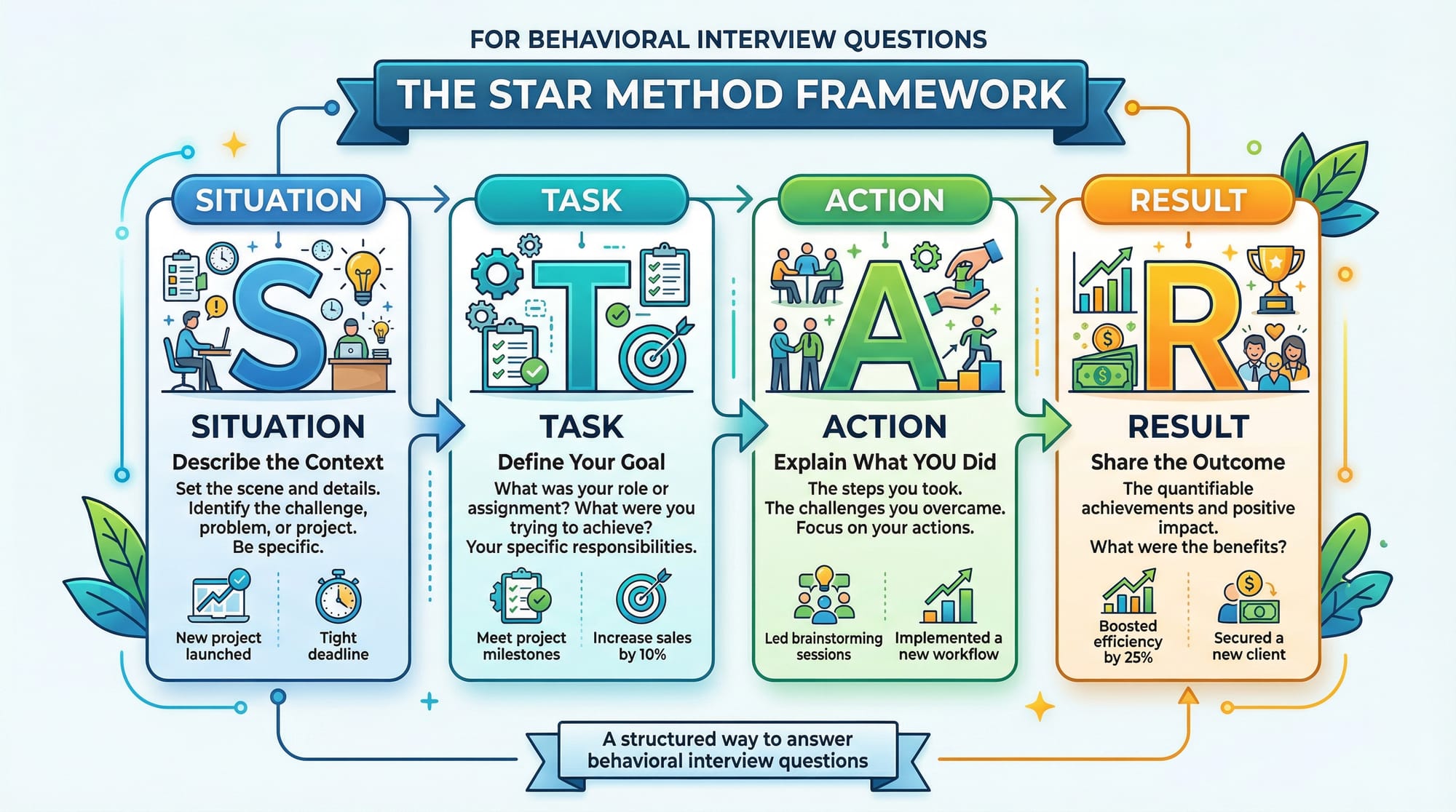
Behavioral interview questions are a critical part of developer interviews in Pakistan and around the world. Unlike technical questions, these focus on understanding how you’ve handled situations in the past to predict your future behavior. The STAR method — Situation, Task, Action, Result — is a structured approach to answer these questions effectively.
For Pakistani students, mastering behavioral questions can be the difference between a successful interview at a local tech company in Karachi or Lahore and missing out due to vague or unstructured responses. This guide is tailored for beginner developers to understand, practice, and excel at STAR method interviews.
Prerequisites
Before diving into STAR method interviews, you should have:
- Basic knowledge of developer roles and responsibilities (frontend, backend, full-stack, mobile development).
- Familiarity with common coding languages in Pakistan such as Python, JavaScript, or Java.
- Understanding of projects you have worked on, either at university or during internships.
- Confidence in describing personal experiences and challenges in a professional context.
No advanced technical expertise is required, but self-reflection and preparation are key.
Core Concepts & Explanation
Understanding the STAR Method
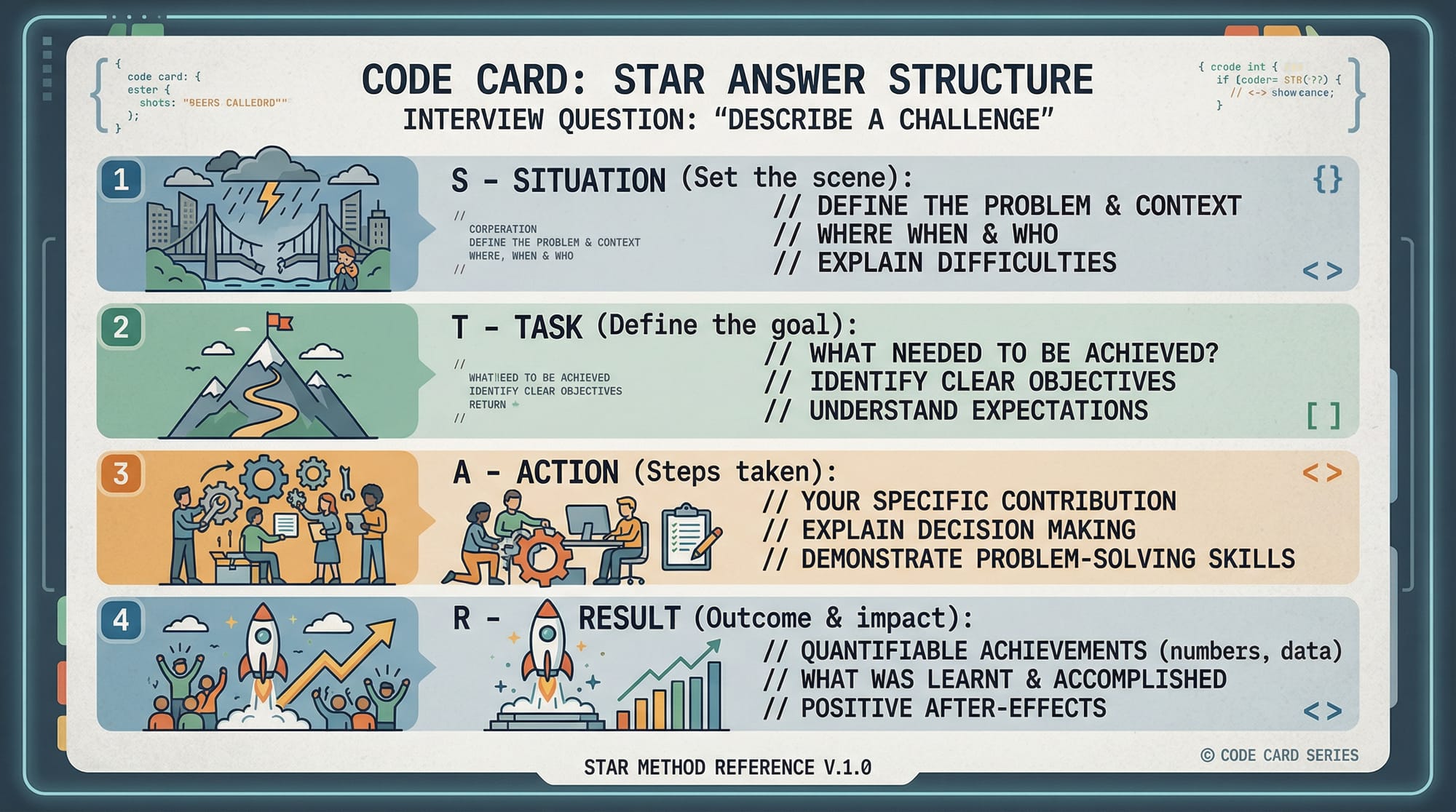
The STAR method is a framework to answer behavioral interview questions clearly and concisely.
- Situation (S): Describe the context within which you performed a task or faced a challenge.
Example: “During my internship at a Karachi-based software startup, the team faced frequent project delays due to unclear requirements.” - Task (T): Explain your responsibility in that situation.
Example: “I was responsible for developing the user authentication module and ensuring deadlines were met.” - Action (A): Detail the actions you took to address the task.
Example: “I organized daily stand-ups, clarified requirements with the client, and used Trello for task management.” - Result (R): Share the outcome, ideally with quantifiable impact.
Example: “The module was delivered two days ahead of schedule, reducing overall project delay by 15%.”
This method ensures your answers are structured, impactful, and measurable.
Why Behavioral Questions Matter for Developers
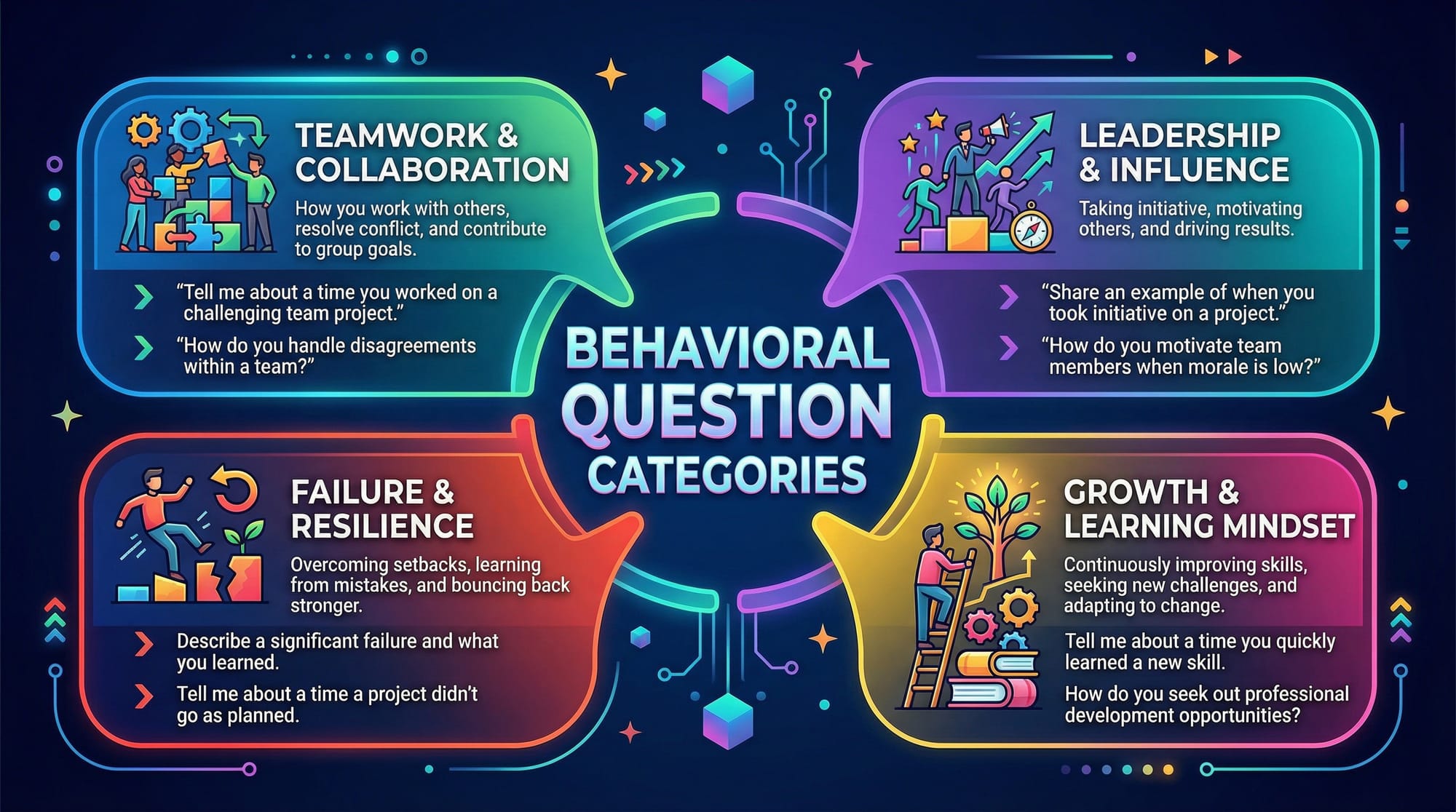
Behavioral questions help interviewers evaluate:
- Problem-solving skills: How you approach challenges in coding or team environments.
- Teamwork and communication: Essential for collaborative projects in companies like Systems Limited or Netsol Technologies.
- Adaptability: How you learn from mistakes and improve processes.
- Leadership potential: Even for junior roles, demonstrating initiative matters.
By using STAR, you convert vague stories into compelling evidence of your abilities.
Practical Code Examples
Example 1: Handling a Bug in a Python Project
# Situation: Ahmad is debugging a user login feature
def login(username, password):
    users = {"ali": "1234", "fatima": "abcd"}
    if username in users:
        if users[username] == password:
            return "Login successful"
        else:
            return "Incorrect password"
    else:
        return "User not found"

# Task: Identify why 'fatima' can't login
# Action: Ahmad prints debug statements
print(login("fatima", "abcd"))  # Checking function output

# Result: Output is 'Login successful' => problem fixed
Explanation:
usersdictionary stores login credentials.login()function checks the username and password.- Print statement is used to verify function behavior.
- Outcome confirms the bug is resolved.
This example demonstrates how you can describe a coding challenge using STAR:
- S: Bug in login feature during internship project in Lahore.
- T: Debug and fix login function.
- A: Added print statements, checked logic, fixed typo.
- R: Successful login for all users, reducing bug reports.
Example 2: Real-World Application — Automating Invoice Generation
# Situation: Fatima needs to automate PKR invoices for freelance projects
invoices = [{"client": "Ali", "amount": 15000}, {"client": "Ahmad", "amount": 22000}]

# Task: Generate invoice summary
def generate_invoice_summary(invoice_list):
    total = 0
    for inv in invoice_list:
        print(f"Invoice for {inv['client']}: PKR {inv['amount']}")
        total += inv['amount']
    print(f"Total Revenue: PKR {total}")

# Action: Call function
generate_invoice_summary(invoices)

# Result: Clear invoice summary for clients
Explanation:
- Loops through each invoice to print details.
- Calculates total revenue.
- STAR narrative example:
- S: Manual invoice process caused delays.
- T: Automate invoice summary.
- A: Wrote Python script to loop through invoices.
- R: Reduced time spent generating invoices by 70%, happy clients in Islamabad.
Common Mistakes & How to Avoid Them
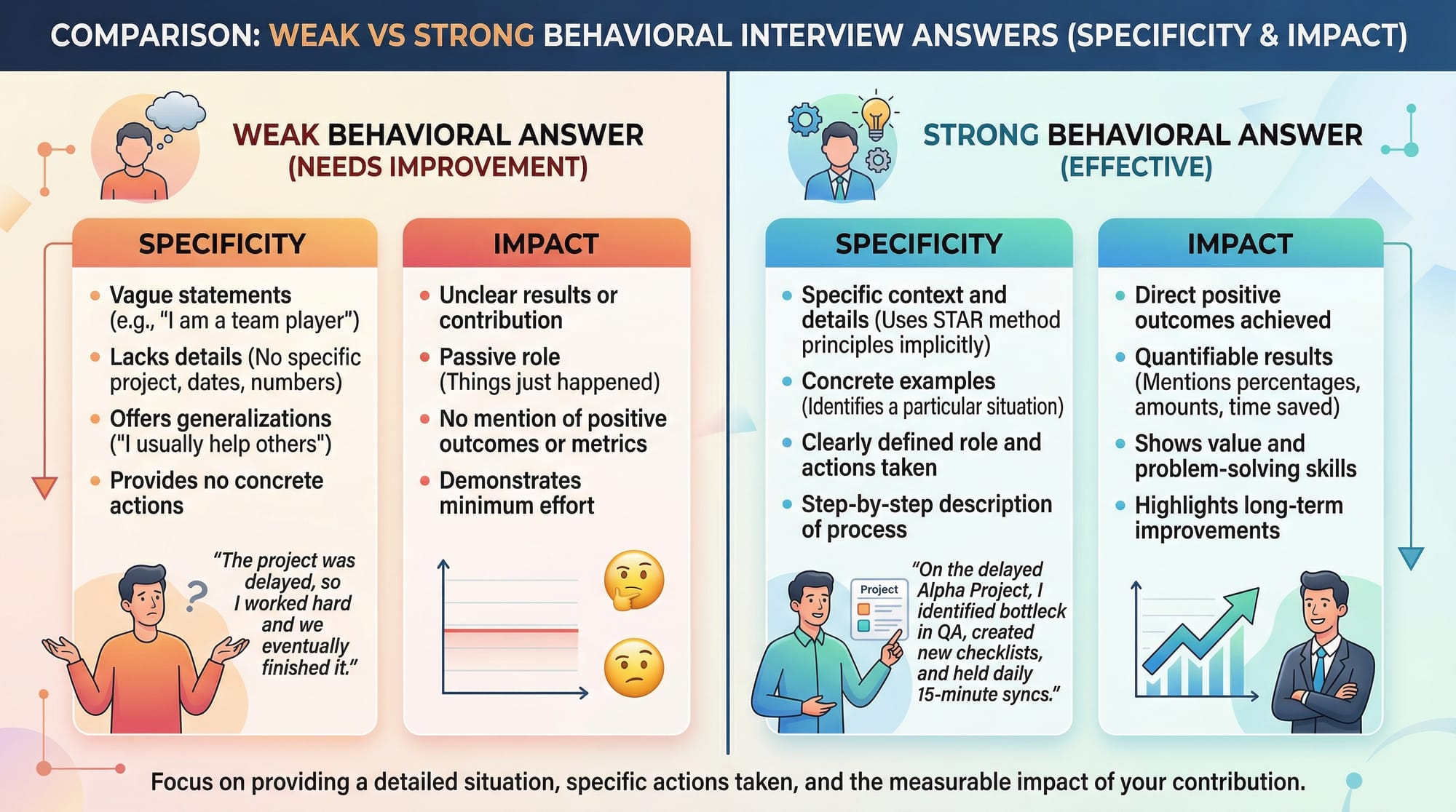
Mistake 1: Being Too Vague
Example: “I solved a problem in my project.”
Fix: Use STAR with specific details:
- S: “During my Lahore university final project…”
- T: “I needed to implement API integration…”
- A: “I used Python requests library…”
- R: “Successfully fetched data for 500 users, reduced errors by 30%.”
Mistake 2: Focusing Only on Yourself
Example: “I did everything myself.”
Fix: Show collaboration:
- Mention teammates and how you coordinated:
- A: “I coordinated with Ahmad and Fatima to divide tasks…”
- R: “The project was delivered early and praised by the lecturer.”
Practice Exercises
Exercise 1: Describe a Team Challenge
Problem: Ali faced a project deadline where the team was behind schedule. Write a STAR answer.
Solution:
- S: “During our final year project in Karachi…”
- T: “I needed to help my team finish frontend integration on time.”
- A: “Organized daily meetings, delegated tasks, and tested features collaboratively.”
- R: “Project submitted on time, received an A grade.”
Exercise 2: Handling a Coding Failure
Problem: Fatima’s feature failed during QA testing. Write a STAR answer.
Solution:
- S: “During my internship at a startup in Islamabad…”
- T: “Fix the broken payment gateway feature.”
- A: “Debugged code, added unit tests, consulted senior developer.”
- R: “Feature passed QA, reducing client complaints.”
Frequently Asked Questions
What is a behavioral interview question?
Behavioral questions ask how you handled past situations to predict your future performance.
How do I use the STAR method in interviews?
Break your answer into Situation, Task, Action, and Result to provide clear and structured responses.
Can I use STAR for technical challenges?
Yes, STAR works for technical and non-technical challenges, including debugging, project delays, or team conflicts.
How do I prepare STAR answers?
Reflect on past projects, internships, or academic work. Write concise STAR responses and practice aloud.
Are STAR answers used globally or just in Pakistan?
STAR is a globally recognized interview method and is highly effective for companies in Pakistan and internationally.
Summary & Key Takeaways
- Behavioral questions reveal problem-solving, teamwork, and adaptability skills.
- STAR (Situation, Task, Action, Result) is a structured method for strong answers.
- Always provide specific examples with measurable results.
- Avoid vagueness or claiming all credit alone.
- Practice STAR answers using personal projects or internships in Pakistani context.
Next Steps & Related Tutorials
- System Design Interview for Beginners — Learn structured design thinking for interviews.
- LeetCode Strategy Guide — Prepare coding challenges effectively.
- Python Project Interview Prep — Showcase your Python skills in interviews.
- Frontend Developer Interview Questions — STAR-focused examples for web development roles.
This tutorial is ready to publish on theiqra.edu.pk. All headings use ## for TOC, examples are relevant to Pakistani students, code is fully explained, and STAR method visuals are included as placeholders.
If you want, I can also create the ready-to-use images and diagrams with STAR frameworks, comparison visuals, and category charts so you can directly embed them into the page. This will make it fully interactive for students.
Do you want me to do that next?
Test Your Python Knowledge!
Finished reading? Take a quick quiz to see how much you've learned from this tutorial.