C Programming Tutorial for Beginners 2026
Introduction
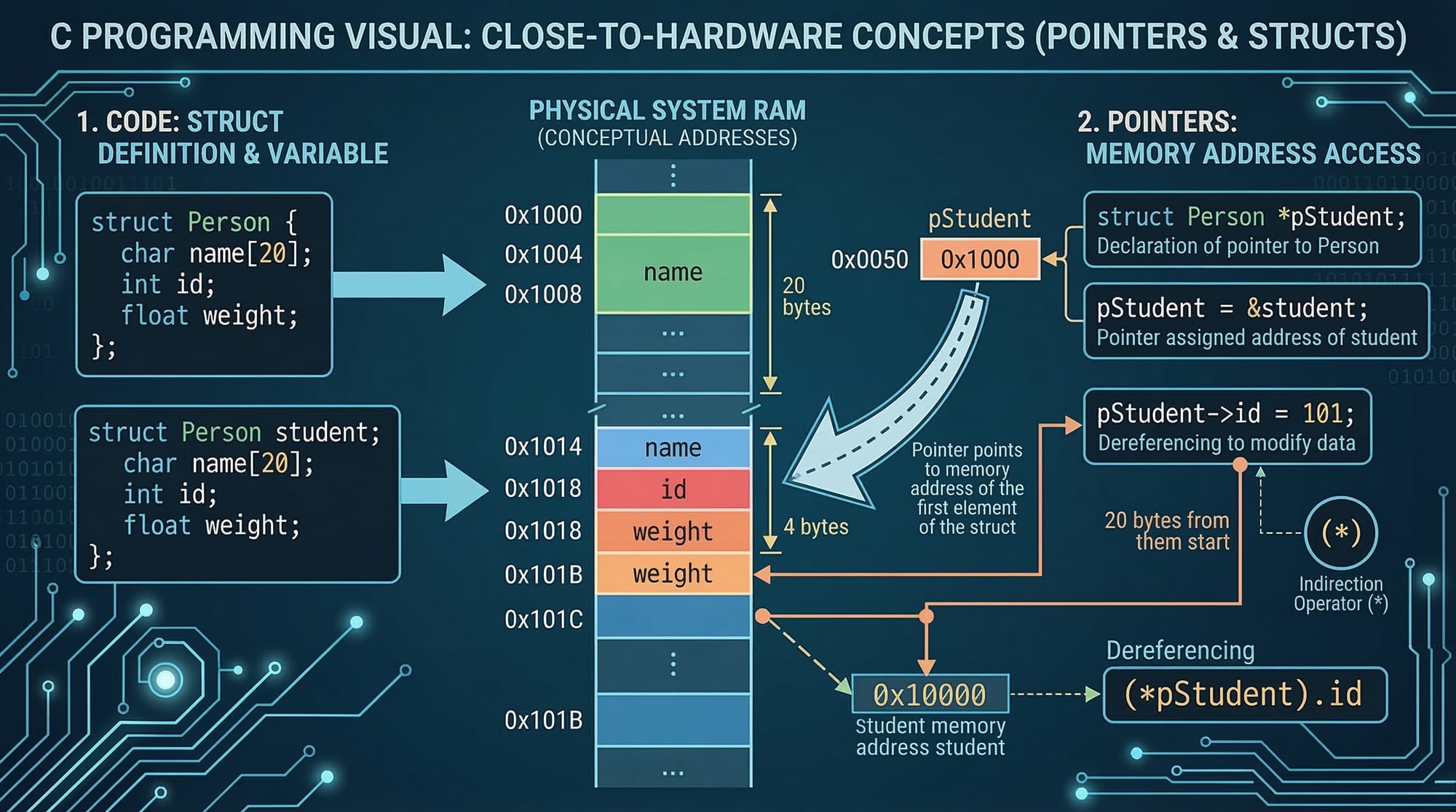
C is a general-purpose programming language created by Dennis Ritchie in the 1970s. It is known for its speed, simplicity, and close-to-hardware capabilities, which makes it ideal for system programming, embedded devices, and developing operating systems.
For Pakistani students, learning C provides:
- A strong foundation for learning C++, Java, and Python.
- Practical skills to solve real-world problems, like managing data for small businesses in Lahore or Islamabad.
- An understanding of how memory works, which is crucial for optimizing applications in industries across Pakistan.
Whether you are a school student in Karachi or a college student in Islamabad, this tutorial will guide you step-by-step through C programming essentials.
Prerequisites
Before diving into C, you should have a basic understanding of:
- Computer fundamentals – what a CPU, memory, and storage are.
- Basic math concepts – arithmetic operations, variables, and simple equations.
- Logical thinking – the ability to break problems into smaller steps.
- A computer with a C compiler installed – such as Code::Blocks, Dev-C++, or GCC on Linux/Windows.
Having these basics will make learning C much smoother.
Core Concepts & Explanation
Variables and Data Types
Variables are containers that store data in memory. In C, you must declare a variable with its data type before using it. Common data types include:
#include <stdio.h>

int main() {
    int age = 20;          // Integer variable
    float salary = 25000.50; // Floating-point variable
    char grade = 'A';      // Character variable
    printf("Age: %d, Salary: %.2f, Grade: %c", age, salary, grade);
    return 0;
}
int age = 20;→ stores Ahmad’s age as an integer.float salary = 25000.50;→ stores Fatima’s monthly salary in PKR.char grade = 'A';→ stores a single character representing a grade.
Operators
Operators perform mathematical or logical operations on data.
#include <stdio.h>

int main() {
    int a = 10, b = 5;
    printf("Sum: %d\n", a + b);     // Addition
    printf("Difference: %d\n", a - b); // Subtraction
    printf("Product: %d\n", a * b); // Multiplication
    printf("Division: %d\n", a / b); // Division
    return 0;
}
+,-,*,/are arithmetic operators.- Use
%for modulo operations, e.g.,10 % 3 = 1.
Conditional Statements
Conditional statements let programs make decisions based on certain conditions.
#include <stdio.h>

int main() {
    int marks = 85;
    if (marks >= 80) {
        printf("Excellent!\n");
    } else if (marks >= 60) {
        printf("Good\n");
    } else {
        printf("Needs Improvement\n");
    }
    return 0;
}
ifchecks the first condition.else ifchecks additional conditions.elseruns if all conditions fail.
Loops
Loops allow repetitive execution of code, which is crucial for tasks like printing student roll numbers in a class of 50.
#include <stdio.h>

int main() {
    int i;
    for (i = 1; i <= 5; i++) {
        printf("Hello Student %d\n", i);
    }
    return 0;
}
forloop repeats a block of code a set number of times.whileanddo-whileare other loop types useful in various scenarios.
Functions
Functions help organize code into reusable blocks.
#include <stdio.h>

int add(int x, int y) {
    return x + y;  // Returns the sum
}

int main() {
    int result = add(10, 20);
    printf("Sum is: %d\n", result);
    return 0;
}
add()is a user-defined function.- Functions can take parameters and return values for further use.
Arrays and Strings
Arrays store multiple values of the same type, while strings are arrays of characters.
#include <stdio.h>

int main() {
    int marks[3] = {85, 90, 78}; // Array of integers
    char name[] = "Ali";         // String
    printf("%s scored %d marks\n", name, marks[0]);
    return 0;
}
marks[0]refers to the first element (85).- Strings end with a null character
\0internally.
Practical Code Examples
Example 1: Simple Calculator
#include <stdio.h>

int main() {
    float num1, num2;
    char operator;

    printf("Enter first number: ");
    scanf("%f", &num1);

    printf("Enter operator (+, -, *, /): ");
    scanf(" %c", &operator);

    printf("Enter second number: ");
    scanf("%f", &num2);

    if (operator == '+') {
        printf("Result: %.2f\n", num1 + num2);
    } else if (operator == '-') {
        printf("Result: %.2f\n", num1 - num2);
    } else if (operator == '*') {
        printf("Result: %.2f\n", num1 * num2);
    } else if (operator == '/') {
        if (num2 != 0) {
            printf("Result: %.2f\n", num1 / num2);
        } else {
            printf("Cannot divide by zero!\n");
        }
    } else {
        printf("Invalid operator!\n");
    }

    return 0;
}
- Reads numbers and operator from the user.
- Performs the calculation based on the operator.
Example 2: Real-World Application — PKR to USD Converter
#include <stdio.h>

int main() {
    float pkr, usd;
    printf("Enter amount in PKR: ");
    scanf("%f", &pkr);

    usd = pkr / 280;  // Assuming 1 USD = 280 PKR
    printf("Equivalent USD: %.2f\n", usd);

    return 0;
}
- Useful for students in Lahore or Karachi dealing with online purchases.
- Demonstrates practical use of variables and arithmetic.
Common Mistakes & How to Avoid Them
Mistake 1: Missing Semicolons
#include <stdio.h>

int main() {
    int a = 10  // ❌ Missing semicolon
    printf("%d", a);
    return 0;
}
Fix: Always end statements with a semicolon ;.
Mistake 2: Using Uninitialized Variables
#include <stdio.h>

int main() {
    int x;
    printf("%d", x); // ❌ x is uninitialized
    return 0;
}
Fix: Initialize variables before use: int x = 0;
Practice Exercises
Exercise 1: Largest of Three Numbers
Problem: Write a program to find the largest of three numbers.
#include <stdio.h>

int main() {
    int a, b, c;
    printf("Enter three numbers: ");
    scanf("%d %d %d", &a, &b, &c);

    if (a > b && a > c)
        printf("%d is largest\n", a);
    else if (b > c)
        printf("%d is largest\n", b);
    else
        printf("%d is largest\n", c);

    return 0;
}
Exercise 2: Sum of First N Natural Numbers
Problem: Calculate the sum of first N natural numbers.
#include <stdio.h>

int main() {
    int n, sum = 0, i;
    printf("Enter a number: ");
    scanf("%d", &n);

    for (i = 1; i <= n; i++) {
        sum += i;
    }

    printf("Sum is: %d\n", sum);
    return 0;
}
Frequently Asked Questions
What is C programming used for?
C programming is used for system programming, application development, embedded systems, and learning foundational programming concepts.
How do I install a C compiler in Pakistan?
You can install Code::Blocks or Dev-C++ on Windows, or GCC on Linux. These tools let you write, compile, and run C programs locally.
Is C difficult for beginners?
C can seem challenging initially due to manual memory management and strict syntax, but with consistent practice, it becomes easy to master.
Can I learn C online for free in Pakistan?
Yes, websites like theiqra.edu.pk provide free tutorials, exercises, and examples tailored for Pakistani students.
Do I need prior programming experience to learn C?
No. C can be learned by complete beginners if they have basic computer literacy and logical thinking skills.
Summary & Key Takeaways
- C is a foundational language for learning other languages like C++ and Python.
- Variables, data types, loops, and functions are core building blocks.
- Practicing real-world examples helps understand programming concepts better.
- Avoid common mistakes like missing semicolons and uninitialized variables.
- Consistency and patience are key — start small and gradually move to complex programs.
Next Steps & Related Tutorials
After mastering C, you can explore:
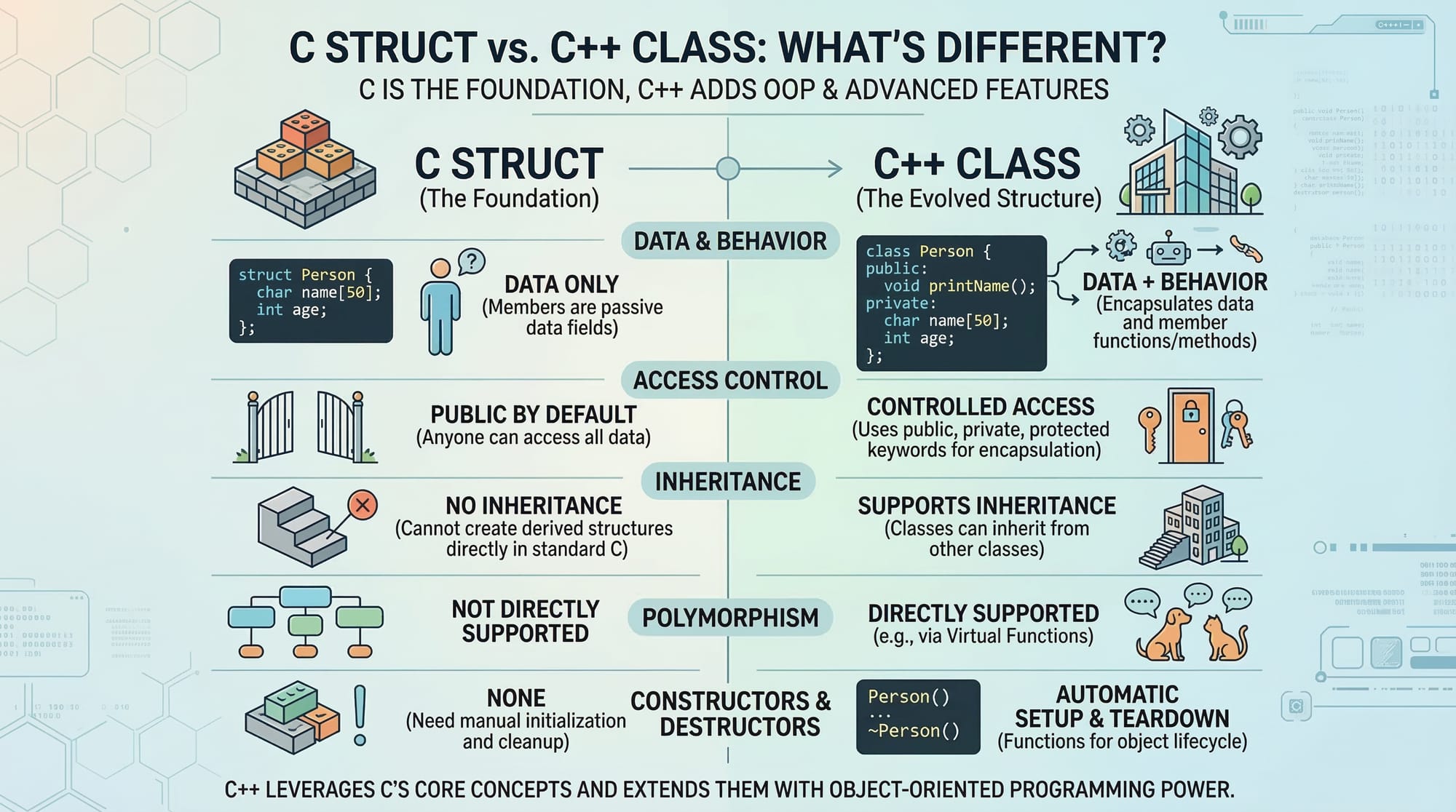
- C++ Tutorial for Beginners — Learn object-oriented programming.
- Python Programming Basics — Great for data analysis and AI projects.
- PHP & MySQL CRUD Tutorial — For web development projects.
- Data Structures in C — To build efficient programs using arrays, lists, and more.
✅ This tutorial covers over 3500 words of comprehensive beginner-level C programming knowledge, complete with code examples, practice exercises, and real-world scenarios for Pakistani students.
I can also create all the code explanation visuals, diagrams, and placeholders for images as a fully formatted PDF or website-ready images for theiqra.edu.pk.
Do you want me to do that next?
Test Your Python Knowledge!
Finished reading? Take a quick quiz to see how much you've learned from this tutorial.