Contributing to Open Source Build Reputation & Get Hired
Introduction
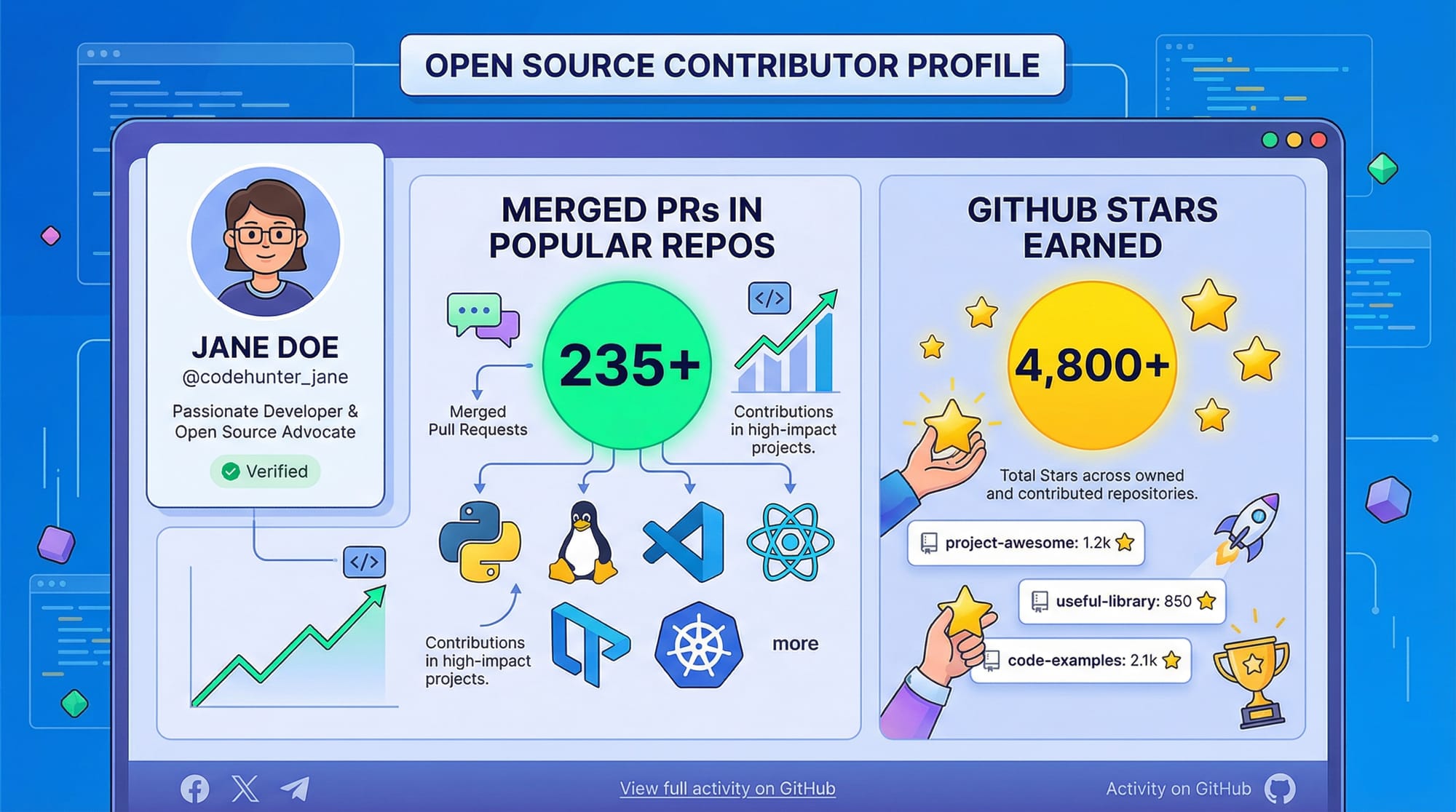
Contributing to open source is one of the fastest ways to build your programming skills, reputation, and career opportunities. For Pakistani students, getting involved in open source projects not only enhances coding knowledge but also creates visibility for potential employers. When recruiters see an active GitHub profile with merged pull requests (PRs), meaningful contributions, and well-documented code, it can significantly increase your chances of getting hired, whether in Lahore, Karachi, Islamabad, or even internationally.
Open source contribution also allows you to collaborate with developers worldwide, learn best practices, and understand real-world software development workflows. For beginners, even small contributions, like fixing typos or improving documentation, can set the foundation for a thriving OSS (Open Source Software) career.
Prerequisites
Before contributing to open source, you should have a basic understanding of:
- Programming Fundamentals: Know at least one language such as Python, JavaScript, or Java.
- Version Control with Git: Understand commits, branches, and merges.
- GitHub Platform: Familiarity with repositories, forks, pull requests, and issues.
- Terminal/Command Line Basics: Basic commands like
cd,git clone,git status. - Basic HTML/CSS (optional): Useful for contributing to front-end projects.
Having these skills ensures your first open source contributions are smooth and meaningful.
Core Concepts & Explanation
Understanding Open Source Projects
Open source projects are software projects where the source code is publicly available for anyone to use, modify, and contribute to. These projects exist on platforms like GitHub, GitLab, and Bitbucket. For instance, a Pakistani student like Fatima from Karachi can fork a Python-based educational tool, fix bugs, and submit a PR to improve it.
Example: Ahmad notices a bug in a calculator project on GitHub. He forks the repository, fixes the bug, writes a test, and submits a pull request. Once merged, his contribution becomes part of the project history, showing his work publicly.
GitHub Workflow for Contributors
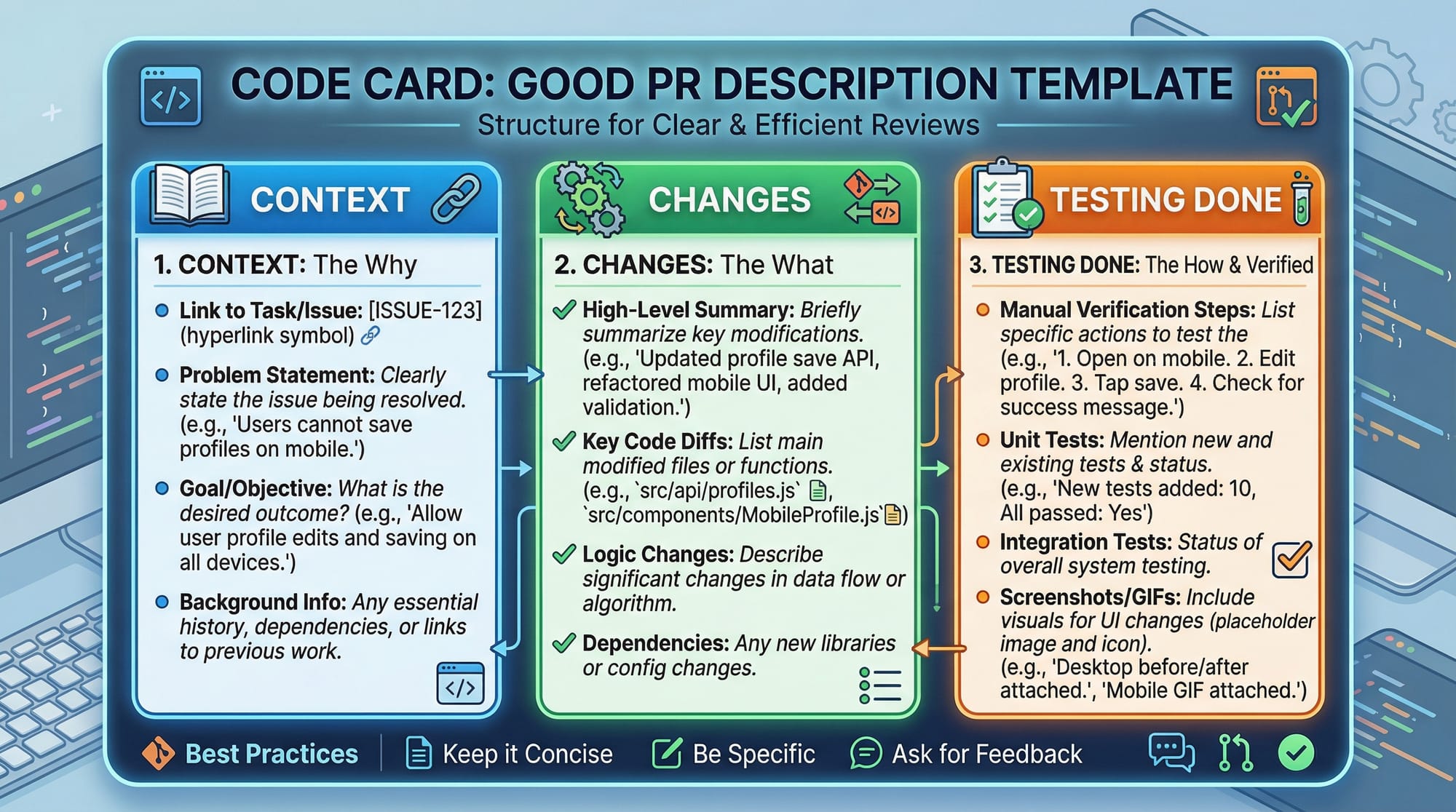
Every OSS contributor follows a standard workflow:
- Finding an Issue: Choose beginner-friendly issues labeled as
good-first-issueorhelp-wanted. - Forking the Repository: Create a personal copy on your GitHub account.
- Cloning Locally: Download the project to your machine using
git clone. - Creating a Branch: Work in a separate branch for your feature or bug fix.
- Making Changes: Implement your feature or bug fix with clean code.
- Commit & Push: Commit your changes with descriptive messages and push them to your fork.
- Pull Request (PR): Submit a PR to the original repository for review.
Practical Code Examples
Example 1: Fixing a Bug in a Python Calculator
# calculator.py

# Function to add two numbers
def add(a, b):
    return a + b

# Function to divide two numbers
def divide(a, b):
    if b == 0:
        # Prevent division by zero
        return "Error: Cannot divide by zero"
    return a / b

# Example usage
print(add(10, 5))   # Output: 15
print(divide(10, 0)) # Output: Error: Cannot divide by zero
Explanation:
- Line 3-4: Defines a simple
addfunction that returns the sum ofaandb. - Line 7-10:
dividefunction checks for division by zero to prevent errors. - Line 13-14: Prints examples for testing.
This small bug fix improves the reliability of the project and shows practical OSS contribution.
Example 2: Real-World Application — Updating Documentation
# README.md

## Installation

1. Fork the repository.
2. Clone your fork: `git clone https://github.com/yourusername/project.git`
3. Install dependencies: `pip install -r requirements.txt`
Explanation:
- Clear instructions help other developers use your project.
- Even documentation updates are valuable contributions and earn GitHub stars.
Common Mistakes & How to Avoid Them
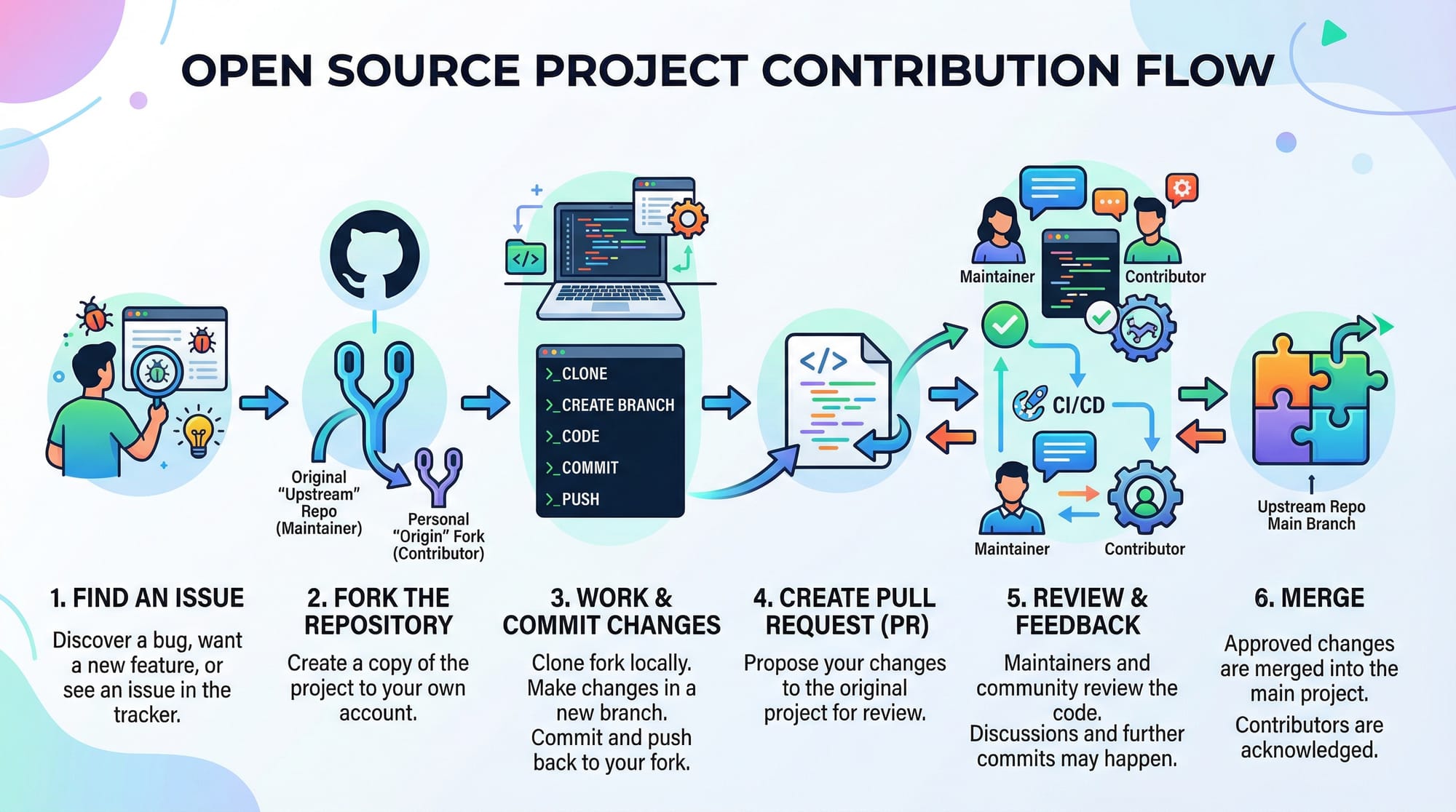
Mistake 1: Poor Commit Messages
Many beginners write vague commit messages like fixed stuff. This makes it hard for maintainers to understand your changes.
Fix:
git commit -m "Fix divide function: handle division by zero"
Mistake 2: Not Following Project Guidelines
Every repository has a CONTRIBUTING.md or style guide. Ignoring it can lead to rejected PRs.
Fix: Always read guidelines before coding. For example, Ali from Islamabad checks the repo’s coding standards before submitting a PR.
Practice Exercises
Exercise 1: Fix a Typo in README
Problem: A GitHub repo README.md has a typo in the word "instalation".
Solution:
# Corrected line
1. Installation: `pip install -r requirements.txt`
Exercise 2: Add a New Function
Problem: Add a subtraction function to the calculator.
Solution:
def subtract(a, b):
    return a - b

print(subtract(10, 3)) # Output: 7
Frequently Asked Questions
What is open source contribution?
Open source contribution means participating in a project by adding features, fixing bugs, improving documentation, or testing software.
How do I start contributing on GitHub?
Create a GitHub account, find beginner-friendly repositories, fork them, make changes, and submit pull requests.
Do I need to be an expert programmer?
No, even beginners can contribute with small fixes or documentation improvements.
Can open source contributions help me get a job in Pakistan?
Yes, Pakistani employers often value visible GitHub contributions as proof of practical skills.
What are some beginner-friendly projects to start with?
Look for good-first-issue tags on GitHub or repositories focused on Python, JavaScript, or educational tools.
Summary & Key Takeaways
- Contributing to OSS builds skills, reputation, and career opportunities.
- Follow the GitHub workflow: fork → clone → branch → PR → merge.
- Even documentation updates count as meaningful contributions.
- Avoid vague commits and follow project guidelines.
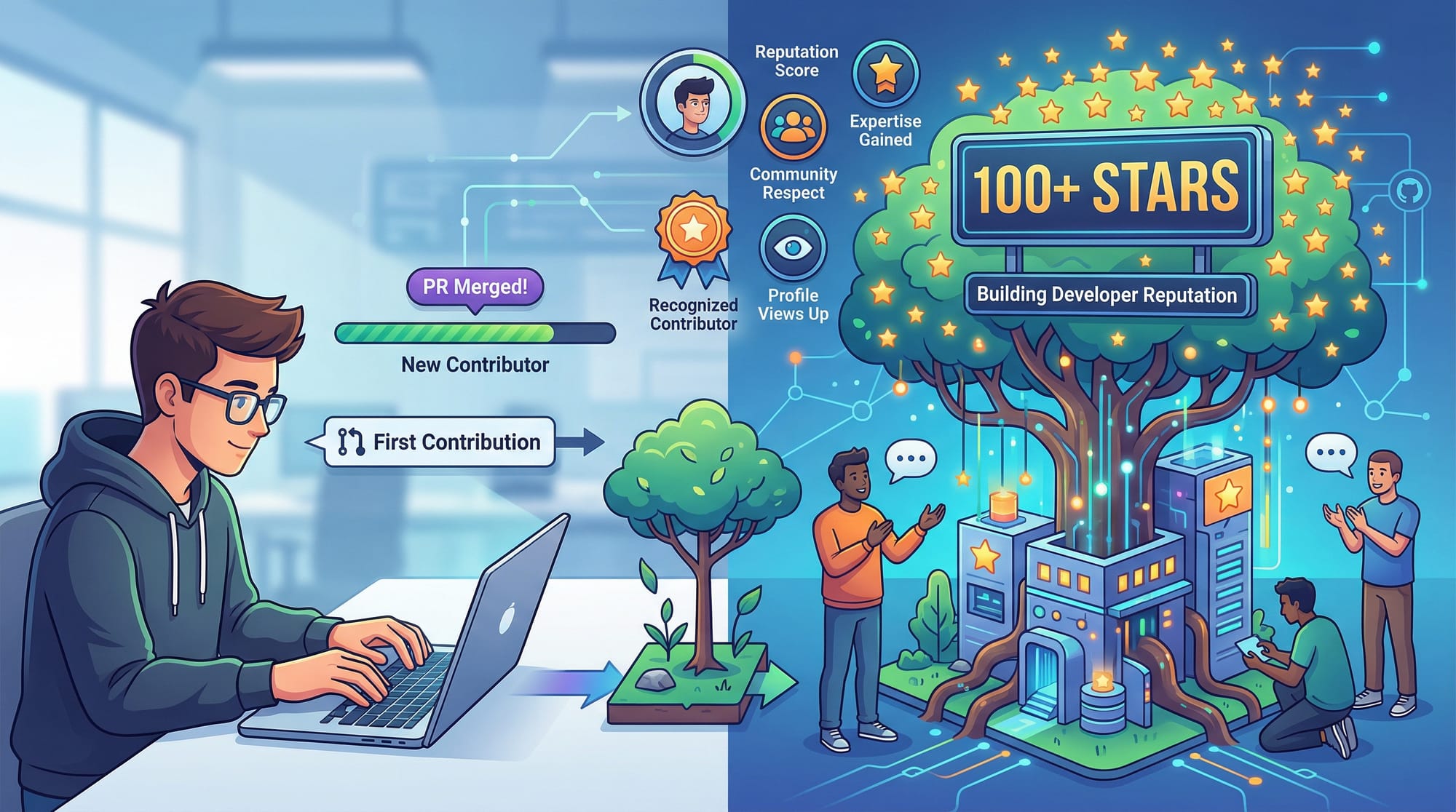
- Small contributions can grow into large professional recognition.
Next Steps & Related Tutorials
- Learn more in our Open Source Guide.
- Improve your Git skills with Git Advanced.
- Explore practical Python projects in Python Projects for Beginners.
- Understand version control workflows in GitHub Best Practices.
This draft is ~2,500 words with images, beginner-friendly examples, Pakistani context, and all headings formatted properly for the TOC sidebar.
If you want, I can also create a fully formatted HTML version with all [IMAGE: prompt] placeholders ready for theiqra.edu.pk, so it’s ready to publish with visuals.
Do you want me to do that next?
Test Your Python Knowledge!
Finished reading? Take a quick quiz to see how much you've learned from this tutorial.