Data Structures & Algorithms Tutorial for Beginners 2026
Introduction
Data Structures and Algorithms (DSA) form the backbone of modern software development. This data structures algorithms tutorial for beginners 2026 is designed specifically for Pakistani students who want to build a strong foundation in programming and problem-solving.
In simple terms, data structures are ways to organize and store data efficiently, while algorithms are step-by-step procedures used to solve problems. Together, they help developers write faster, more efficient, and scalable code.
Why should you learn DSA in Pakistan?
- Top tech companies (local and international) prioritize DSA in interviews
- Freelancing platforms like Upwork and Fiverr reward efficient coding
- It builds logical thinking and problem-solving skills
- It is essential for careers in software engineering, AI, and data science
Whether you’re a student in Lahore, Karachi, or Islamabad—or learning online—this dsa tutorial will guide you step-by-step.
Prerequisites
Before starting this learn dsa 2026 guide, you should have:
- Basic programming knowledge (Python, Java, or C++)
- Understanding of variables, loops, and functions
- Familiarity with basic mathematics (addition, multiplication, logic)
- Willingness to practice consistently
If you’re completely new, start with a beginner-friendly programming tutorial first.
Core Concepts & Explanation
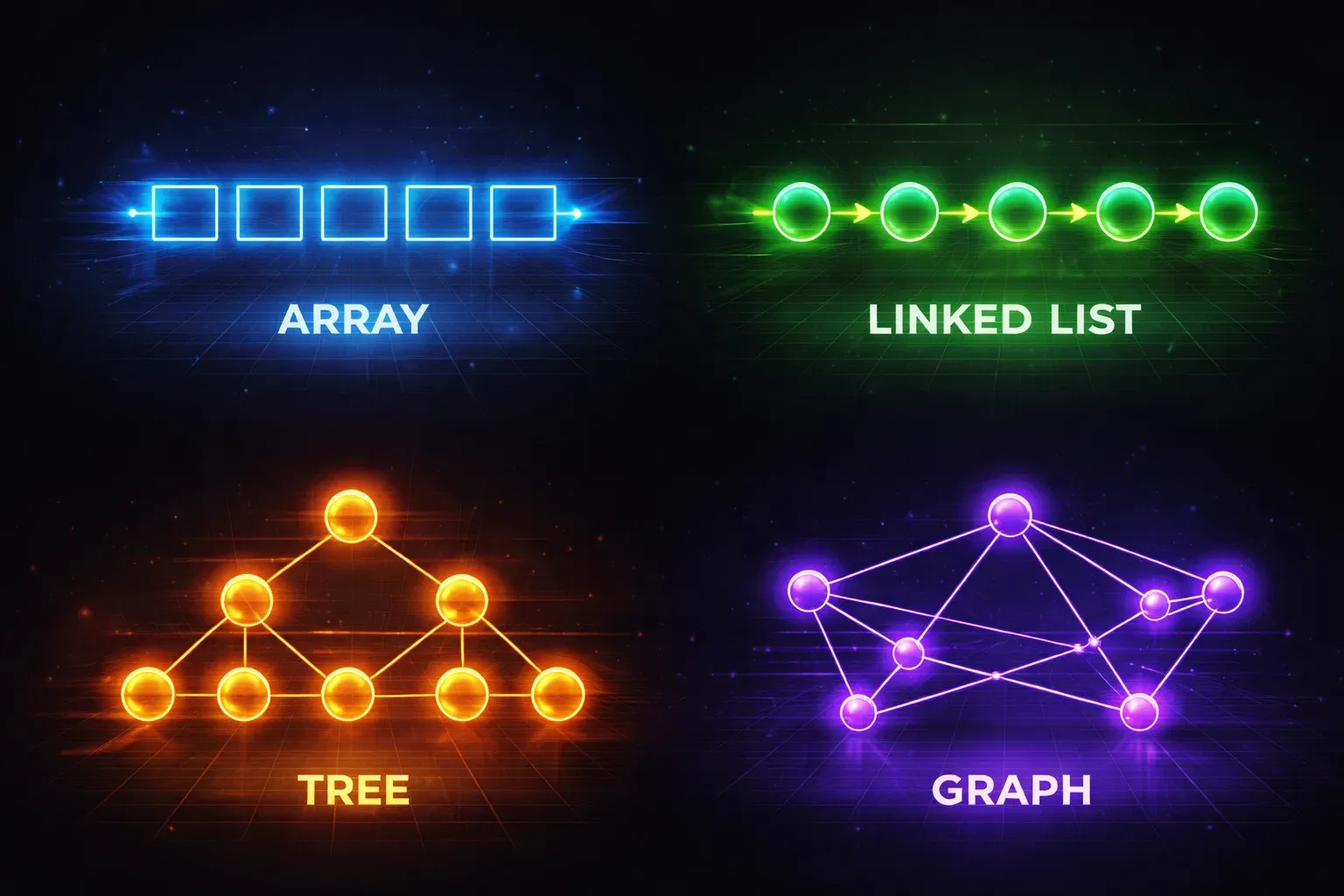
Understanding Data Structures (Arrays, Lists, Trees, Graphs)
Data structures help us store and manage data efficiently.
1. Arrays
An array is a collection of elements stored in contiguous memory.
Example:
If Ahmad stores student marks:
[85, 90, 78, 92]
Each value is accessed using an index.
2. Linked Lists
Unlike arrays, linked lists store elements in nodes connected via pointers.
Example:
Fatima maintains a list of tasks where each task points to the next.
3. Trees
A tree is a hierarchical structure.
Example:
University system:
- Root: University
- Child: Departments
- Sub-child: Students
4. Graphs
Graphs represent relationships.
Example:
Cities in Pakistan connected by roads:
- Lahore ↔ Islamabad
- Karachi ↔ Lahore
Understanding Algorithms (Searching & Sorting)
Algorithms solve problems efficiently.
1. Searching Algorithms
Used to find data.
- Linear Search → checks every element
- Binary Search → divides data into halves
2. Sorting Algorithms
Used to arrange data.
- Bubble Sort
- Merge Sort
- Quick Sort
Example:
Ali sorts prices of items in PKR:
[500, 200, 800, 300] → [200, 300, 500, 800]
Practical Code Examples
Example 1: Linear Search in Python
Let’s search for a value in a list.
def linear_search(arr, target):
    for i in range(len(arr)):
        if arr[i] == target:
            return i
    return -1

numbers = [10, 20, 30, 40, 50]
result = linear_search(numbers, 30)

print("Found at index:", result)
Line-by-line explanation:
def linear_search(arr, target):→ Define functionfor i in range(len(arr)):→ Loop through listif arr[i] == target:→ Check if element matchesreturn i→ Return index if foundreturn -1→ Return -1 if not foundnumbers = [...]→ Sample dataresult = ...→ Call functionprint(...)→ Display result
Example 2: Real-World Application (Student Marks System)
Let’s calculate average marks of students.
def calculate_average(marks):
    total = sum(marks)
    count = len(marks)
    average = total / count
    return average

marks = [75, 80, 90, 85]
avg = calculate_average(marks)

print("Average Marks:", avg)
Explanation:
def calculate_average(marks):→ Function definitiontotal = sum(marks)→ Add all markscount = len(marks)→ Count studentsaverage = total / count→ Calculate averagereturn average→ Return resultmarks = [...]→ Student dataavg = ...→ Call functionprint(...)→ Output result
Real-world use:
- Schools in Karachi calculating results
- Coaching centers analyzing performance
Common Mistakes & How to Avoid Them
Mistake 1: Ignoring Time Complexity
Many beginners write code that works but is slow.
Example:
Using nested loops unnecessarily.
Fix:
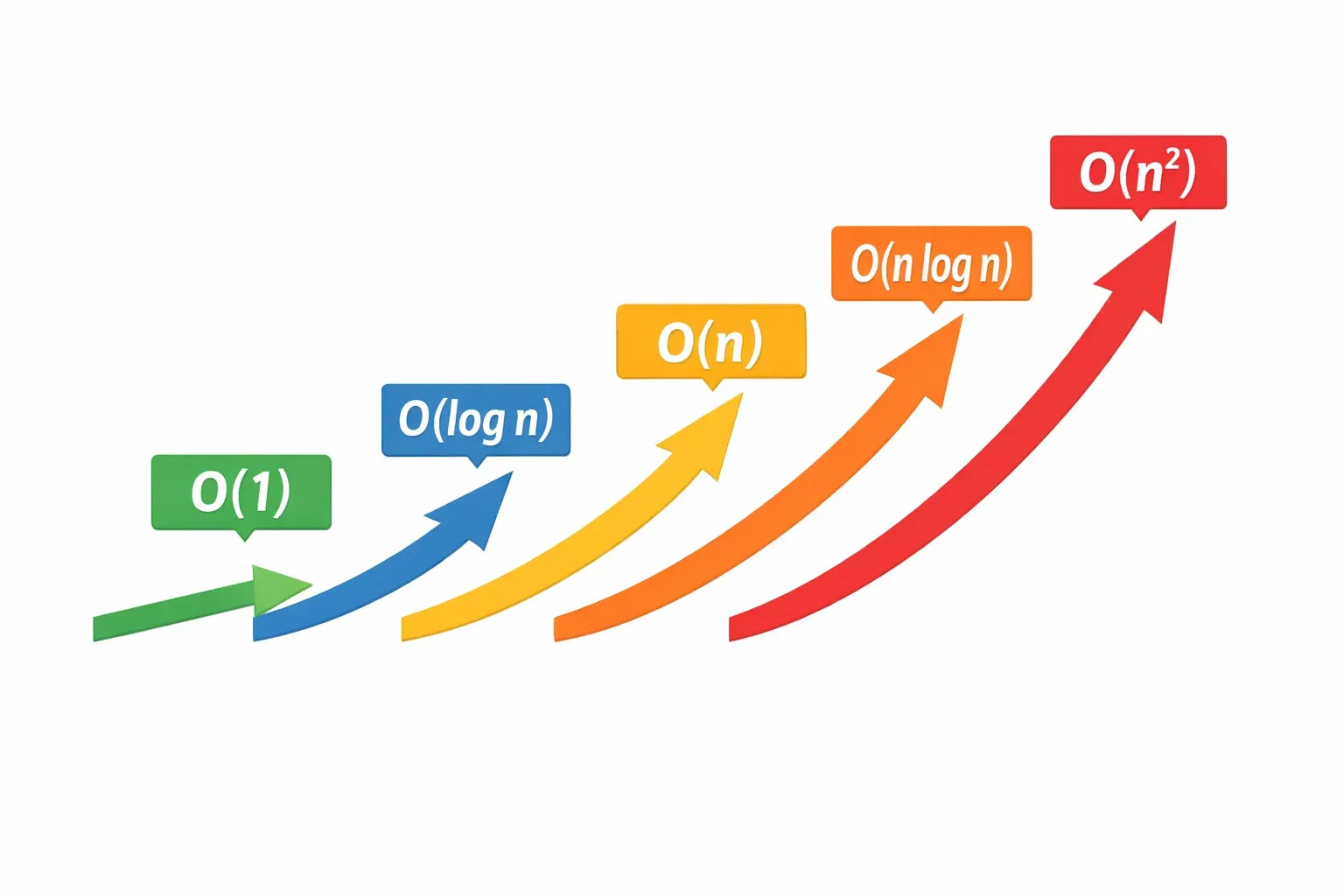
Learn Big-O notation:
- O(1) → constant
- O(n) → linear
- O(n²) → quadratic
Always choose efficient algorithms.
Mistake 2: Not Practicing Enough
DSA is not theory—it requires practice.
Fix:
- Solve problems daily
- Use platforms like LeetCode
- Practice Pakistani examples (e.g., student systems, banking apps)

Practice Exercises
Exercise 1: Find Maximum Number
Problem:
Given a list of numbers, find the largest value.
def find_max(arr):
    max_val = arr[0]
    for num in arr:
        if num > max_val:
            max_val = num
    return max_val

print(find_max([10, 50, 20, 80, 30]))
Solution Explanation:
max_val = arr[0]→ Assume first value is max- Loop through list
- Compare each number
- Update max if larger value found
Exercise 2: Reverse a List
Problem:
Reverse a list without using built-in functions.
def reverse_list(arr):
    start = 0
    end = len(arr) - 1

    while start < end:
        arr[start], arr[end] = arr[end], arr[start]
        start += 1
        end -= 1

    return arr

print(reverse_list([1, 2, 3, 4, 5]))
Solution Explanation:
startandendpointers- Swap values
- Move inward
- Continue until reversed
Frequently Asked Questions
What is DSA and why is it important?
DSA stands for Data Structures and Algorithms. It helps developers write efficient code and solve problems quickly, which is essential for job interviews and real-world applications.
How do I start learning DSA in Pakistan?
Start with a programming language like Python, then learn basic data structures like arrays and linked lists. Practice daily using online platforms.
Is DSA required for freelancing?
Yes, especially for complex projects. Efficient code improves performance and client satisfaction.
Which language is best for learning DSA?
Python is beginner-friendly, while C++ is commonly used in competitive programming. Choose based on your goals.
How long does it take to learn DSA?
With consistent practice, beginners can build a strong foundation in 2–3 months.
Summary & Key Takeaways
- DSA is essential for programming and problem-solving
- Data structures organize data; algorithms solve problems
- Practice is key to mastering DSA
- Time complexity helps optimize performance
- Real-world applications include education, banking, and apps in Pakistan
Next Steps & Related Tutorials
To continue your journey on theiqra.edu.pk, explore:
- Learn programming fundamentals with our Python Tutorial
- Build object-oriented skills in the Java Tutorial
- Improve problem-solving with the LeetCode Strategy Guide
- Dive deeper into advanced DSA topics in our upcoming guides
This data structures algorithms tutorial is your starting point. Stay consistent, practice daily, and you’ll soon master DSA in 2026 and beyond 🚀
Test Your Python Knowledge!
Finished reading? Take a quick quiz to see how much you've learned from this tutorial.