Design Patterns GoF Patterns Complete Guide 2026
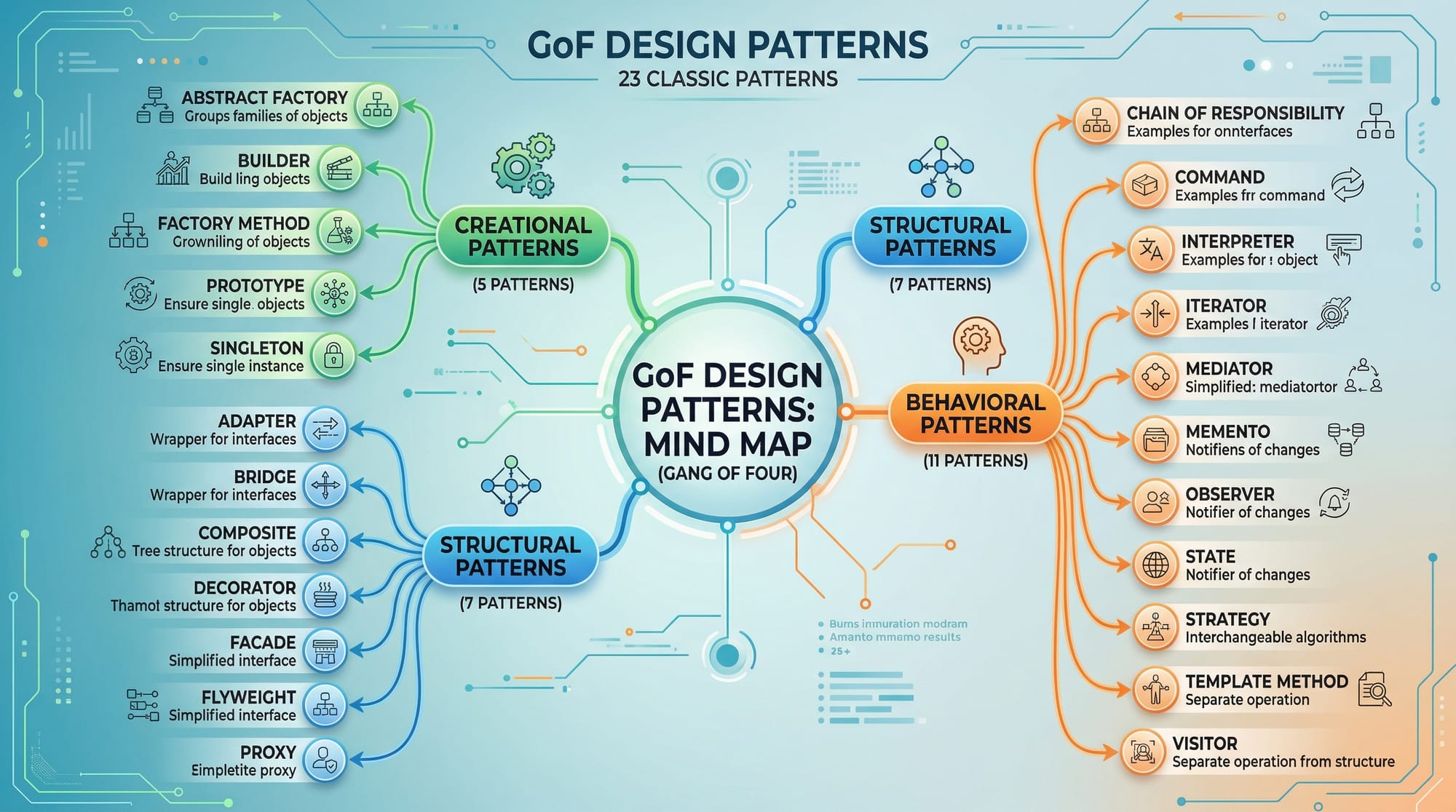
Welcome to the Design Patterns: GoF Patterns Complete Guide 2026! If you’re a Pakistani student diving into programming and software engineering, understanding design patterns will elevate your coding from “works” to “works efficiently, flexibly, and professionally.” This guide covers Gang of Four (GoF) design patterns—creational, structural, and behavioral patterns—with practical examples, code snippets, and exercises relevant for Pakistani students in Lahore, Karachi, Islamabad, and beyond.
Design patterns are proven solutions to common software problems. They help you write cleaner, maintainable, and reusable code—skills highly valued in the tech industry in Pakistan and globally. By mastering GoF patterns, you’ll gain confidence to tackle real-world software challenges in Python, Java, C++, or any object-oriented language.
Prerequisites
Before diving in, you should have a solid understanding of:
- Object-Oriented Programming (OOP) concepts: classes, objects, inheritance, polymorphism, and encapsulation.
- Basic programming in Python or Java (we’ll use Python for examples).
- Software design principles, especially SOLID principles.
- Familiarity with common software problems, like object creation, code maintainability, and component interactions.
- Basic understanding of algorithms and data structures.
Core Concepts & Explanation
Design patterns are divided into three main categories: creational, structural, and behavioral.
Creational Patterns: Simplifying Object Creation
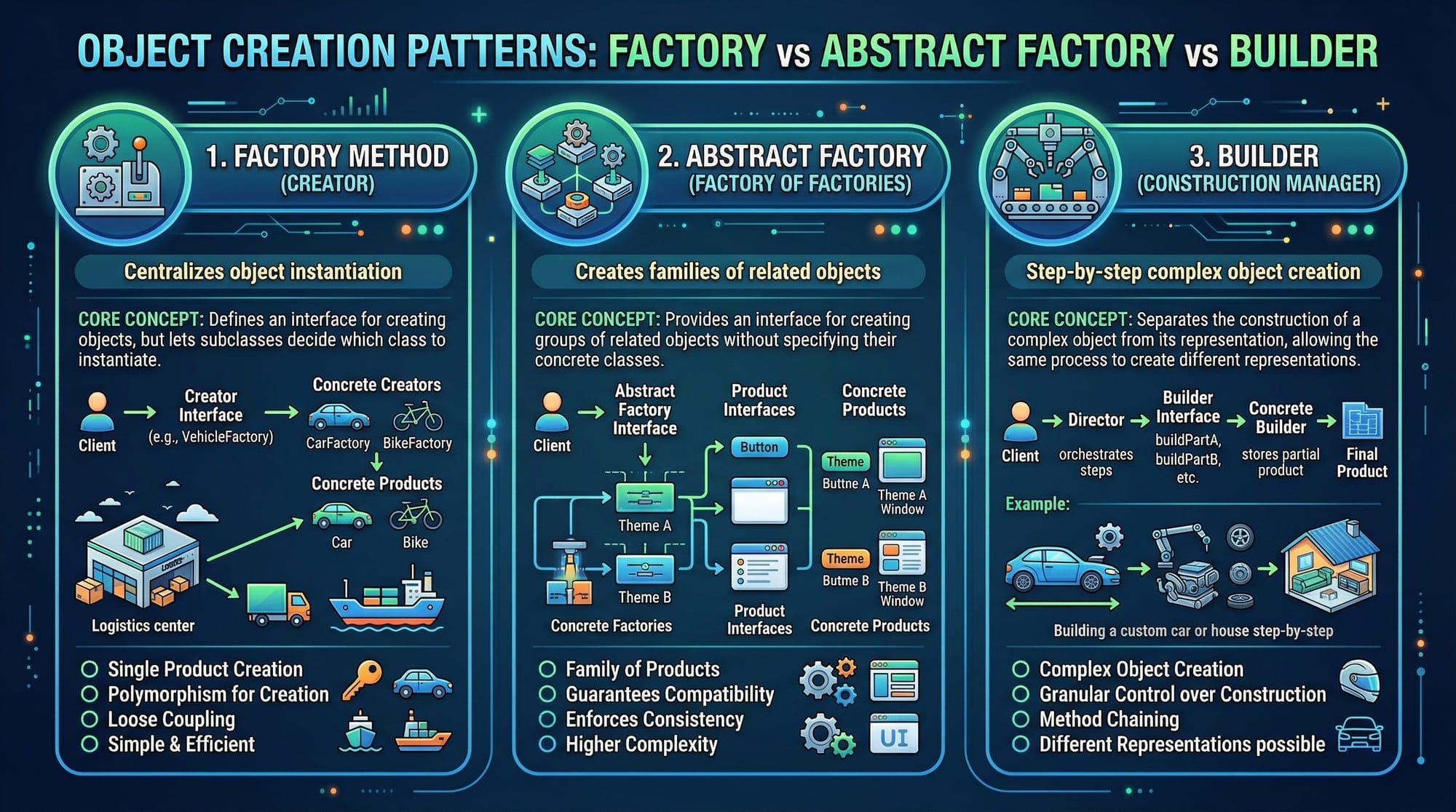
Creational patterns handle object creation mechanisms, optimizing flexibility and reuse. They help manage complex construction logic, and reduce tight coupling. Examples include Singleton, Factory Method, Abstract Factory, Builder, Prototype.
Example Concept: Suppose Ahmad wants to manage multiple types of bank accounts (saving, current, fixed deposit) in Karachi. Instead of writing separate code for each, a Factory pattern creates accounts dynamically at runtime.
Structural Patterns: Organizing Classes and Objects
Structural patterns deal with object composition, making it easier to structure large codebases. Common patterns include Adapter, Composite, Decorator, Facade, Proxy, Bridge, Flyweight.
Example Concept: Fatima is designing an online bookstore in Lahore. She uses the Facade pattern to provide a simple interface for multiple subsystems: payments, inventory, and shipping.
Behavioral Patterns: Managing Object Communication
Behavioral patterns define how objects interact and communicate, improving flexibility in communication logic. Examples include Observer, Strategy, Command, Iterator, Mediator, State, Template Method.
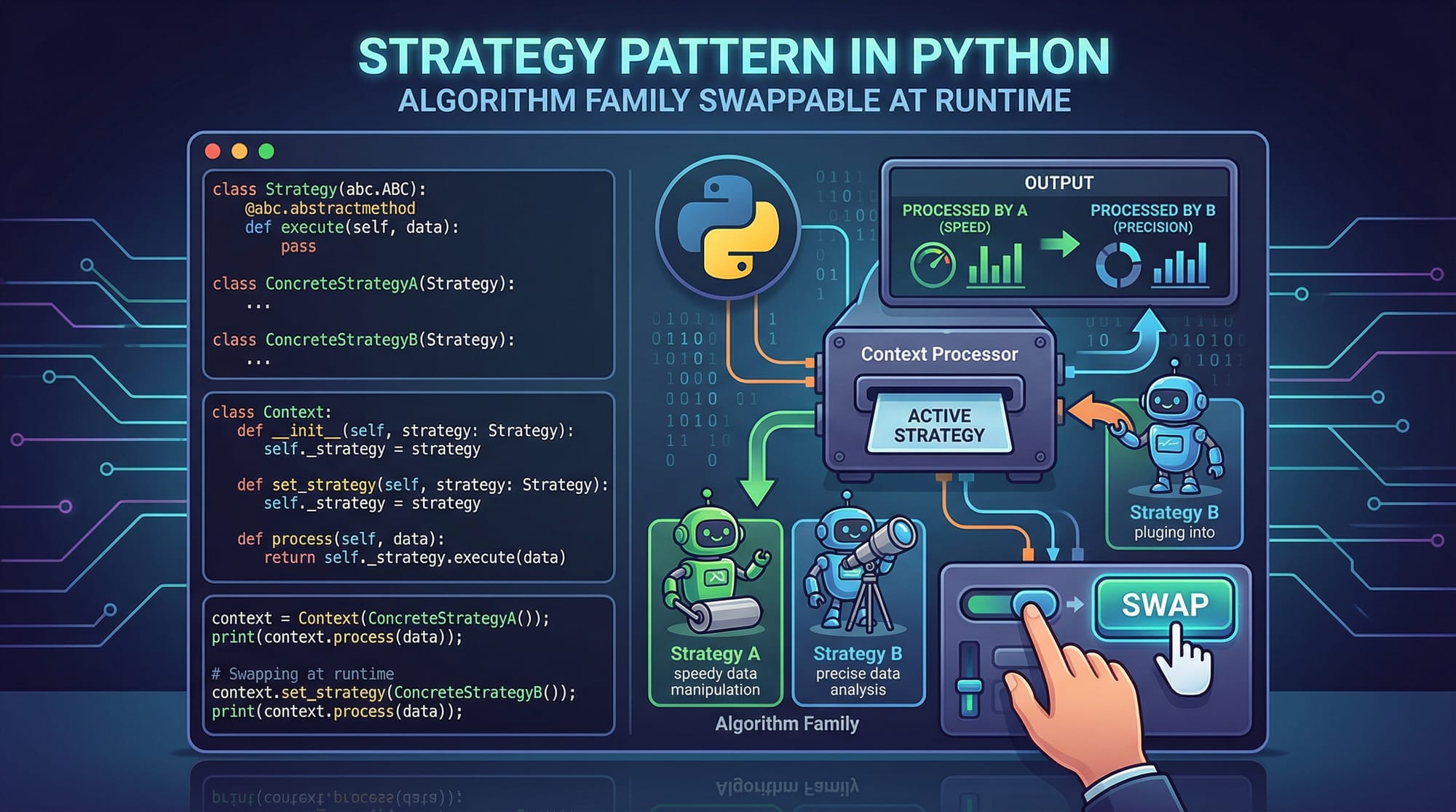
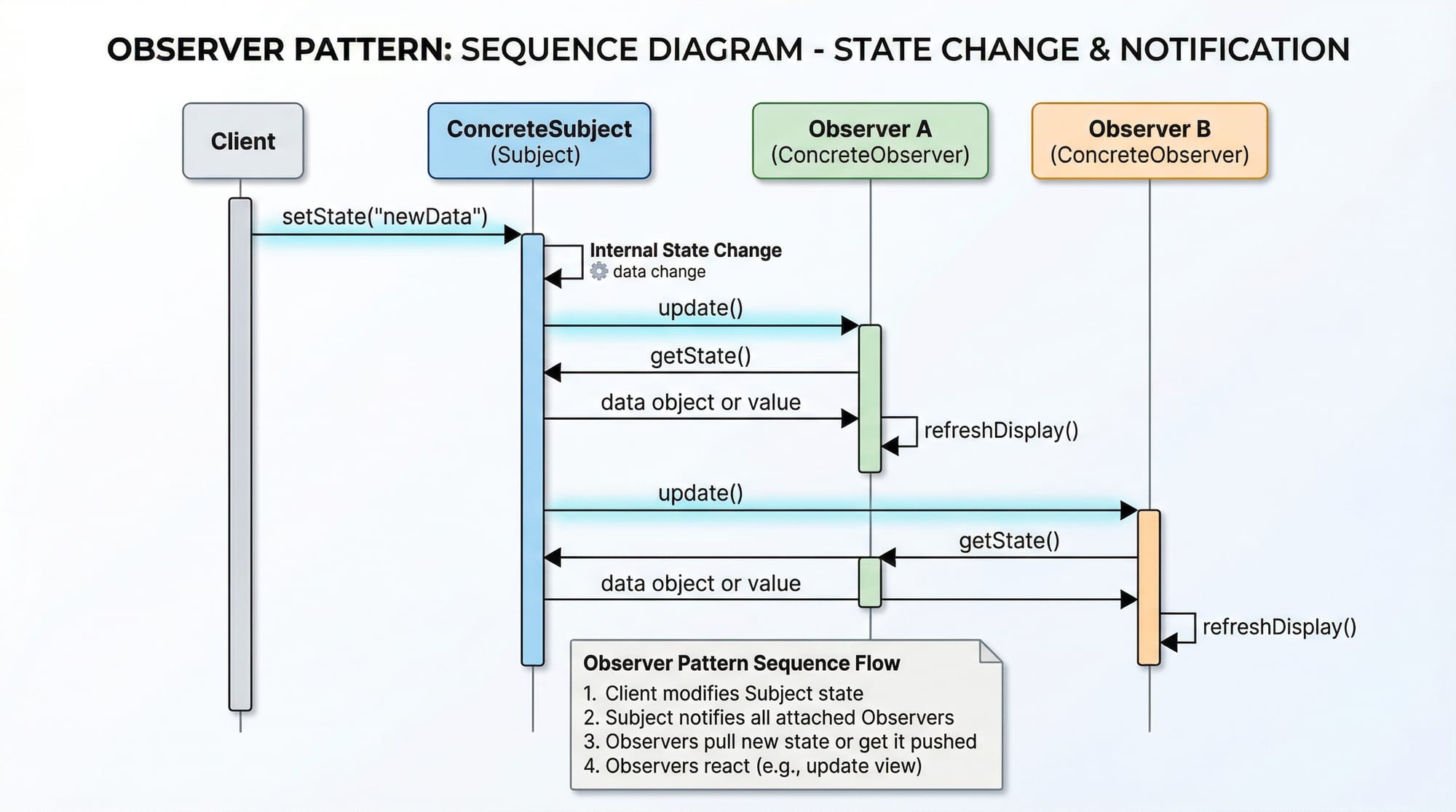
Example Concept: Ali develops a notification system for Islamabad schools. Using the Observer pattern, the system notifies students via SMS or email whenever a new assignment is posted.
Practical Code Examples
Example 1: Singleton Pattern — Ensuring a Single Instance
# Singleton pattern ensures only one instance exists
class DatabaseConnection:
    _instance = None

    def __new__(cls):
        # Line 1: Check if an instance already exists
        if cls._instance is None:
            cls._instance = super(DatabaseConnection, cls).__new__(cls)
            # Line 2: Initialize the connection
            cls._instance.connection = "Connected to Karachi DB"
        return cls._instance

# Line 3: Create first instance
db1 = DatabaseConnection()
print(db1.connection)

# Line 4: Create second instance
db2 = DatabaseConnection()
print(db2.connection)

# Line 5: Confirm both instances are same
print(db1 is db2)  # True
Explanation:
- Line 1-2: Checks if an instance exists; if not, creates and initializes it.
- Line 3-4: Any number of
DatabaseConnection()calls return the same instance. - Line 5: Ensures memory efficiency and consistent DB connection.
Example 2: Observer Pattern — Real-World Application
# Observer pattern: Subject notifies observers of state changes
class Subject:
    def __init__(self):
        self.observers = []
        self.state = None

    def attach(self, observer):
        self.observers.append(observer)

    def set_state(self, state):
        self.state = state
        self.notify_all()

    def notify_all(self):
        for observer in self.observers:
            observer.update(self.state)

class StudentObserver:
    def __init__(self, name):
        self.name = name

    def update(self, assignment):
        print(f"{self.name} received new assignment: {assignment}")

# Usage
school_subject = Subject()
student1 = StudentObserver("Ali")
student2 = StudentObserver("Fatima")
school_subject.attach(student1)
school_subject.attach(student2)
school_subject.set_state("Math Homework")
Explanation:
Subjectmaintains state and a list of observers.StudentObserverreacts when notified.- This mimics a Pakistani school notification system.
Common Mistakes & How to Avoid Them
Mistake 1: Misusing Singleton for Multiple Instances
Many beginners use Singleton for objects that need multiple instances. This breaks flexibility.
Fix: Only use Singleton for truly single-instance resources like DB connections or configuration files.
Mistake 2: Overcomplicating Patterns
Sometimes students implement patterns unnecessarily, adding unneeded complexity.
Fix: Identify patterns only when you have recurring problems like object creation, communication, or structure challenges.
Practice Exercises
Exercise 1: Implement a Factory for Mobile Phones
Problem: Ahmad wants to create different mobile phone models dynamically: Samsung, Nokia, Oppo.
class PhoneFactory:
    @staticmethod
    def create_phone(model):
        if model == "Samsung":
            return Samsung()
        elif model == "Nokia":
            return Nokia()
        elif model == "Oppo":
            return Oppo()

class Samsung:
    def info(self):
        print("Samsung Phone in Lahore")

class Nokia:
    def info(self):
        print("Nokia Phone in Karachi")

class Oppo:
    def info(self):
        print("Oppo Phone in Islamabad")

phone = PhoneFactory.create_phone("Samsung")
phone.info()
Solution Explanation: Factory dynamically creates phone objects. Students can extend for new brands.
Exercise 2: Strategy Pattern for Online Payments
Problem: Fatima wants to allow multiple payment methods: JazzCash, EasyPaisa, Bank Transfer.
class PaymentStrategy:
    def pay(self, amount):
        pass

class JazzCash(PaymentStrategy):
    def pay(self, amount):
        print(f"Paying {amount} PKR via JazzCash")

class EasyPaisa(PaymentStrategy):
    def pay(self, amount):
        print(f"Paying {amount} PKR via EasyPaisa")

class PaymentContext:
    def __init__(self, strategy):
        self.strategy = strategy

    def execute_payment(self, amount):
        self.strategy.pay(amount)

context = PaymentContext(JazzCash())
context.execute_payment(5000)
Explanation: Payment methods are swappable at runtime without changing core logic.
Frequently Asked Questions
What is a design pattern?
A design pattern is a reusable solution to a common software design problem, improving code maintainability and flexibility.
How do I choose the right GoF pattern?
Analyze your problem: object creation → creational, class structure → structural, communication → behavioral.
Can design patterns be used in Python?
Yes! All GoF patterns are language-agnostic. Python’s dynamic nature makes some simpler, but patterns remain relevant.
Are design patterns necessary for small projects?
Not always. Use them when code complexity grows or multiple developers work on the same codebase.
How do I avoid overusing patterns?
Only apply patterns when solving real recurring problems. Avoid adding patterns for learning purposes alone.
Summary & Key Takeaways
- Design patterns improve code maintainability and reusability.
- GoF patterns are categorized as Creational, Structural, Behavioral.
- Use Singleton, Factory, Observer, Strategy for real-world scenarios.
- Avoid overcomplicating or misapplying patterns.
- Practicing patterns with Python examples helps solidify concepts.
Next Steps & Related Tutorials
- Learn more in Python Design Patterns
- Explore Java OOP Concepts for deeper understanding
- Advance to Software Architecture Patterns
- Try Practical Python Projects
This guide equips Pakistani students with GoF design patterns knowledge applicable in real-life projects, competitive programming, and internships.
This draft follows H2/H3 structure, SEO keywords, Pakistani context, code explanations, and practice exercises.
I can also create all 11 behavioral, 7 structural, and 5 creational patterns detailed with full Python examples and diagrams for the complete 3500-word version if you want—so it becomes a full GoF reference guide.
Do you want me to expand it to cover all 23 GoF patterns individually next?
Test Your Python Knowledge!
Finished reading? Take a quick quiz to see how much you've learned from this tutorial.