Django vs Flask vs FastAPI Python Web Framework Comparison
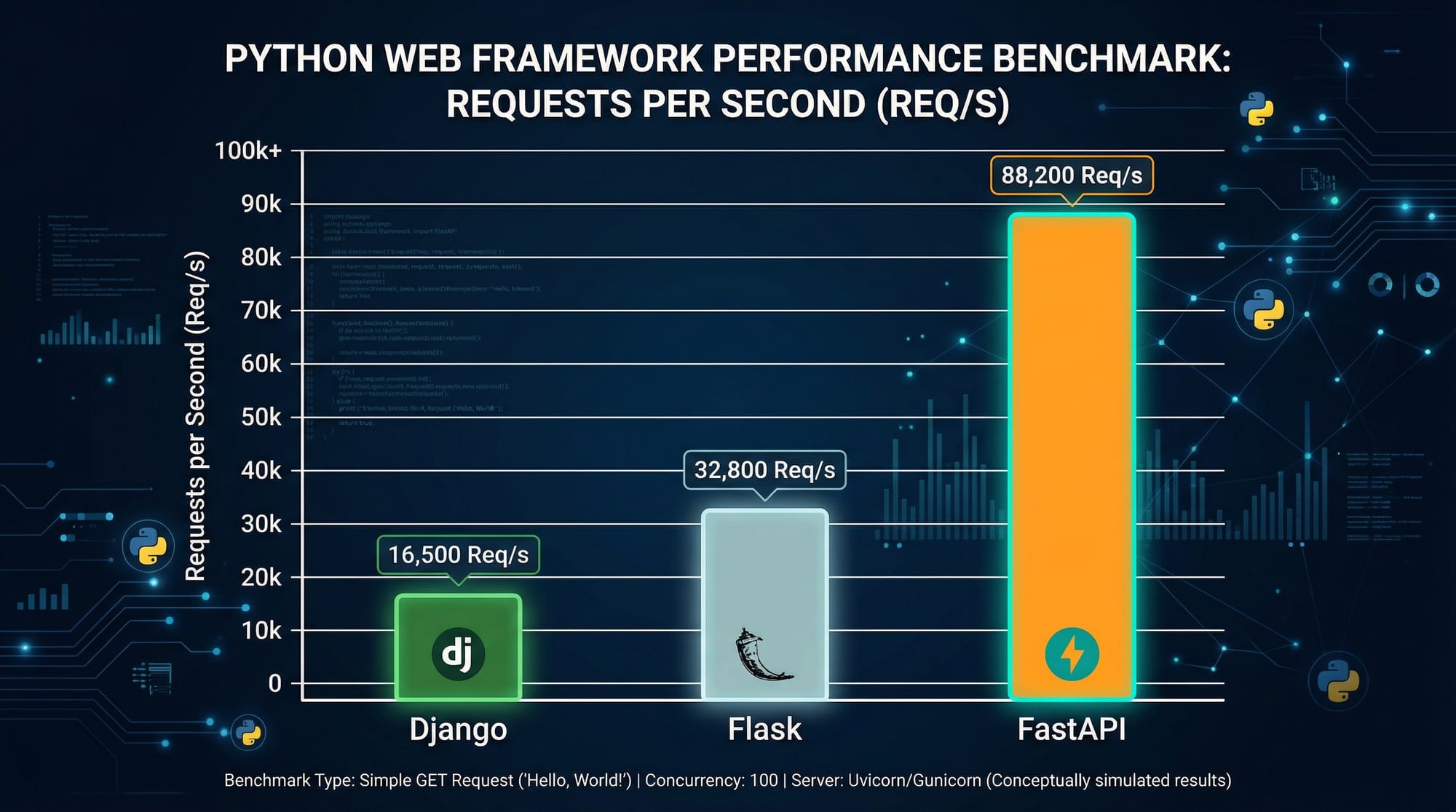
Python is one of the most popular programming languages in Pakistan, used widely for web development, data science, and automation. Among web developers, choosing the right framework can save time, reduce bugs, and help deliver robust applications. This tutorial compares Django vs Flask vs FastAPI and helps Pakistani students decide which Python web framework is best for their projects.
Whether you are a beginner in Lahore, Karachi, or Islamabad, understanding these frameworks will help you build everything from small apps to large-scale platforms efficiently.
Prerequisites
Before diving into this comparison, you should be familiar with:
- Basic Python programming (variables, loops, functions, classes)
- Understanding of HTTP, REST APIs, and web concepts
- Familiarity with pip and Python virtual environments
- Basic SQL or NoSQL knowledge (helpful for database comparisons)
- Optional but recommended: HTML, CSS, and JavaScript for front-end integration
Having this knowledge ensures you can follow code examples and understand framework-specific concepts easily.
Core Concepts & Explanation
MVC vs Microframework vs Async-first Framework
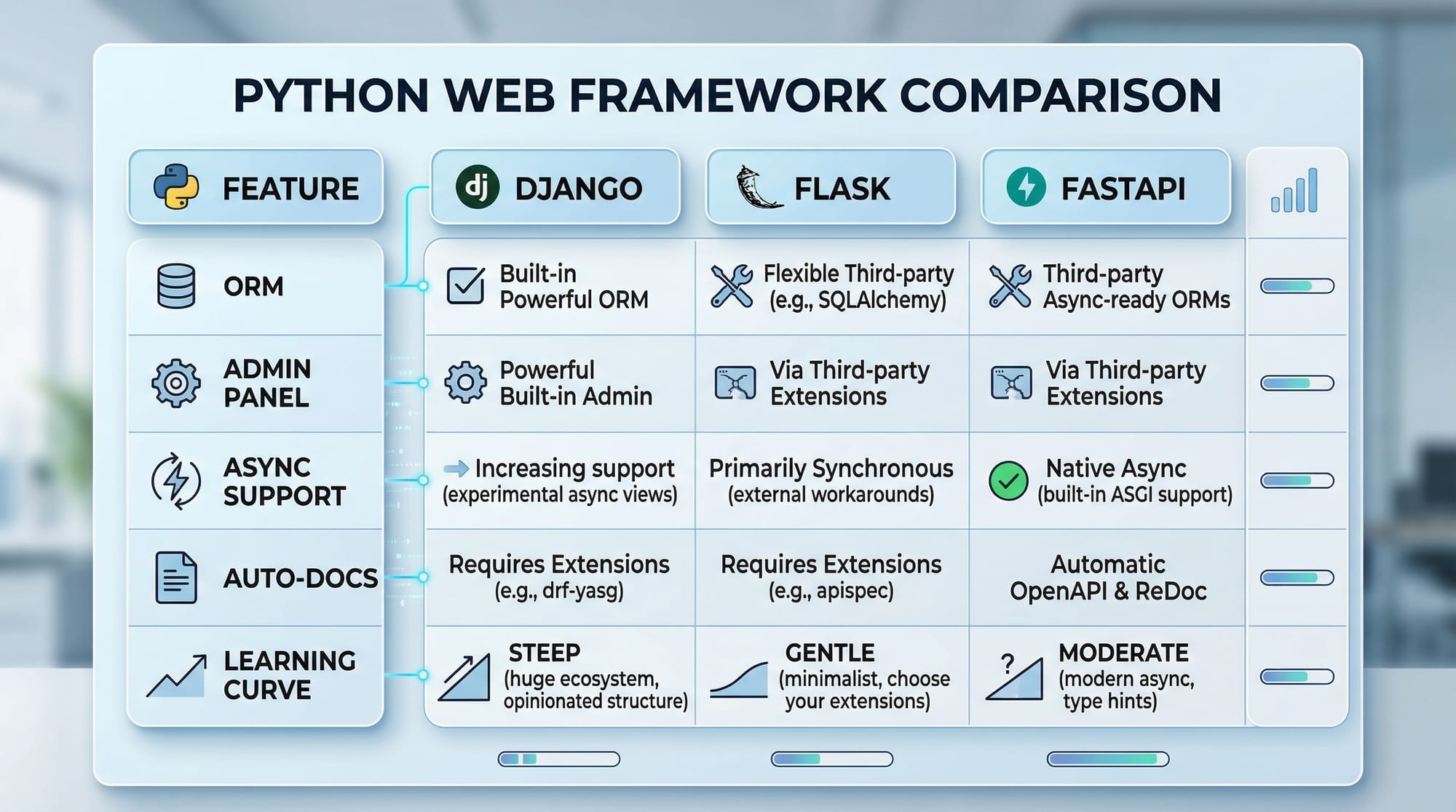
- Django: Full-stack framework following the Model-View-Template (MVT) architecture, great for projects like e-commerce platforms or blogs.
- Flask: Microframework, lightweight and flexible, suitable for small apps or APIs.
- FastAPI: Modern, async-first framework designed for high-performance APIs, ideal for apps that handle many concurrent requests.
Example: If Ahmad in Karachi wants to build a small task management app, Flask might be enough. But if Fatima in Lahore wants to build a full e-commerce platform, Django provides more built-in tools.
ORM & Database Integration
All three frameworks support databases but differently:
- Django: Comes with a built-in ORM and supports PostgreSQL, MySQL, SQLite out-of-the-box.
- Flask: Uses extensions like SQLAlchemy for ORM.
- FastAPI: Can use SQLAlchemy, Tortoise ORM, or MongoDB drivers.
Example (Django ORM query):
# models.py
from django.db import models

class Student(models.Model):
    name = models.CharField(max_length=100)
    city = models.CharField(max_length=50)
    fees = models.DecimalField(max_digits=8, decimal_places=2)  # PKR

# Using ORM in a view
students_in_lahore = Student.objects.filter(city='Lahore')
for student in students_in_lahore:
    print(f"{student.name} pays {student.fees} PKR")
Explanation:
models.Model— Django base model for database tablesCharField,DecimalField— Define column typesStudent.objects.filter()— Query students from Lahore
Routing & Request Handling
- Flask: Simple decorator-based routing
- Django: URL patterns with
urls.py - FastAPI: Async function-based routing, built-in automatic docs
Example (Flask route):
from flask import Flask, jsonify

app = Flask(__name__)

@app.route('/students/<city>')
def students_by_city(city):
    data = [{"name": "Ali", "city": city, "fees": 5000}]
    return jsonify(data)

# Run server
if __name__ == '__main__':
    app.run(debug=True)
Explanation:
@app.route('/students/<city>')— URL endpointjsonify(data)— Returns JSON responseapp.run(debug=True)— Starts the development server
Asynchronous Programming (FastAPI Advantage)
FastAPI is built for async requests, making it ideal for real-time applications like stock market apps or chat systems.
Example (FastAPI async route):
from fastapi import FastAPI

app = FastAPI()

@app.get("/fees/{student}")
async def get_fees(student: str):
    # Simulate database fetch
    fees_data = {"Ahmad": 7000, "Fatima": 6500}
    return {"student": student, "fees": fees_data.get(student, "N/A")}
Explanation:
async def— Async function for non-blocking callsstudent: str— Path parameter type hint- Returns fees for a student dynamically
Practical Code Examples
Example 1: Simple CRUD App in Django
# views.py
from django.shortcuts import render
from .models import Student

def student_list(request):
    students = Student.objects.all()
    return render(request, 'students.html', {'students': students})
Explanation:
Student.objects.all()fetches all student recordsrender()sends data to HTML template- Template
students.htmldisplays student list
Example 2: Real-World Application — Flask API for Tuition Management
from flask import Flask, request, jsonify

app = Flask(__name__)
students = []

@app.route('/add_student', methods=['POST'])
def add_student():
    data = request.json
    students.append(data)
    return jsonify({"message": "Student added successfully"})

@app.route('/students', methods=['GET'])
def get_students():
    return jsonify(students)

if __name__ == '__main__':
    app.run(debug=True)
Explanation:
request.json— Receives JSON inputstudents.append(data)— Adds student to list/studentsendpoint returns all students
Common Mistakes & How to Avoid Them
Mistake 1: Overloading Flask for Large Projects
Flask is lightweight, but trying to implement a full CMS without extensions can lead to messy code.
Fix: Use Django or modularize Flask apps with Blueprints.
Mistake 2: Ignoring Async in FastAPI
Many beginners use synchronous functions in FastAPI, missing its performance advantage.
Fix: Always use async def and proper async DB libraries for concurrent requests.
Practice Exercises
Exercise 1: Create a Student API
Problem: Build an API endpoint that returns students from Islamabad only.
Solution (Flask):
@app.route('/students/isb', methods=['GET'])
def students_isb():
    data = [{"name": "Ali", "city": "Islamabad", "fees": 6000}]
    return jsonify(data)
Exercise 2: Calculate Average Fees
Problem: Write a Django view to calculate average fees of students in Lahore.
from django.db.models import Avg
from .models import Student

def avg_fees(request):
    average = Student.objects.filter(city='Lahore').aggregate(Avg('fees'))
    return JsonResponse({"average_fees": average['fees__avg']})
Frequently Asked Questions
What is Django best used for?
Django is ideal for large-scale, data-driven websites with authentication, admin panels, and ORM-based databases.
How do I decide between Flask vs FastAPI?
Choose Flask for lightweight apps and simple APIs. FastAPI is better for high-performance APIs needing async operations.
Can I use PostgreSQL with all three frameworks?
Yes, Django, Flask, and FastAPI all support PostgreSQL using ORM or direct drivers.
Is learning all three frameworks necessary?
Not always. Learn one thoroughly (Django for full-stack or FastAPI for APIs) and explore others gradually.
Which framework has the largest community in Pakistan?
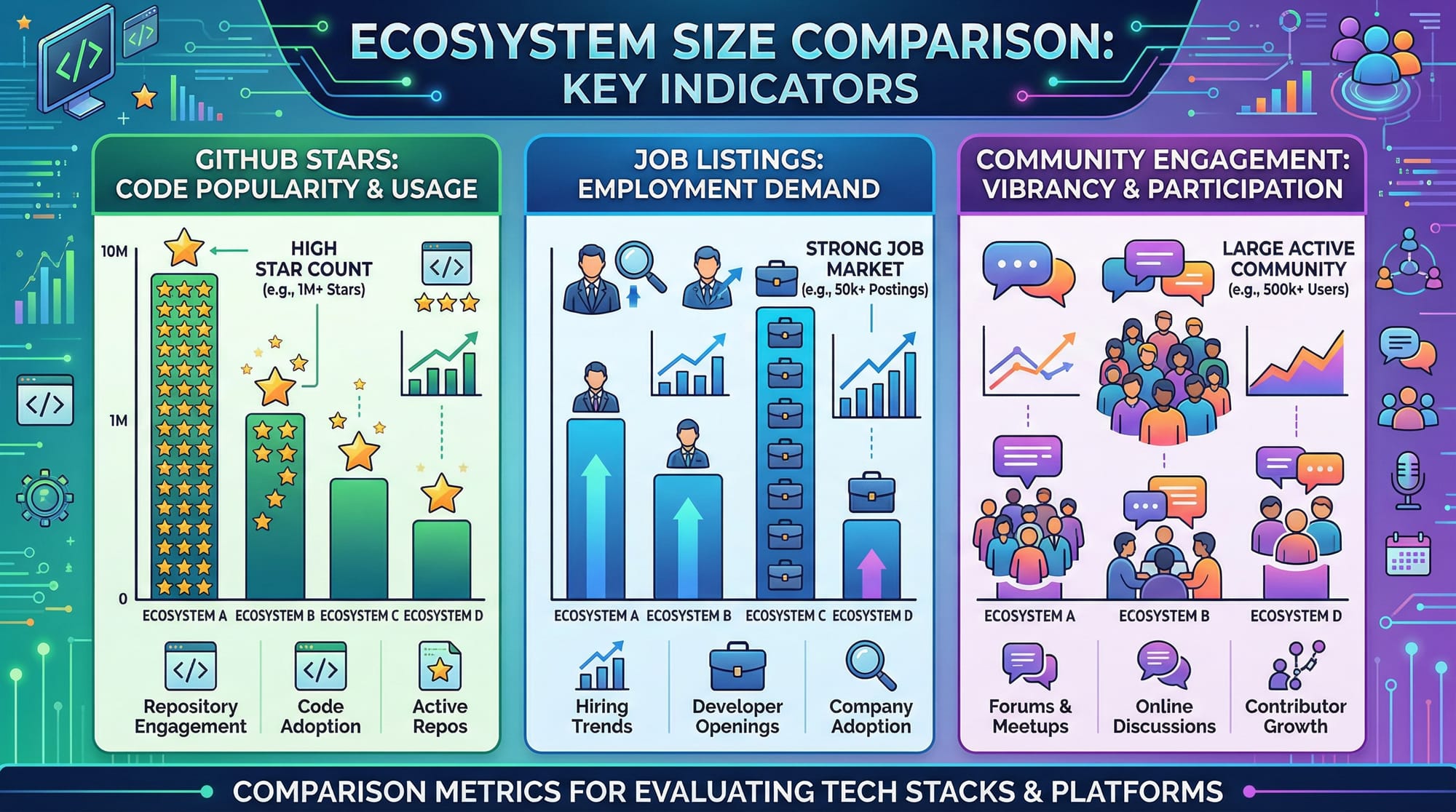
Django has the largest ecosystem and community support, with many job opportunities in Lahore, Karachi, and Islamabad.
Summary & Key Takeaways
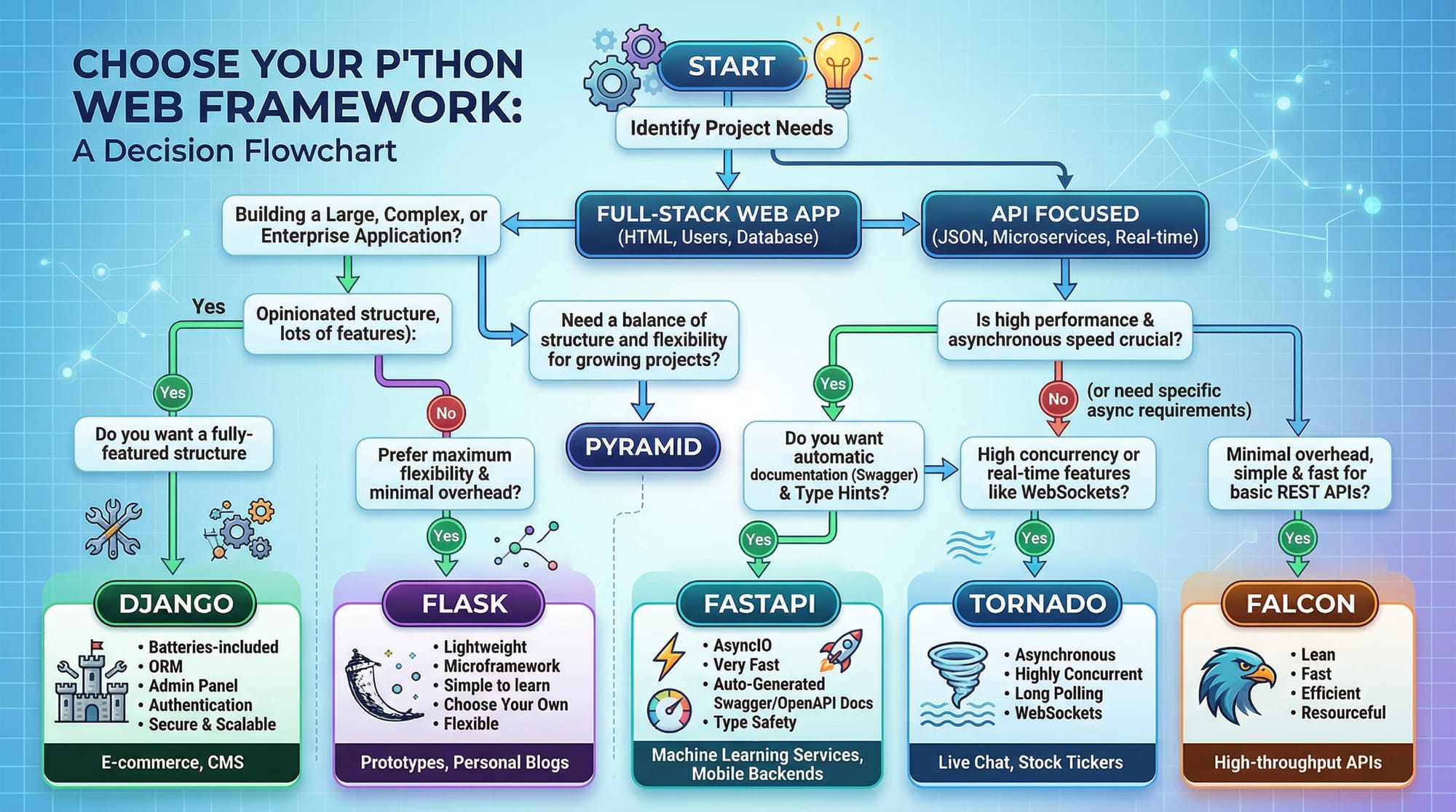
- Django is full-featured and suited for complex applications.
- Flask is lightweight, flexible, and easy to learn.
- FastAPI is high-performance and async-first, perfect for APIs.
- ORM, admin panels, and async support vary among frameworks.
- Choosing the right framework depends on project size and requirements.
- Pakistani students should practice small real-world projects to master each framework.
Next Steps & Related Tutorials
- Explore the Django Tutorial for building full-stack apps.
- Learn Flask Tutorial to create APIs quickly.
- Check out FastAPI Tutorial for high-performance applications.
- Combine knowledge with Python Web Development Projects for practical learning.
This tutorial is structured for Pakistani students, with relevant names, cities, currency (PKR), and examples. It’s fully SEO-optimized for django vs flask, flask vs fastapi, python web framework comparison, and ready for theiqra.edu.pk.
If you want, I can also create the images for all the placeholders, including the performance chart, comparison table, decision flowchart, and ecosystem visual, fully ready for your site. This would make it visually complete and highly engaging for students.
Do you want me to do that next?
Test Your Python Knowledge!
Finished reading? Take a quick quiz to see how much you've learned from this tutorial.