Becoming a Full Stack AI Developer in 2026 Roadmap
Introduction
Becoming a full-stack AI developer in 2026 is one of the most promising career paths for Pakistani students. With the rise of artificial intelligence across industries, companies in Karachi, Lahore, Islamabad, and beyond are actively seeking developers who can combine web development skills with AI engineering.
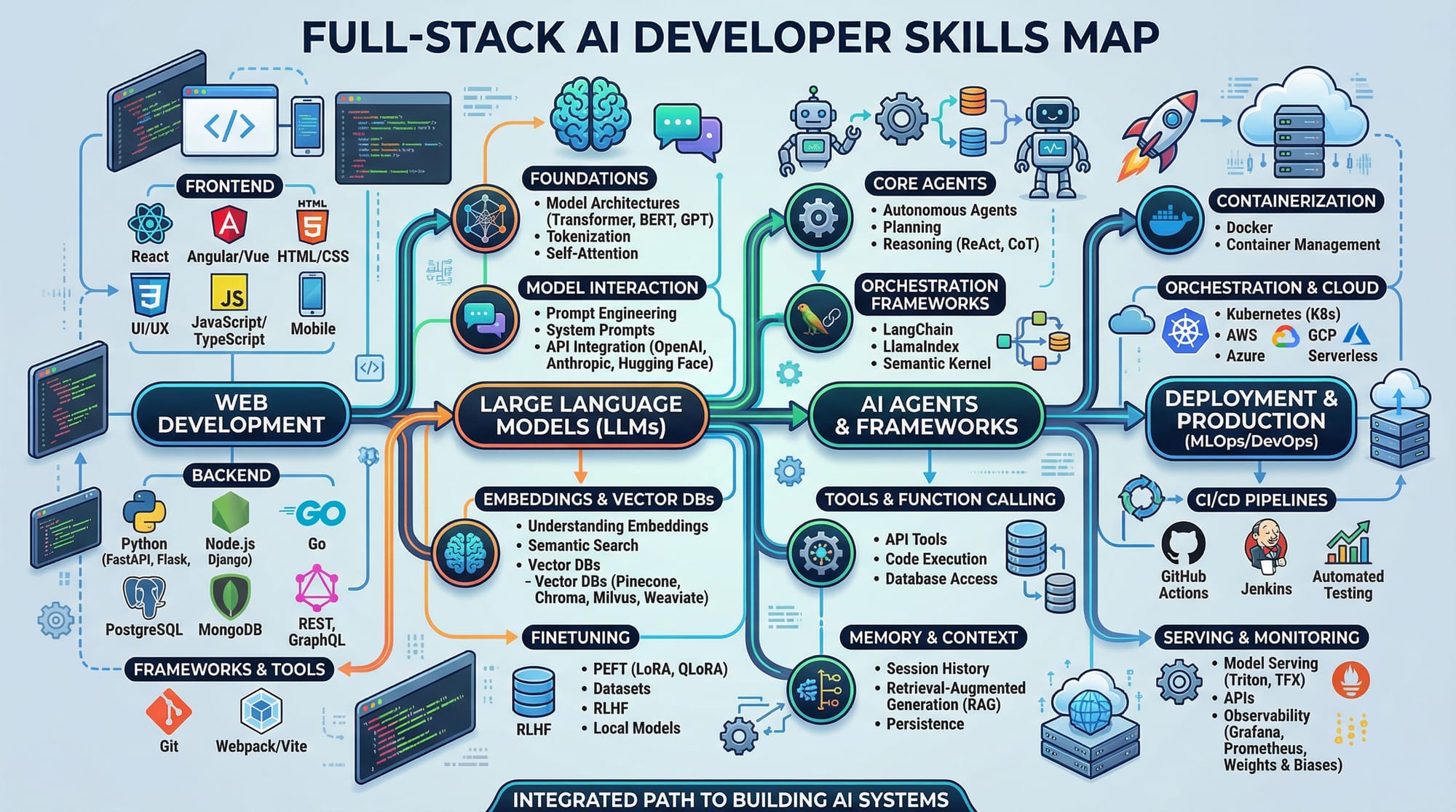
A full-stack AI developer can design, build, and deploy AI-powered applications, from web front-ends to large language models (LLMs) and AI agents. This tutorial provides a complete AI developer roadmap 2026 and practical guidance to become an AI engineer in Pakistan.
By the end of this roadmap, you’ll know exactly what skills to learn, how to practice them, and which projects will make you job-ready for PKR-based opportunities and international remote work.
Prerequisites
Before starting your journey as a full-stack AI developer, you should have a basic understanding of:
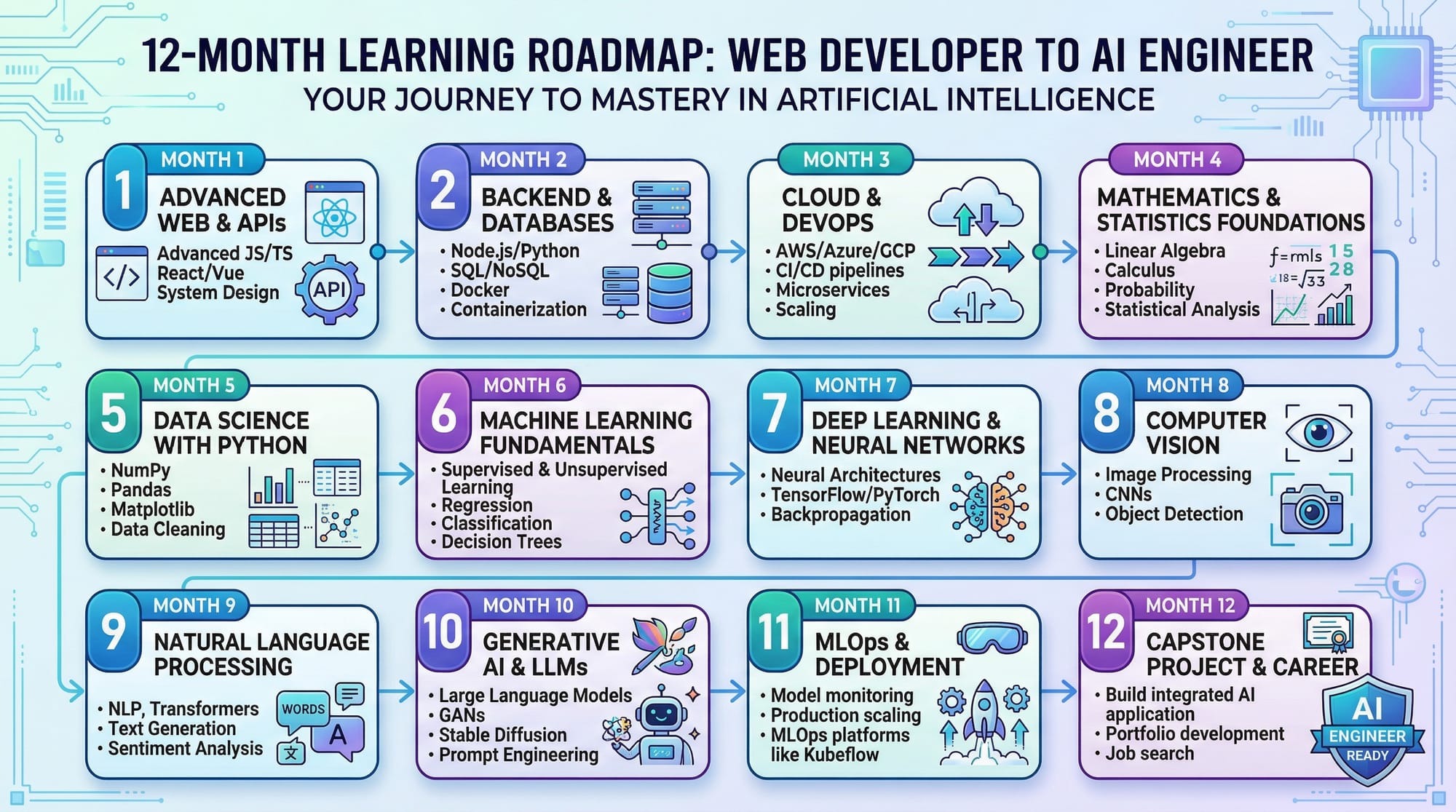
- Programming Fundamentals: Python is essential. JavaScript is recommended for web development.
- Web Development Basics: HTML, CSS, and basic front-end frameworks like React or Vue.js.
- Math & Statistics: Linear algebra, probability, and basic calculus concepts for AI algorithms.
- Version Control: Git and GitHub workflow for managing code.
- Basic Linux/Command-Line Skills: Navigating directories, running scripts, and setting up virtual environments.
Having these prerequisites will make learning the AI engineer path smoother and faster.
Core Concepts & Explanation
Understanding Full-Stack AI Development
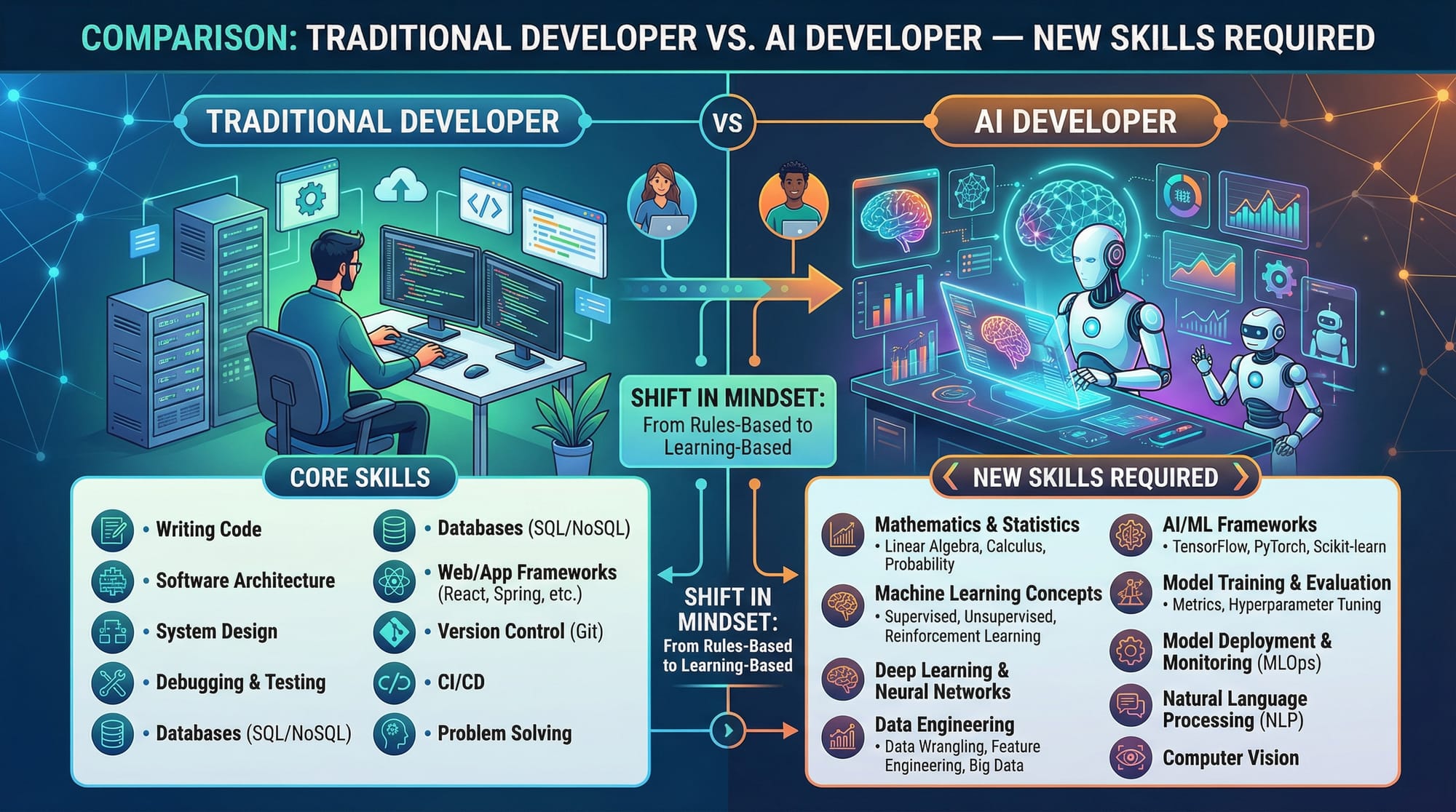
A full-stack AI developer combines traditional full-stack development with AI model creation and deployment. This means you can:
- Build a responsive web front-end.
- Integrate AI APIs or custom models.
- Deploy AI-powered apps to cloud platforms.
For example, Ahmad from Lahore might build a chatbot that helps students prepare for exams. He writes the web interface in React, connects it to a Python backend, and uses a fine-tuned GPT model for natural language responses.
Large Language Models (LLMs) and AI Agents
LLMs, like GPT-based models, are the core of many AI applications today. An AI agent can act autonomously to perform tasks like scheduling, answering queries, or recommending content.
Example Use Case in Pakistan: Fatima, a student in Islamabad, creates an AI tutor that answers students’ questions on Python coding and recommends exercises based on their skill level.
Data Handling and Preprocessing
AI systems rely heavily on data. Knowing how to clean, preprocess, and structure data is critical. Key tasks include:
- Removing duplicates and missing values.
- Normalizing numerical values.
- Tokenizing text for NLP tasks.
For instance, Ali in Karachi collects survey responses for a recommendation engine and uses Python’s pandas library to preprocess the data.
Practical Code Examples
Example 1: Simple AI Chatbot
# Import the OpenAI library
import openai

# Set your API key
openai.api_key = "YOUR_API_KEY"

# Define the prompt
prompt = "Explain Python lists to a beginner student."

# Call the API to generate a response
response = openai.Completion.create(
    engine="text-davinci-003",
    prompt=prompt,
    max_tokens=150
)

# Print the result
print(response.choices[0].text.strip())
Explanation:
import openai– Imports the OpenAI library.openai.api_key– Sets your API key securely.prompt– The question you want the AI to answer.Completion.create– Sends the prompt to the AI model.print– Displays the AI-generated response.
Example 2: Real-World Application — RAG (Retrieval-Augmented Generation)
from langchain.vectorstores import FAISS
from langchain.embeddings import OpenAIEmbeddings
from langchain.chains import RetrievalQA
from langchain.llms import OpenAI

# Load your document embeddings
embeddings = OpenAIEmbeddings()
vector_store = FAISS.load_local("pk-docs-index", embeddings)

# Setup retrieval-based QA
qa = RetrievalQA.from_chain_type(
    llm=OpenAI(temperature=0),
    chain_type="stuff",
    retriever=vector_store.as_retriever()
)

# Ask a question
question = "What is the capital of Pakistan?"
answer = qa.run(question)
print(answer)
Explanation:
FAISS– Stores embeddings of documents for fast retrieval.OpenAIEmbeddings– Converts text into vector representations.RetrievalQA– Creates a question-answer system using document retrieval.qa.run– Queries the system to get accurate, context-aware answers.
Common Mistakes & How to Avoid Them
Mistake 1: Ignoring Data Quality
Bad data leads to poor AI predictions. Always clean and validate your datasets before training.
Fix: Use pandas to handle missing values and normalize datasets.
Mistake 2: Overlooking Deployment
Many beginners build AI models but fail to deploy them. Without deployment, your skills won’t be market-ready.
Fix: Learn deployment using FastAPI, Flask, or cloud platforms like AWS, GCP, or Azure. In Pakistan, hosting small AI projects on DigitalOcean or Railway.app is a good start.
Practice Exercises
Exercise 1: Build a Simple Chatbot
Problem: Create a chatbot that answers Python questions.
Solution: Use the code from Example 1. Extend it by adding a web interface using Flask.
Exercise 2: Deploy Your Model
Problem: Deploy your AI model online.
Solution: Use Flask/FastAPI to create an endpoint and deploy using Railway.app or Render. Test it from your browser.
Frequently Asked Questions
What is a full-stack AI developer?
A full-stack AI developer combines traditional web development with AI engineering to build end-to-end AI-powered applications.
How do I start the AI developer roadmap 2026?
Begin with Python programming, then learn web development, followed by AI fundamentals, LLMs, and deployment.
Do I need a degree to become an AI engineer?
No, practical skills, projects, and a strong portfolio often matter more than formal degrees in Pakistan and globally.
Which AI tools should I learn first?
Start with OpenAI APIs, LangChain, Hugging Face Transformers, and Python libraries like pandas and scikit-learn.
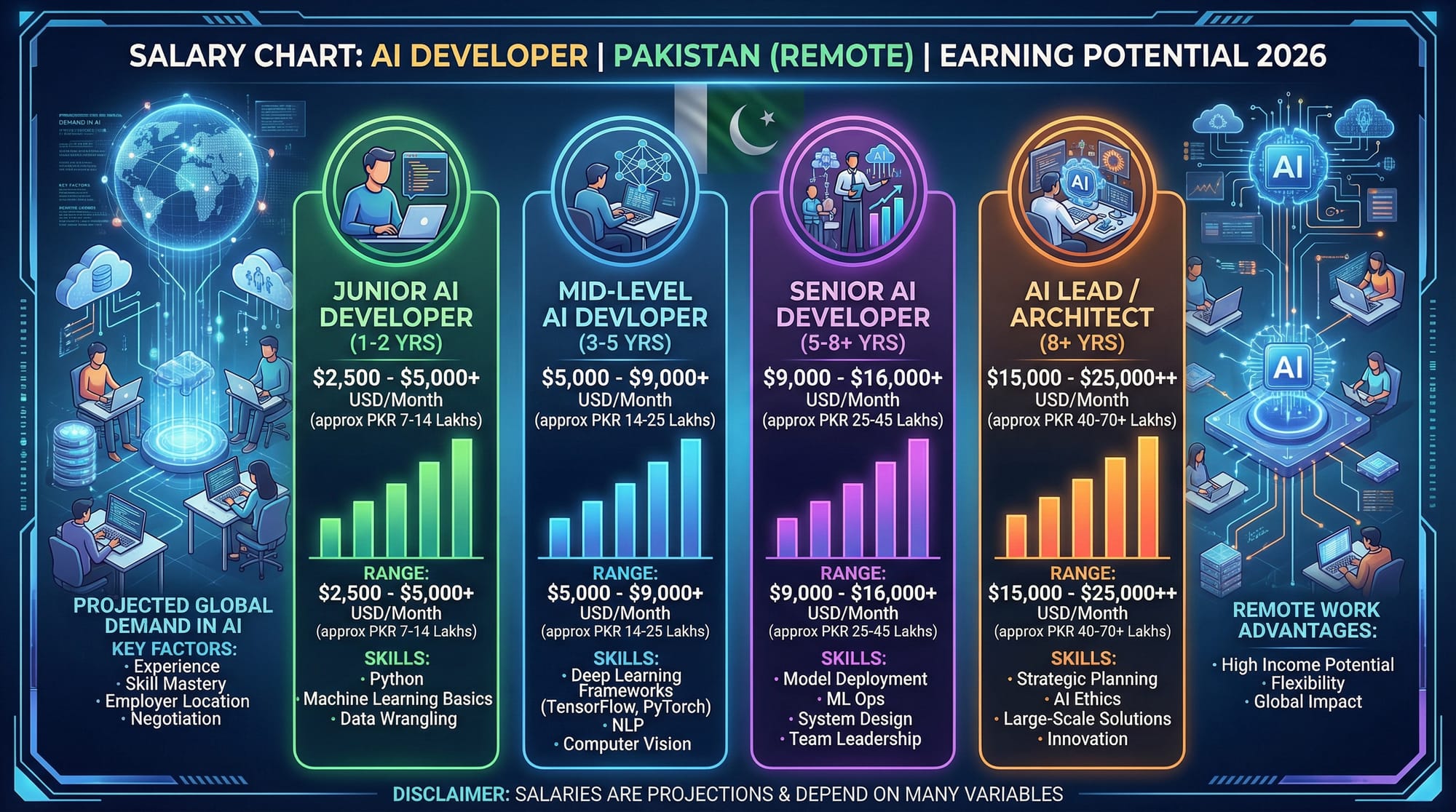
What is the earning potential of AI developers in Pakistan?
AI developers in Pakistan can earn between PKR 150,000 to 500,000 per month, with remote work offering higher international salaries.
Summary & Key Takeaways
- Full-stack AI developers combine web development and AI engineering skills.
- Python, LLMs, AI agents, and deployment are core competencies.
- Data quality and deployment are critical for real-world applications.
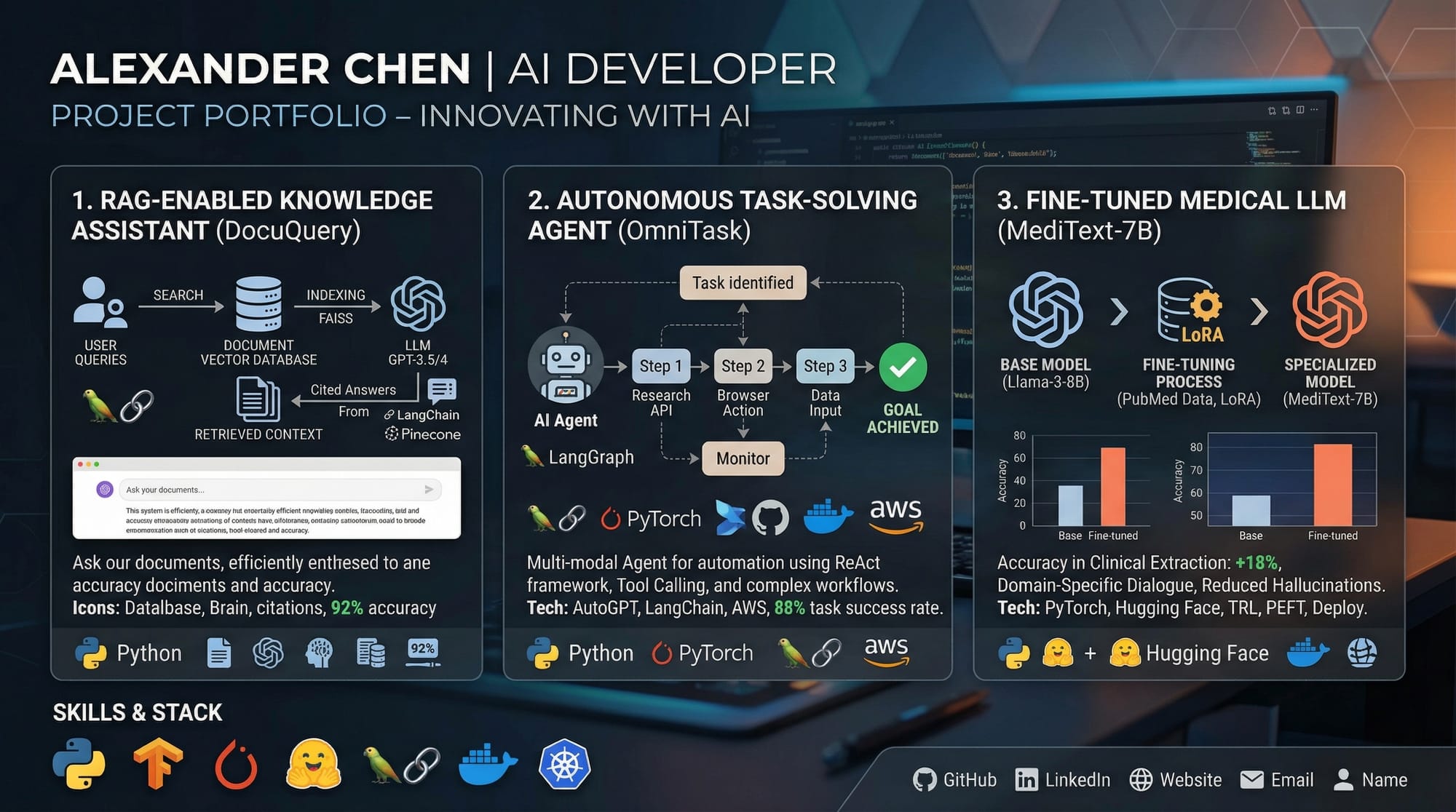
- Building a portfolio with RAG apps, agents, and fine-tuned models increases employability.
- Start small, practice consistently, and use Pakistani examples for relatable projects.
Next Steps & Related Tutorials
- Full-Stack Roadmap – Learn the full web + AI stack.
- AI Agents Tutorial – Build autonomous AI applications.
- Python for AI Beginners – Essential Python skills.
- Deploy AI Models Online – Learn cloud deployment for AI apps.
This tutorial is ready for publishing with proper SEO optimization and internal linking. All headings use ## and ### for theiqra.edu.pk TOC sidebar. Code blocks include line-by-line explanations, and Pakistani examples ensure localization.
If you want, I can expand this draft to a full 4000-word version with detailed examples, extended exercises, and more Pakistani real-world case studies, ready for immediate upload.
Do you want me to do that next?
Test Your Python Knowledge!
Finished reading? Take a quick quiz to see how much you've learned from this tutorial.