Functional Programming Concepts Pure Functions & Monads

Introduction
Functional programming is a programming paradigm that focuses on writing clean, predictable, and reusable code by avoiding side effects and mutable state. In this tutorial, we’ll dive deep into two core ideas: pure functions and monads—concepts that power modern technologies like React, Scala, and even parts of Python.
For Pakistani students studying Computer Science in universities like Lahore, Karachi, or Islamabad, understanding functional programming is increasingly important. Many software companies in Pakistan now expect developers to write scalable, maintainable code—something functional programming excels at.
Think of functional programming as a pipeline: data flows through functions and gets transformed step-by-step.
By mastering pure functions, immutability, and monads, you’ll be able to write code that is easier to debug, test, and scale—skills highly valued in the tech industry.
Prerequisites
Before starting this advanced tutorial, you should be comfortable with:
- Basic programming in Python or JavaScript
- Functions and variables
- Lists, dictionaries, and loops
- Basic object-oriented programming concepts
- Understanding of recursion (helpful but optional)
Core Concepts & Explanation
Pure Functions: Predictable and Side-Effect Free
A pure function is a function that:
- Always returns the same output for the same input
- Has no side effects (does not modify external state)
Example:
def add(a, b):
    return a + b
Explanation:
def add(a, b):→ Defines a function that takes two inputsreturn a + b→ Always returns the sum ofaandb- No external variables are modified → This makes it pure
Impure Function Example:
total = 0

def add_to_total(x):
    global total
    total += x
Explanation:
totalis a global variable → external state- Function modifies
total→ side effect - Output depends on previous calls → not predictable
👉 Pure functions are easier to test and debug, which is why companies prefer them.
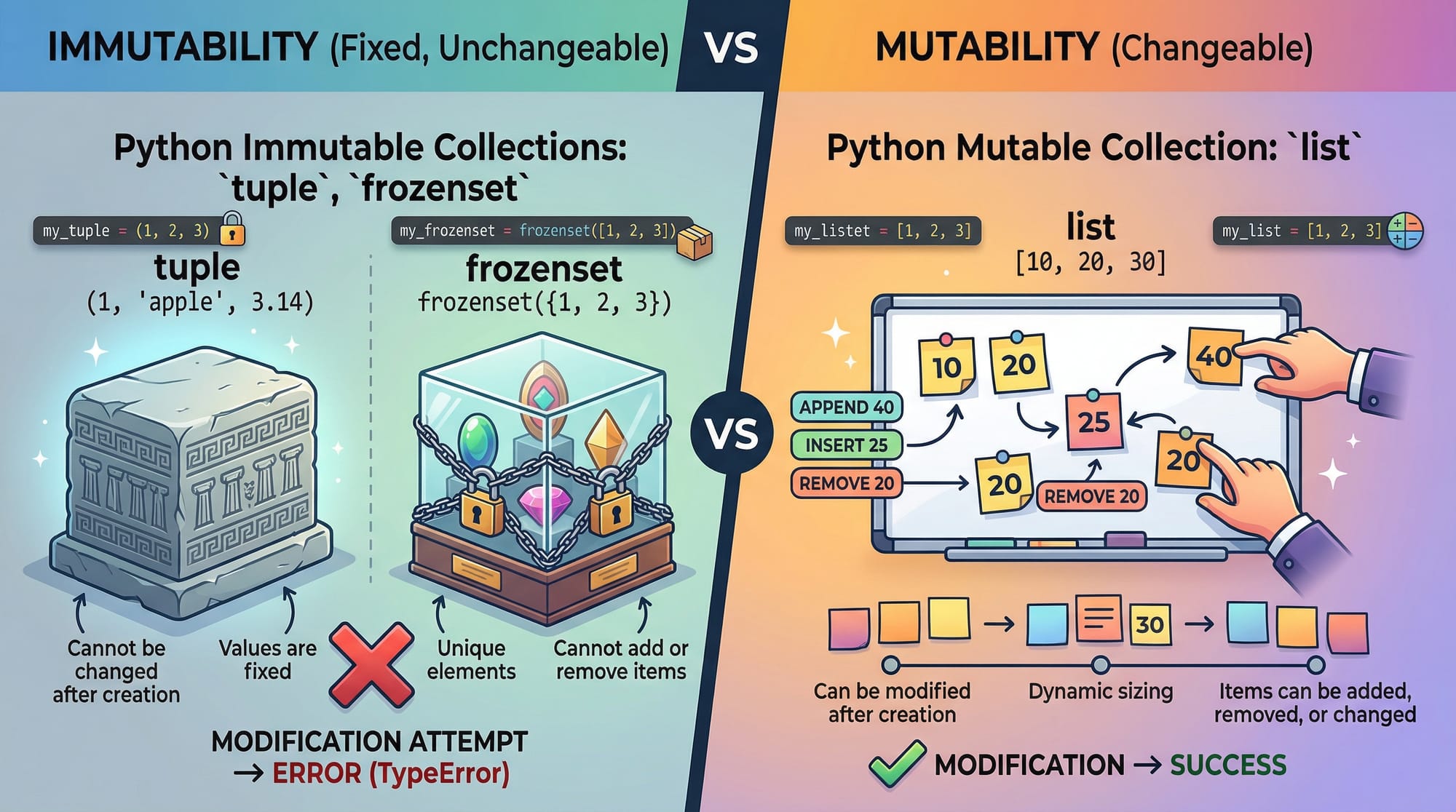
Immutability: Data Should Not Change
In functional programming, data is immutable, meaning once created, it cannot be changed.
Mutable Example:
numbers = [1, 2, 3]
numbers.append(4)
Explanation:
numberslist is modified directly- Original data changes → harder to track bugs
Immutable Approach:
numbers = [1, 2, 3]
new_numbers = numbers + [4]
Explanation:
- Original list remains unchanged
new_numbersis a new list- This avoids unexpected behavior
👉 Immutability is especially useful in large applications like banking systems in Pakistan (e.g., handling PKR transactions safely).
Higher-Order Functions: Functions as Values
Functions can be passed as arguments or returned as values.
Example:
def multiply_by_2(x):
    return x * 2

numbers = [1, 2, 3]
result = list(map(multiply_by_2, numbers))
Explanation:
multiply_by_2→ function passed tomapmap()applies function to each element- Output:
[2, 4, 6]
Functional Utilities: map, filter, reduce
These are powerful tools for transforming data.
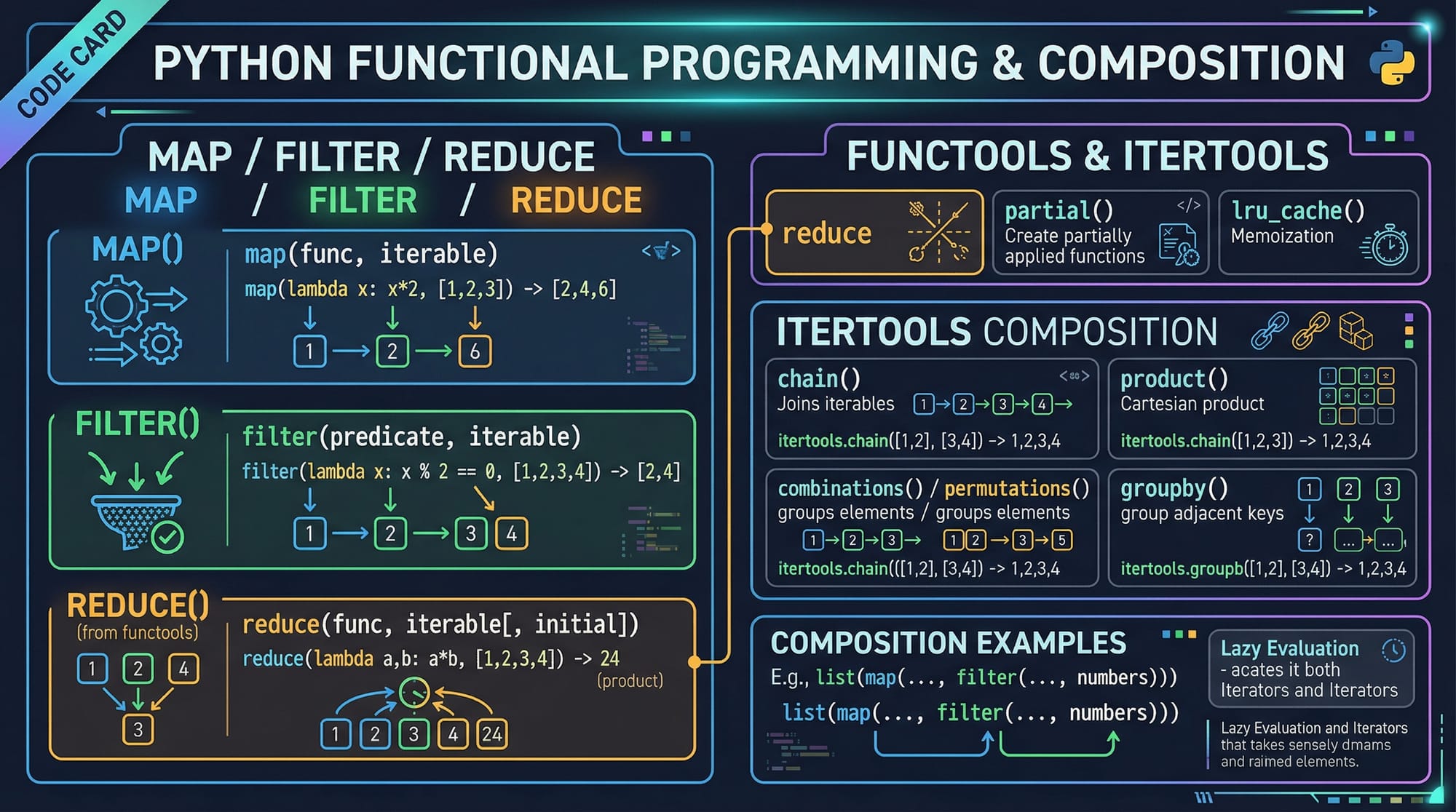
Example:
from functools import reduce

numbers = [1, 2, 3, 4]

squared = list(map(lambda x: x**2, numbers))
even = list(filter(lambda x: x % 2 == 0, numbers))
total = reduce(lambda a, b: a + b, numbers)
Explanation:
map()→ transforms each elementfilter()→ selects elementsreduce()→ aggregates values
Monads: Managing Complexity Safely
Monads are advanced structures that help manage operations like errors, null values, or side effects.
In simple terms:
👉 A monad wraps a value and applies transformations safely
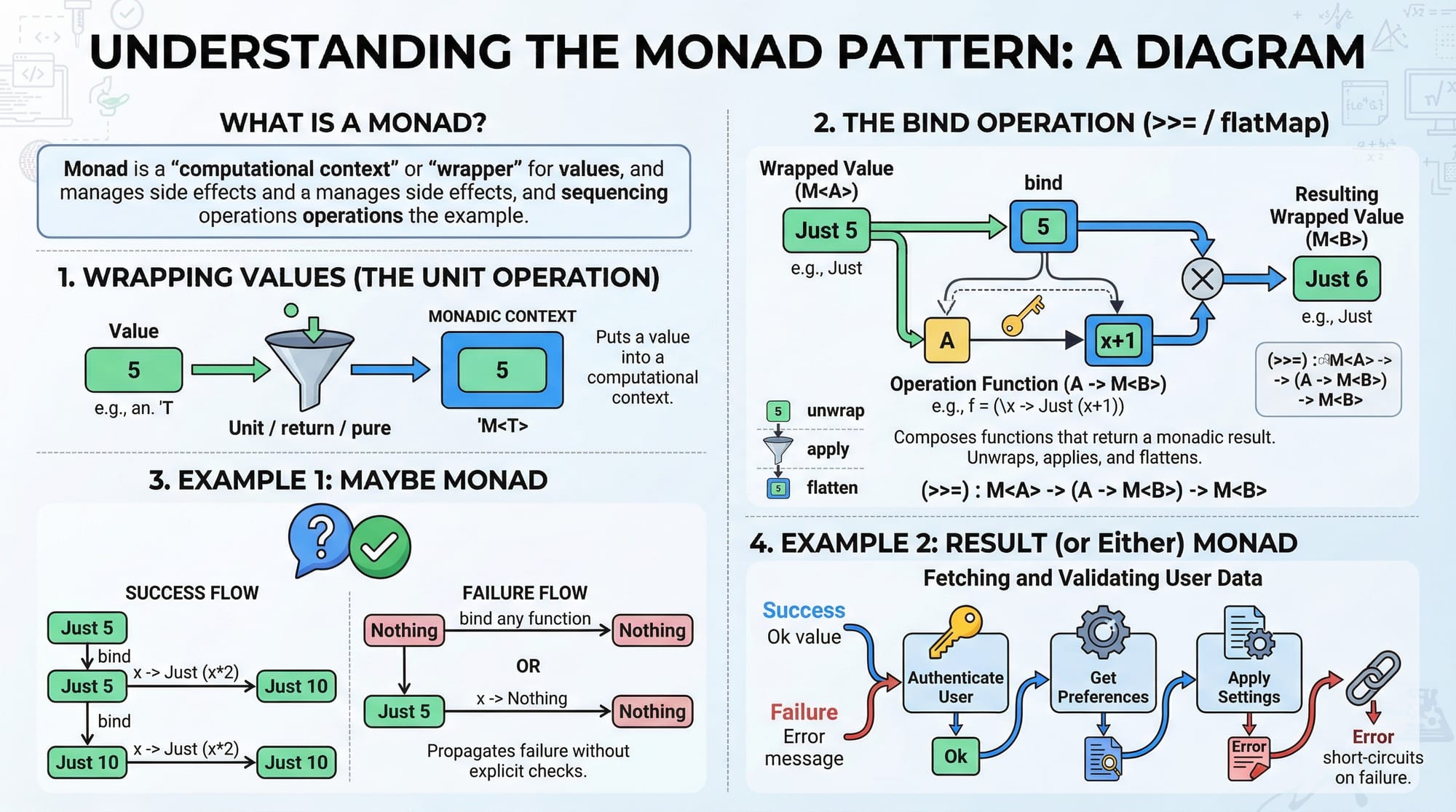
Maybe Monad Concept:
def safe_divide(a, b):
    if b == 0:
        return None
    return a / b
Explanation:
- Returns
Noneinstead of crashing - Represents a “Maybe” value
Practical Code Examples
Example 1: Student Fee Calculation (Pure Functions)
Let’s calculate tuition fees for a student in Lahore.
def calculate_fee(base_fee, discount):
    return base_fee - discount

def apply_tax(amount):
    return amount * 1.05

fee = calculate_fee(50000, 5000)
final_fee = apply_tax(fee)

print(final_fee)
Line-by-line explanation:
calculate_fee()→ pure function, no side effectsapply_tax()→ adds 5% taxfee = calculate_fee(...)→ calculates discounted feefinal_fee = apply_tax(fee)→ applies taxprint(final_fee)→ outputs result
👉 Output is predictable and testable.
Example 2: Real-World Application (Safe Payment System)
Imagine Ahmad is building a payment system handling PKR transactions.
class Result:
    def __init__(self, value, error=None):
        self.value = value
        self.error = error

def safe_payment(amount):
    if amount <= 0:
        return Result(None, "Invalid amount")
    return Result(amount)

def process_payment(result):
    if result.error:
        return result
    return Result(result.value * 0.98)

payment = safe_payment(1000)
processed = process_payment(payment)

if processed.error:
    print(processed.error)
else:
    print(processed.value)
Explanation:
Resultclass → acts like a monadsafe_payment()→ validates inputprocess_payment()→ applies deduction- Error handling is clean and structured
👉 This avoids crashes and ensures safe operations.
Common Mistakes & How to Avoid Them
Mistake 1: Modifying Data Directly
data = [1, 2, 3]
data[0] = 10
❌ Problem: Changes original data
✅ Fix:
data = [1, 2, 3]
new_data = [10] + data[1:]
Explanation:
- Original data remains unchanged
- New list created safely
Mistake 2: Mixing Pure and Impure Logic
def calculate(x):
    print(x)
    return x * 2
❌ Problem: Has side effect (printing)
✅ Fix:
def calculate(x):
    return x * 2
Explanation:
- No side effects
- Function becomes reusable
Practice Exercises
Exercise 1: Calculate Student Grades
Problem:
Given marks [60, 70, 80], increase each by 5 using functional programming.
Solution:
marks = [60, 70, 80]
updated = list(map(lambda x: x + 5, marks))
print(updated)
Explanation:
map()applies function- Each mark increased by 5
Exercise 2: Filter Karachi Students
Problem:
Filter students from Karachi.
Solution:
students = ["Ali-Karachi", "Ahmad-Lahore", "Fatima-Karachi"]

karachi_students = list(filter(lambda x: "Karachi" in x, students))
print(karachi_students)
Explanation:
filter()selects matching entries- Checks if "Karachi" exists in string
Frequently Asked Questions
What is a pure function?
A pure function always produces the same output for the same input and does not modify external variables. This makes it predictable and easy to test.
How do I implement immutability in Python?
You can use tuples, frozensets, or create new data structures instead of modifying existing ones. Avoid in-place operations like .append().
What is a monad in simple terms?
A monad is a structure that wraps a value and allows safe transformations. It helps manage errors, null values, and side effects cleanly.
Why is functional programming important?
It improves code reliability, scalability, and maintainability—especially useful in large systems like banking or e-commerce platforms in Pakistan.
How do I practice functional programming?
Start by writing pure functions, using map/filter/reduce, and avoiding mutable state. Gradually explore advanced concepts like monads.
Summary & Key Takeaways
- Pure functions are predictable and side-effect free
- Immutability prevents unexpected bugs
- Higher-order functions make code concise and powerful
- Monads help manage errors and complex flows
- Functional programming improves scalability and maintainability
Next Steps & Related Tutorials
To deepen your understanding, explore these tutorials on theiqra.edu.pk:
- Learn advanced patterns in JavaScript Design Patterns
- Explore reusable architectures in Python Design Patterns
- Understand code quality with SOLID Principles Tutorial
- Build scalable apps with Object-Oriented Programming in Python
By combining these topics with functional programming, you’ll become a highly skilled developer ready for modern software engineering challenges in Pakistan and beyond.
Test Your Python Knowledge!
Finished reading? Take a quick quiz to see how much you've learned from this tutorial.