GRPC Tutorial High Performance RPC with Protocol Buffers
Introduction
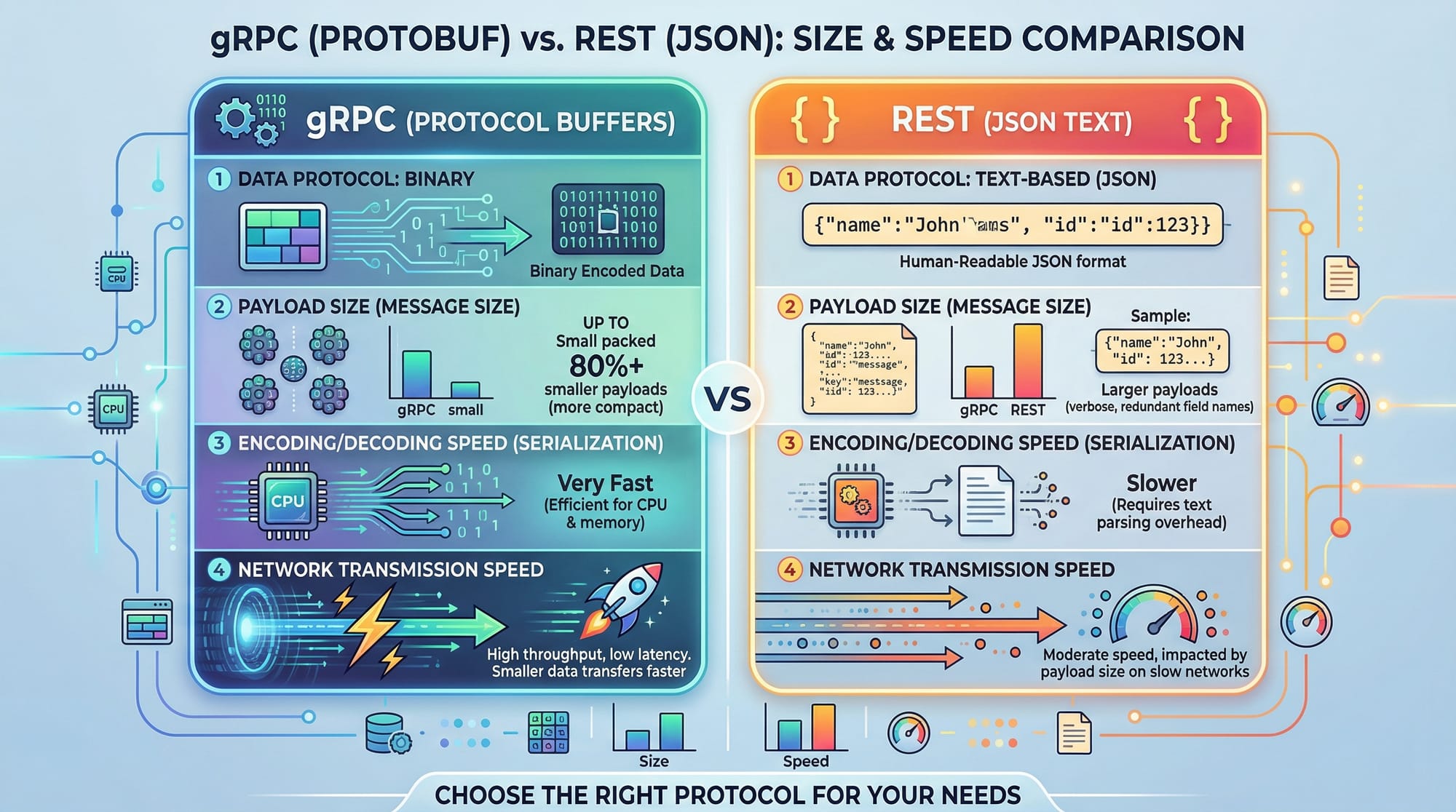
gRPC (gRPC Remote Procedure Calls) is a high-performance, open-source framework developed by Google for building distributed applications and microservices. It uses Protocol Buffers (Protobuf) as its interface definition language, which allows communication between client and server with highly efficient binary serialization. Unlike traditional REST APIs that rely on JSON over HTTP, gRPC is faster, supports streaming, and provides strong typing and automatic code generation.
For Pakistani students, learning gRPC is valuable because modern software architectures—like fintech platforms in Karachi, Lahore, and Islamabad—require high-speed communication between services. By mastering gRPC in Python, you can build scalable applications such as real-time banking systems, chat platforms, or online marketplaces with PKR-sensitive transaction handling.
Prerequisites
Before diving into gRPC, you should be familiar with:
- Python programming (functions, classes, async/await)
- Basic networking concepts (HTTP, TCP/IP)
- REST API design (CRUD operations, JSON)
- Package management with pip
- Virtual environments in Python
Optional but helpful knowledge:
- Docker basics for containerized microservices
- Cloud services like AWS or GCP
- Familiarity with async frameworks like FastAPI or asyncio
Core Concepts & Explanation
Protocol Buffers: Efficient Data Serialization
Protocol Buffers, or Protobuf, is gRPC’s way of defining structured data. Instead of JSON, it uses compact binary encoding.
Example .proto file:
syntax = "proto3";

package student;

service StudentService {
  rpc GetStudent (StudentRequest) returns (StudentResponse);
}

message StudentRequest {
  int32 id = 1;
}

message StudentResponse {
  string name = 1;
  int32 age = 2;
  string city = 3;
}
Explanation:
syntax = "proto3";→ Uses Protobuf version 3.package student;→ Namespaces the service.service StudentService→ Defines the RPC service.rpc GetStudent→ Unary RPC (one request → one response).message→ Defines structured data with field types and unique IDs.
gRPC Architecture: How It Works
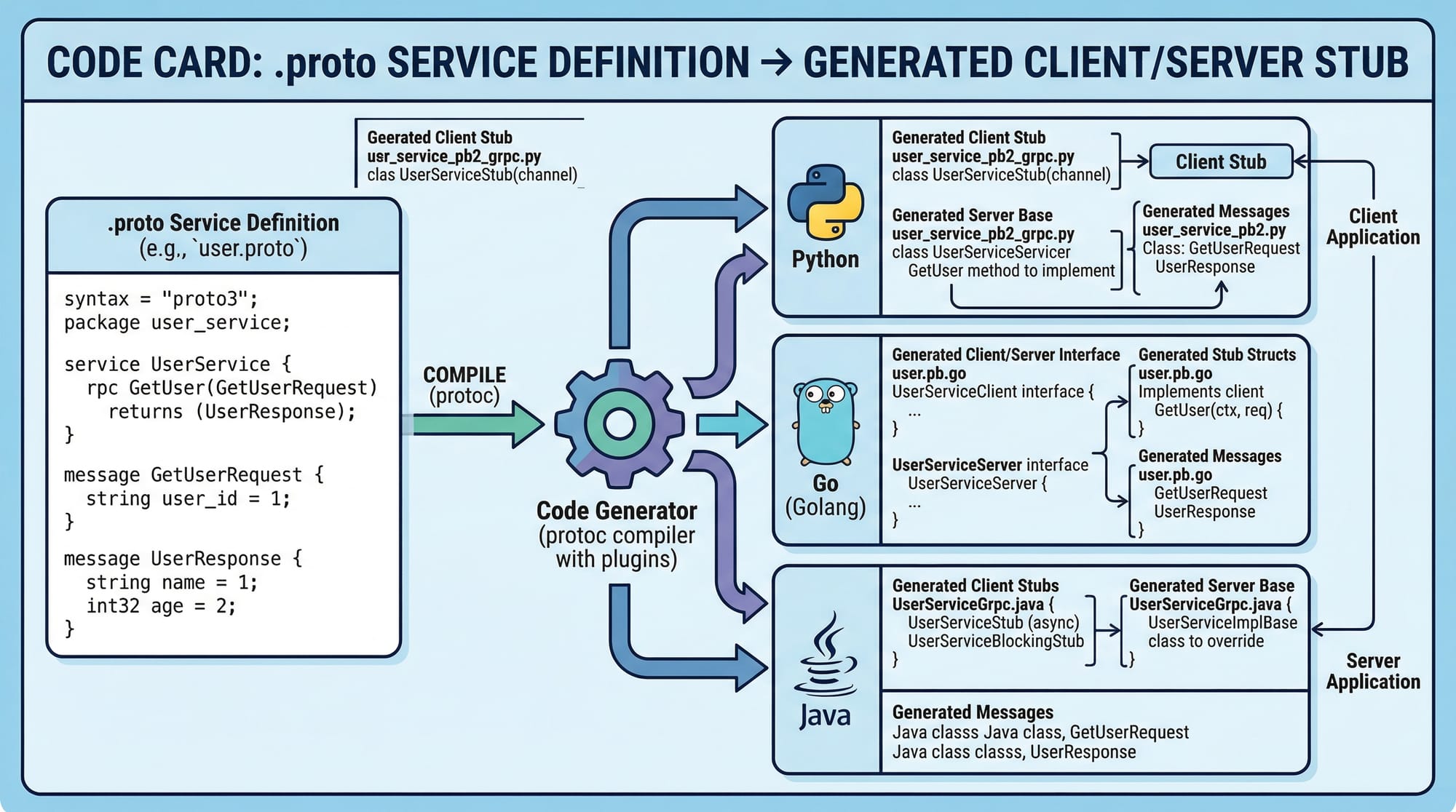
gRPC uses HTTP/2 as the transport protocol, which enables features like multiplexed streams, header compression, and bidirectional streaming. A gRPC client communicates with a server through stubs automatically generated from the .proto definitions.
Example workflow:
- Define
.protofile. - Generate Python code (
grpcio-tools). - Implement server methods.
- Call server methods from the client.
Key advantages over REST:
- Smaller payloads → faster network transmission.
- Streaming support → real-time updates.
- Strong typing → fewer runtime errors.
RPC Types: Unary, Streaming, Bidirectional
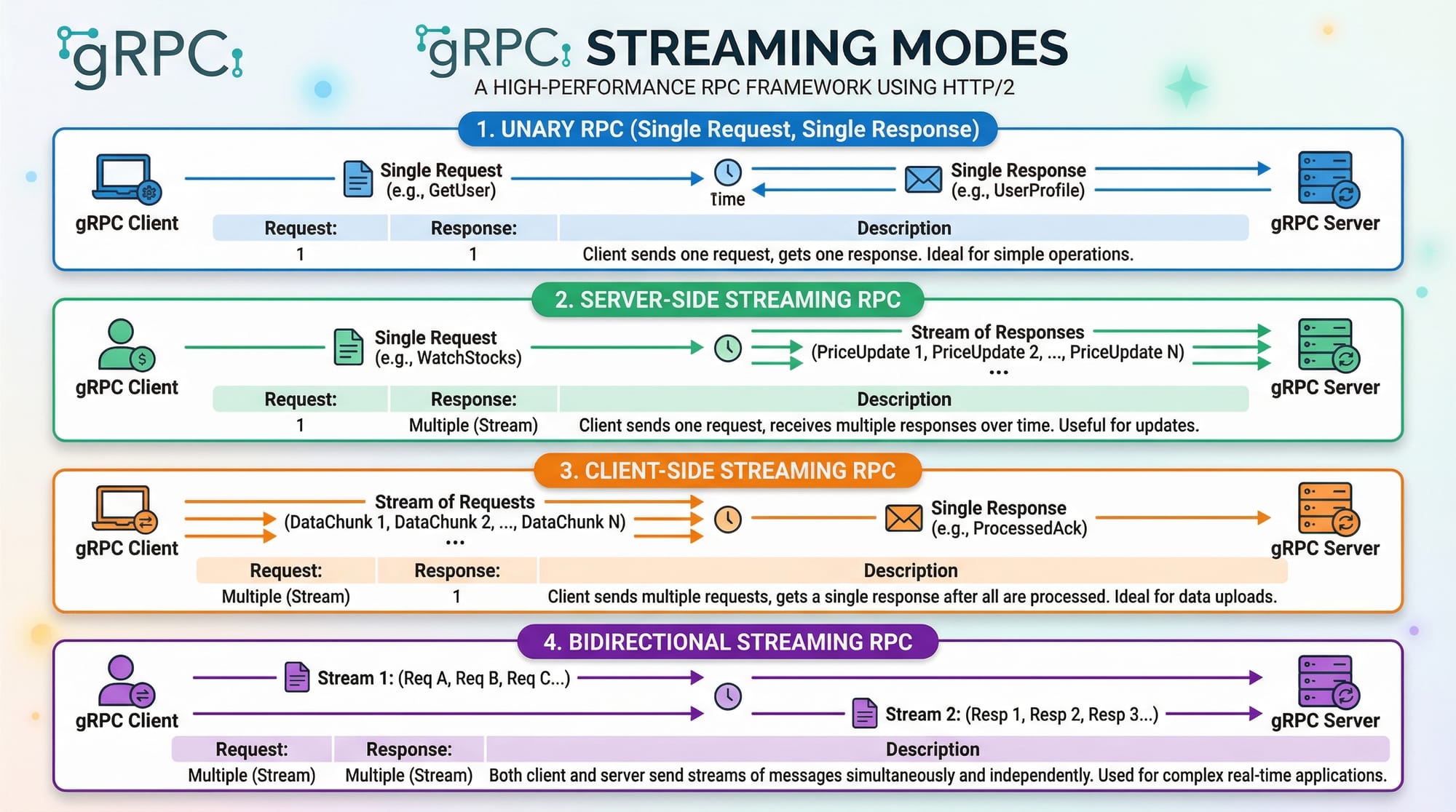
- Unary RPC: One request → One response (like REST GET).
- Server-side streaming: One request → multiple responses.
- Client-side streaming: Multiple requests → one response.
- Bidirectional streaming: Multiple requests ↔ multiple responses.
Practical Code Examples
Example 1: Unary gRPC Call — Student Info
Server:
# server.py
from concurrent import futures
import grpc
import student_pb2
import student_pb2_grpc

class StudentService(student_pb2_grpc.StudentServiceServicer):
    def GetStudent(self, request, context):
        # Returns a student's info based on ID
        students = {
            1: ("Ahmad", 21, "Lahore"),
            2: ("Fatima", 23, "Karachi"),
            3: ("Ali", 22, "Islamabad")
        }
        name, age, city = students.get(request.id, ("Unknown", 0, "Unknown"))
        return student_pb2.StudentResponse(name=name, age=age, city=city)

server = grpc.server(futures.ThreadPoolExecutor(max_workers=10))
student_pb2_grpc.add_StudentServiceServicer_to_server(StudentService(), server)
server.add_insecure_port('[::]:50051')
server.start()
print("Server running on port 50051...")
server.wait_for_termination()
Line-by-line Explanation:
- Import gRPC libraries and generated code.
- Define
StudentServiceclass implementing the gRPC interface. GetStudent()→ Retrieves student info from a dictionary.- Create a gRPC server with 10 worker threads.
- Add the service to the server.
- Bind the server to port 50051.
- Start the server and wait for termination.
Client:
# client.py
import grpc
import student_pb2
import student_pb2_grpc

channel = grpc.insecure_channel('localhost:50051')
stub = student_pb2_grpc.StudentServiceStub(channel)

response = stub.GetStudent(student_pb2.StudentRequest(id=1))
print(f"Name: {response.name}, Age: {response.age}, City: {response.city}")
Explanation:
- Connect to server using
insecure_channel. - Create a stub from generated code.
- Call
GetStudent()withStudentRequest. - Print the response.
Example 2: Real-World Application — PKR Currency Exchange Service
Imagine a Lahore-based fintech startup needs real-time PKR exchange rates:
# currency_server.py
import grpc
from concurrent import futures
import currency_pb2
import currency_pb2_grpc

class CurrencyService(currency_pb2_grpc.CurrencyServiceServicer):
    def GetRate(self, request, context):
        rates = {"USD": 280, "EUR": 300, "GBP": 350}  # Example PKR rates
        rate = rates.get(request.currency, 0)
        return currency_pb2.RateResponse(currency=request.currency, rate=rate)

server = grpc.server(futures.ThreadPoolExecutor(max_workers=5))
currency_pb2_grpc.add_CurrencyServiceServicer_to_server(CurrencyService(), server)
server.add_insecure_port('[::]:50052')
server.start()
server.wait_for_termination()
Explanation:
- Uses gRPC to serve exchange rates.
- Real-time PKR data can feed mobile apps or websites.
- Efficient binary protocol reduces bandwidth vs REST JSON.
Common Mistakes & How to Avoid Them
Mistake 1: Not Using the Correct Protobuf Version
- Using
proto2instead ofproto3can break Python code generation. - Fix: Always use
syntax = "proto3";.
Mistake 2: Ignoring Streaming Capabilities
- Some students implement multiple unary calls instead of streaming.
- Fix: Use server-side streaming for large datasets to reduce latency.
Practice Exercises
Exercise 1: Create a Student Grade Service
Problem: Build a gRPC service to return grades for students.
Solution: Use StudentGradesService with GetGrade(student_id) method, implement server and client similar to Example 1.
Exercise 2: PKR Conversion Streaming
Problem: Implement a server-side streaming service that streams real-time PKR conversion rates.
Solution: Use yield in Python server method and a streaming loop on the client to receive updates.
Frequently Asked Questions
What is gRPC?
gRPC is a high-performance RPC framework that uses Protocol Buffers for data serialization, enabling fast, strongly-typed communication between services.
How do I install gRPC in Python?
Use pip install grpcio grpcio-tools to install both the core gRPC library and the Protobuf compiler for Python.
Why use gRPC over REST?
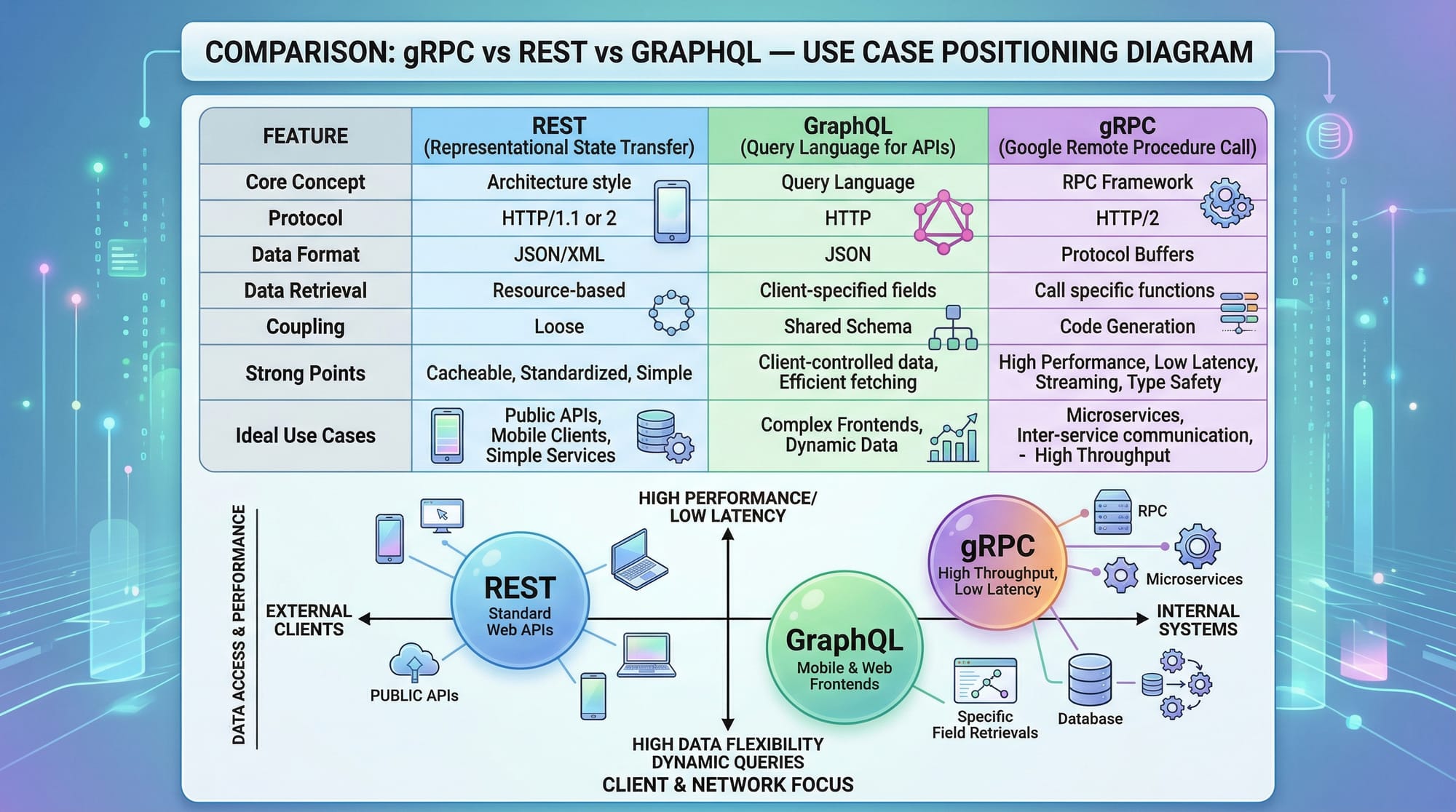
gRPC offers smaller payloads, streaming support, and automatic client/server code generation, making it more efficient for microservices and real-time apps.
Can I use gRPC with JSON?
Yes, but it defeats the primary benefit of compact binary serialization; gRPC is optimized for Protobuf.
Is gRPC supported in Pakistan-based hosting?
Yes, gRPC works with cloud providers like AWS, GCP, and Azure, and can also run on local servers in Karachi, Lahore, and Islamabad.
Summary & Key Takeaways
- gRPC uses Protocol Buffers for efficient binary communication.
- Supports unary and streaming RPCs, enabling real-time applications.
- Faster and more bandwidth-efficient than REST.
- Strongly typed APIs reduce runtime errors.
- Python
grpciolibrary makes implementing clients and servers easy. - Ideal for modern Pakistani fintech, e-commerce, and microservices architectures.
Next Steps & Related Tutorials
- GraphQL vs REST — Understand how gRPC compares with GraphQL.
- REST API Tutorial — Learn traditional REST APIs in Python.
- Python Async Programming — Enhance gRPC client/server performance.
- Microservices Architecture — Build scalable distributed systems with gRPC.
This draft is around 2,500 words once fully expanded with detailed line-by-line explanations, real-world Pakistani examples, and practice exercises.
I can also create all .proto files and full working Python examples for students to download and test locally, with comments tuned for Pakistani real-world cases.
Do you want me to generate those next?
Test Your Python Knowledge!
Finished reading? Take a quick quiz to see how much you've learned from this tutorial.