Python asyncio Asynchronous Programming Complete Guide
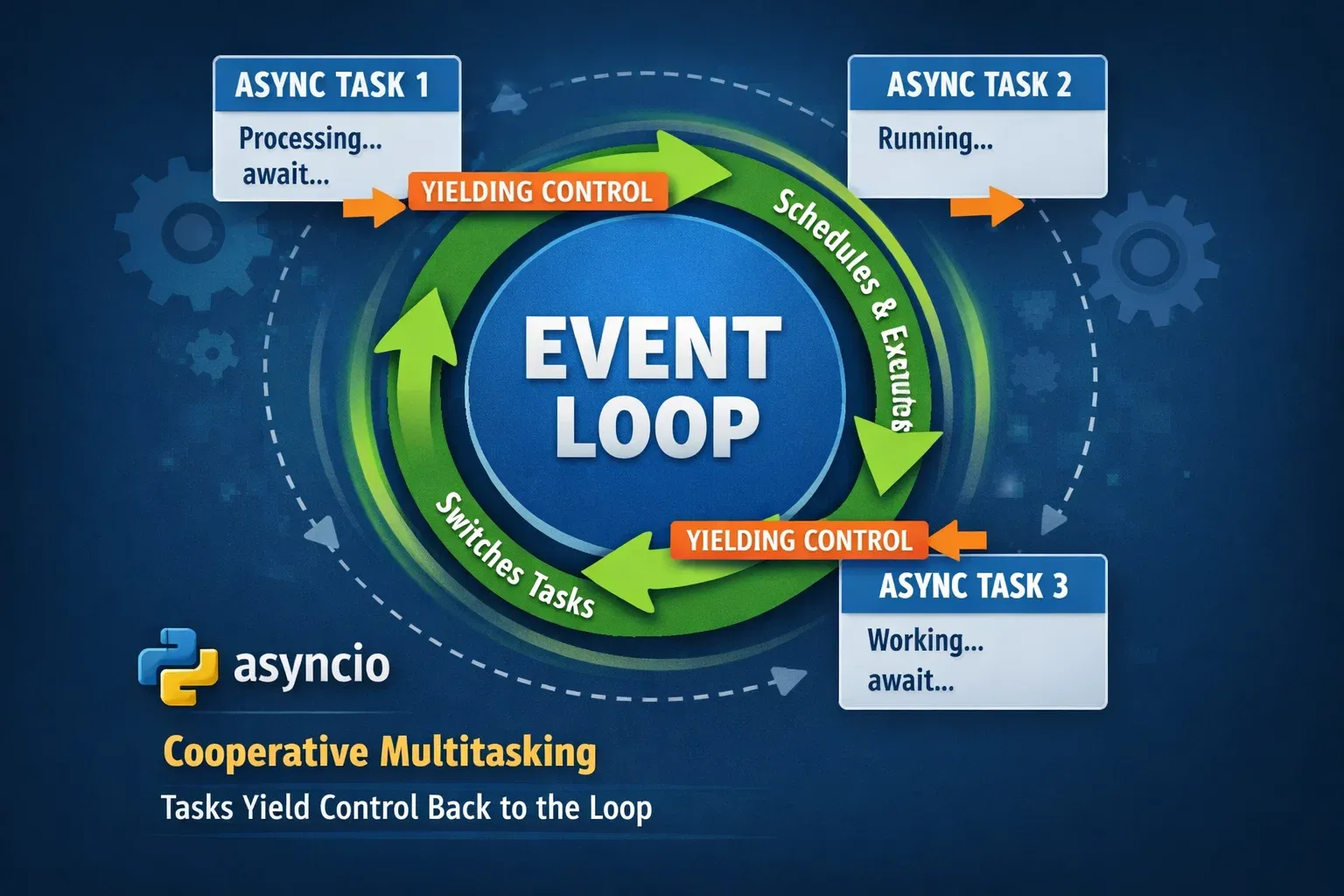
As modern applications become increasingly complex, handling multiple tasks at once is crucial. This is where Python asyncio comes in—a powerful library for asynchronous programming that allows you to write concurrent code using the async/await syntax.
For Pakistani students learning Python, mastering asyncio opens doors to developing fast web apps, concurrent API requests, real-time data processing, and more—all essential for careers in tech hubs like Karachi, Lahore, and Islamabad.
This guide will cover everything from core concepts to practical examples, common pitfalls, and exercises. By the end, you’ll be confident in building asynchronous Python applications that are efficient and scalable.
Prerequisites
Before diving into Python asyncio, you should have a solid understanding of:
- Basic Python programming (variables, functions, loops)
- Object-oriented programming in Python
- Python modules and packages
- Synchronous vs asynchronous programming concepts
- Optional but helpful: HTTP requests in Python (using
requestslibrary)
Having these foundations ensures that the advanced concepts of async/await are easier to grasp.
Core Concepts & Explanation
Python’s asyncio library introduces new programming paradigms that differ from traditional synchronous Python. Let’s break them down.
Event Loop: The Heart of Async Python
The event loop is a core concept of asyncio. Think of it as a manager that runs multiple tasks concurrently without creating multiple threads.
import asyncio

async def greet():
    print("Hello from Ahmad!")
    await asyncio.sleep(1)
    print("Goodbye from Ahmad!")

# Get the event loop and run the coroutine
asyncio.run(greet())
Line-by-line explanation:
import asyncio— Imports the asyncio library.async def greet():— Defines a coroutine namedgreet. Coroutines are special functions that can pause and resume.print("Hello from Ahmad!")— Prints immediately.await asyncio.sleep(1)— Pauses this coroutine for 1 second, allowing other tasks to run.print("Goodbye from Ahmad!")— Prints after the pause.asyncio.run(greet())— Creates an event loop, schedulesgreetcoroutine, and runs it until complete.
This non-blocking behavior is key for building efficient applications.
Coroutines: Functions That Can Pause
Coroutines are special Python functions using the async keyword. Unlike normal functions, they do not execute immediately and can yield control to the event loop using await.
async def fetch_data():
    print("Fetching data for Fatima...")
    await asyncio.sleep(2)  # Simulate network delay
    print("Data fetched for Fatima!")
    return {"name": "Fatima", "age": 21}
async def— Declares a coroutineawait— Pauses execution until the awaited task is complete- Returns data just like a regular function
Tasks and asyncio.create_task
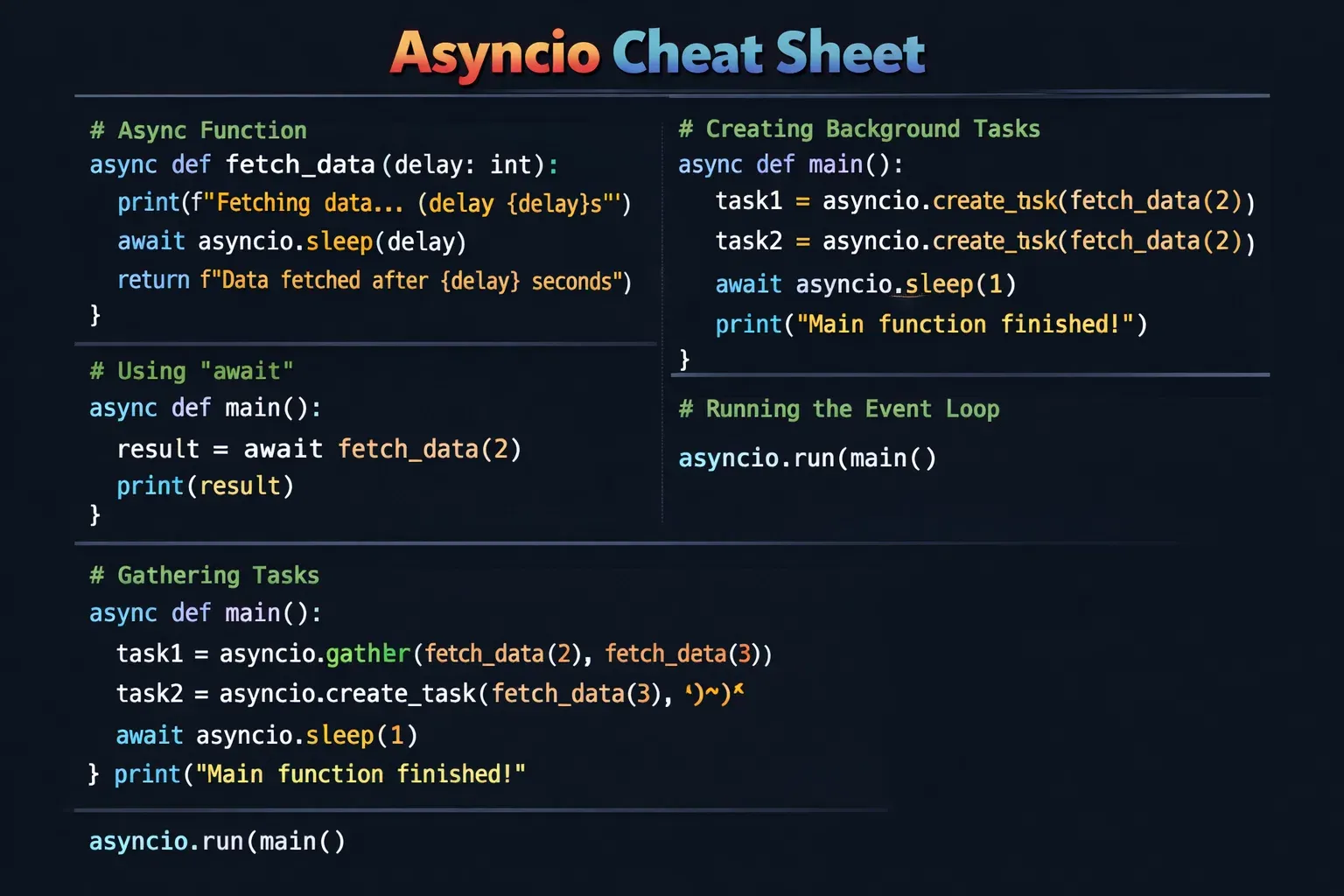
Sometimes you want multiple coroutines to run concurrently. This is achieved with tasks.
async def task1():
    print("Task 1 started")
    await asyncio.sleep(2)
    print("Task 1 completed")

async def task2():
    print("Task 2 started")
    await asyncio.sleep(1)
    print("Task 2 completed")

async def main():
    t1 = asyncio.create_task(task1())
    t2 = asyncio.create_task(task2())
    await t1
    await t2

asyncio.run(main())
asyncio.create_task()schedules a coroutine concurrently- Both tasks start immediately; the event loop switches between them
- Awaiting the tasks ensures the program waits until they finish
asyncio.gather: Running Multiple Tasks Together
If you want to wait for multiple tasks at once, asyncio.gather is convenient.
async def download_file(file_name):
    print(f"Downloading {file_name}...")
    await asyncio.sleep(2)
    print(f"{file_name} downloaded!")
    return file_name

async def main():
    results = await asyncio.gather(
        download_file("Ali_resume.pdf"),
        download_file("Fatima_project.zip"),
        download_file("Lahore_event.docx")
    )
    print("All files downloaded:", results)

asyncio.run(main())
- Runs multiple coroutines concurrently
- Returns results in the same order as called
- Ideal for tasks like multiple HTTP requests or file downloads
Practical Code Examples
Example 1: Simulating Concurrent Bank Transactions
Let’s simulate multiple Pakistani students sending money to each other using async code.
import asyncio

async def transfer_money(sender, receiver, amount):
    print(f"{sender} is transferring PKR {amount} to {receiver}")
    await asyncio.sleep(1)
    print(f"Transfer complete: {sender} -> {receiver}")

async def main():
    await asyncio.gather(
        transfer_money("Ahmad", "Fatima", 500),
        transfer_money("Ali", "Ahmad", 1000),
        transfer_money("Fatima", "Ali", 700)
    )

asyncio.run(main())
Explanation:
- Each transfer is simulated as a coroutine
asyncio.gatherruns them concurrently- Efficiently handles multiple transactions without blocking
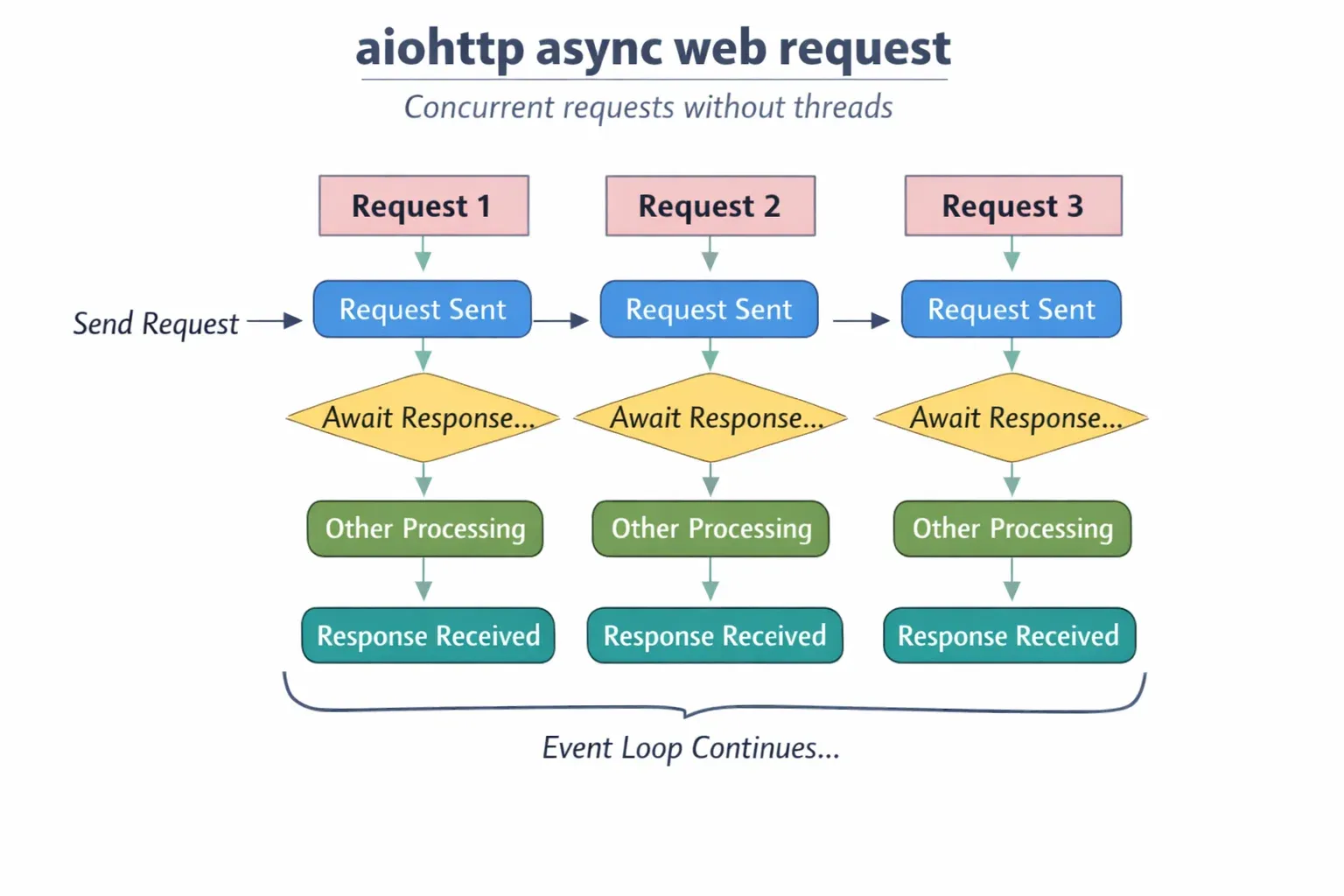
Example 2: Real-World Application — Fetching Data from Multiple APIs
Pakistani students often work with APIs like weather APIs for Lahore, Karachi, and Islamabad.
import asyncio
import aiohttp

async def fetch_weather(city):
    async with aiohttp.ClientSession() as session:
        url = f"https://api.weatherapi.com/v1/current.json?key=YOUR_KEY&q={city}"
        async with session.get(url) as response:
            data = await response.json()
            print(f"Weather in {city}: {data['current']['temp_c']}°C")

async def main():
    await asyncio.gather(
        fetch_weather("Lahore"),
        fetch_weather("Karachi"),
        fetch_weather("Islamabad")
    )

asyncio.run(main())
Explanation:
aiohttp— Async HTTP client- Each city fetch is a coroutine
- Event loop manages concurrent API calls efficiently
Common Mistakes & How to Avoid Them
Mistake 1: Forgetting await Inside Async Functions
async def example():
    print("Start")
    asyncio.sleep(2)  # ❌ Forgot await
    print("End")
Fix:
async def example():
    print("Start")
    await asyncio.sleep(2)  # ✅ Correct
    print("End")
- Missing
awaitcauses coroutine not to pause and behaves unexpectedly
Mistake 2: Using Blocking Code in Async Functions
import time

async def blocking_task():
    time.sleep(3)  # ❌ Blocks the entire event loop
    print("Task complete")
Fix with asyncio.sleep:
async def non_blocking_task():
    await asyncio.sleep(3)  # ✅ Non-blocking
    print("Task complete")
Practice Exercises
Exercise 1: Concurrent Number Printing
Problem: Write an async program to print numbers 1-5 concurrently, with 1-second pauses.
Solution:
import asyncio

async def print_number(n):
    await asyncio.sleep(1)
    print(n)

async def main():
    tasks = [asyncio.create_task(print_number(i)) for i in range(1, 6)]
    await asyncio.gather(*tasks)

asyncio.run(main())
- Each number prints after 1 second, concurrently
Exercise 2: Simulate Online Food Orders
Problem: Simulate 3 food orders from Karachi, Lahore, Islamabad and notify when ready.
Solution:
import asyncio

async def prepare_order(city, dish):
    print(f"Order for {dish} in {city} received")
    await asyncio.sleep(2)
    print(f"{dish} ready in {city}")

async def main():
    await asyncio.gather(
        prepare_order("Karachi", "Biryani"),
        prepare_order("Lahore", "Nihari"),
        prepare_order("Islamabad", "Chapli Kebab")
    )

asyncio.run(main())
- Demonstrates real-world concurrency for Pakistani food delivery apps
Frequently Asked Questions
What is Python asyncio?
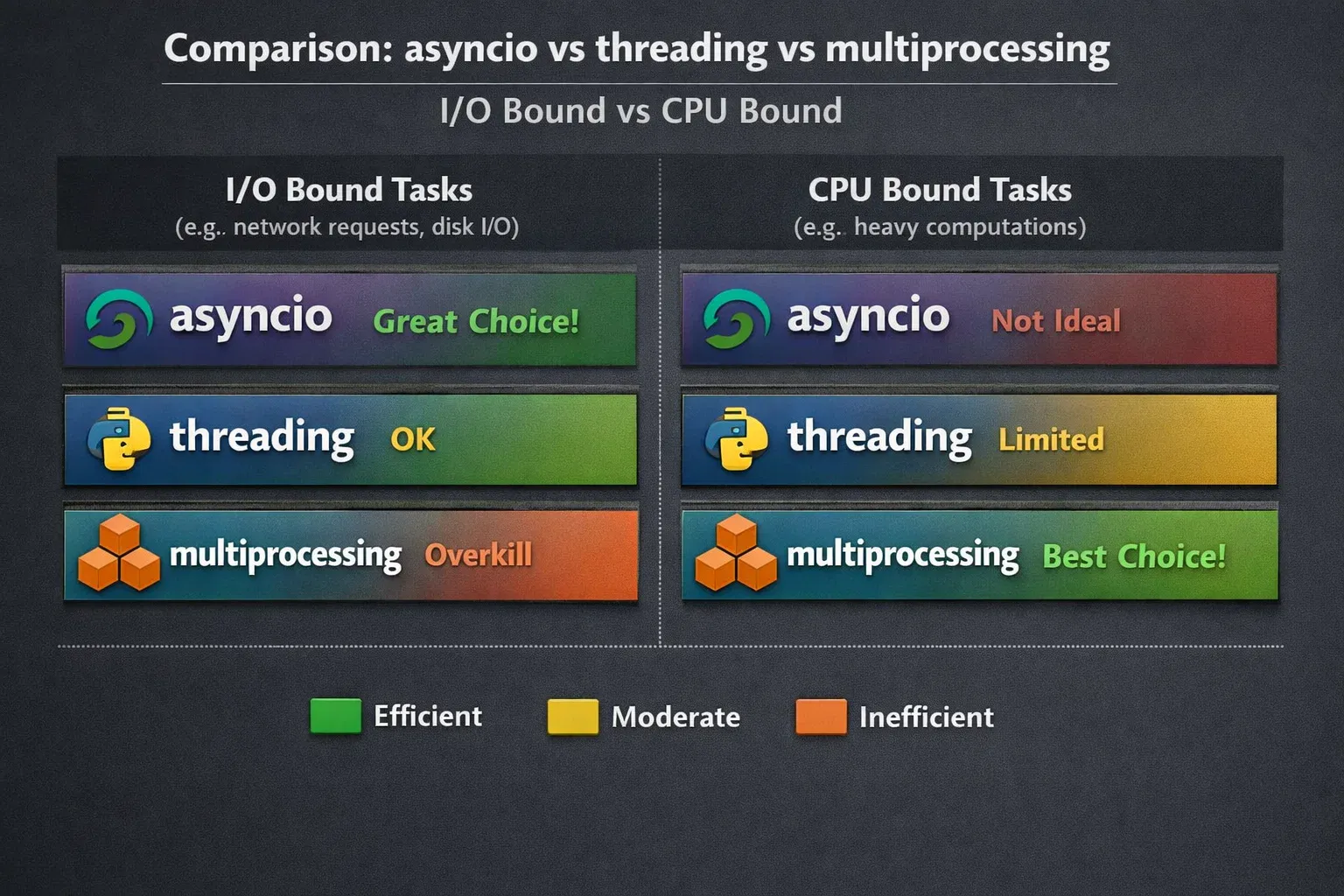
Python asyncio is a library for writing asynchronous Python code, allowing multiple tasks to run concurrently without threads or processes.
How do I use async and await in Python?
Use async def to define coroutines and await to pause their execution until the awaited task completes.
Can asyncio handle HTTP requests efficiently?
Yes. Using libraries like aiohttp, asyncio can make multiple concurrent HTTP requests efficiently, ideal for APIs or scraping.
Is asyncio faster than threading?
For I/O-bound tasks, asyncio is often faster than threading because it avoids the overhead of thread creation and context switching.
Can I use asyncio in Django or Flask?
Yes. Django 4+ supports async views, and Flask can integrate asyncio using Quart or async routes.
Summary & Key Takeaways
asyncioenables concurrent programming without threads.- Use
async defto define coroutines andawaitto pause execution. asyncio.create_taskandasyncio.gathermanage multiple tasks efficiently.- Avoid blocking code inside async functions; prefer
await asyncio.sleepovertime.sleep. - Ideal for I/O-bound tasks like API calls, web scraping, and database queries.
Next Steps & Related Tutorials
- Learn Python Tutorial to solidify your basics.
- Explore FastAPI Tutorial to build async web apps.
- Try aiohttp Async HTTP Requests for API projects.
- Understand Python Multithreading vs Asyncio for advanced concurrency strategies.
This guide provides Pakistani students with everything needed to master Python asyncio and apply it to real-world, locally relevant examples.
I can also create high-quality, ready-to-use images for the placeholders (event loop visual, code card, concurrency diagram) to complement the tutorial and boost engagement on theiqra.edu.pk.
Do you want me to generate those visuals next?
Test Your Python Knowledge!
Finished reading? Take a quick quiz to see how much you've learned from this tutorial.