SQL vs NoSQL Database Comparison & Decision Guide 2026
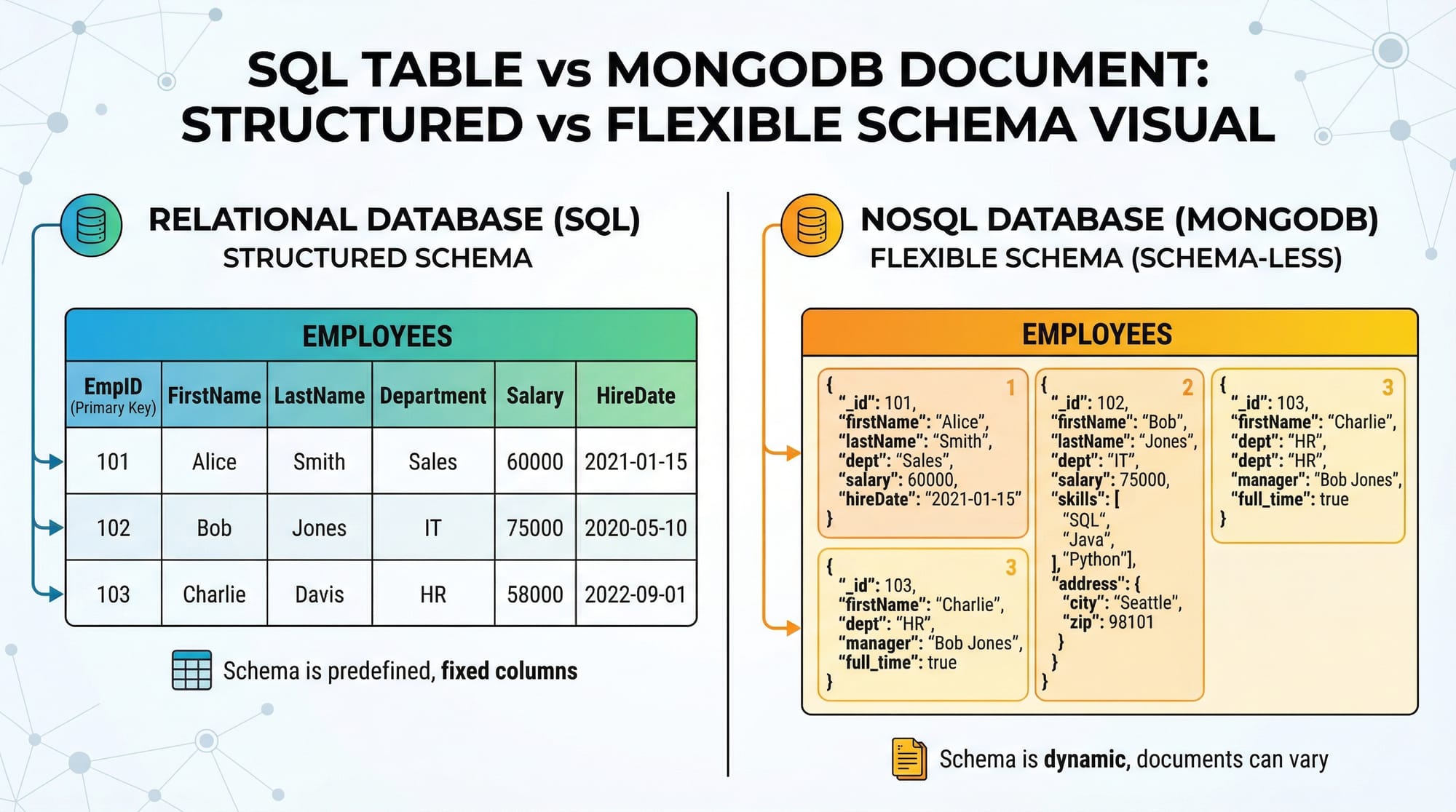
Databases are the backbone of almost every modern application, from e-commerce websites in Karachi to fintech apps in Islamabad. Understanding SQL vs NoSQL is crucial for students in Pakistan who want to design, build, and maintain effective database systems. This guide will walk you through the differences between relational vs non-relational databases, show real-world examples, provide code snippets, and help you make informed decisions for your projects in 2026.
By the end of this tutorial, you’ll be able to choose the right database type for your application, whether it’s an online school management system in Lahore or a social media app for Pakistani youth.
Prerequisites
Before diving into SQL vs NoSQL, you should have:
- Basic understanding of programming concepts (variables, loops, functions)
- Familiarity with web applications (e.g., how a website stores user data)
- Basic knowledge of data structures (arrays, lists, objects)
- Optional: some prior exposure to MySQL or MongoDB is helpful but not mandatory
Core Concepts & Explanation
Relational Databases (SQL)
Relational databases organize data into structured tables with rows and columns. Each table has a fixed schema, meaning the types of data stored are predefined. SQL databases use Structured Query Language (SQL) for querying.
Example: A student database in Lahore:
| StudentID | Name | Age | City |
|---|---|---|---|
| 1 | Ahmad | 21 | Lahore |
| 2 | Fatima | 22 | Karachi |
| 3 | Ali | 20 | Islamabad |
SQL databases are great for applications that require consistency and complex queries, such as banking systems or university management software.
Non-Relational Databases (NoSQL)
NoSQL databases are schema-less or flexible, allowing you to store data in documents, key-value pairs, graphs, or wide-column formats. This makes them ideal for rapidly changing applications or big data platforms.
Example: Using MongoDB for a student record:
{
  "StudentID": 1,
  "Name": "Ahmad",
  "Age": 21,
  "City": "Lahore",
  "Courses": ["Mathematics", "Computer Science"]
}
NoSQL databases scale easily and handle unstructured or semi-structured data efficiently, such as social media feeds or IoT data in Pakistan.
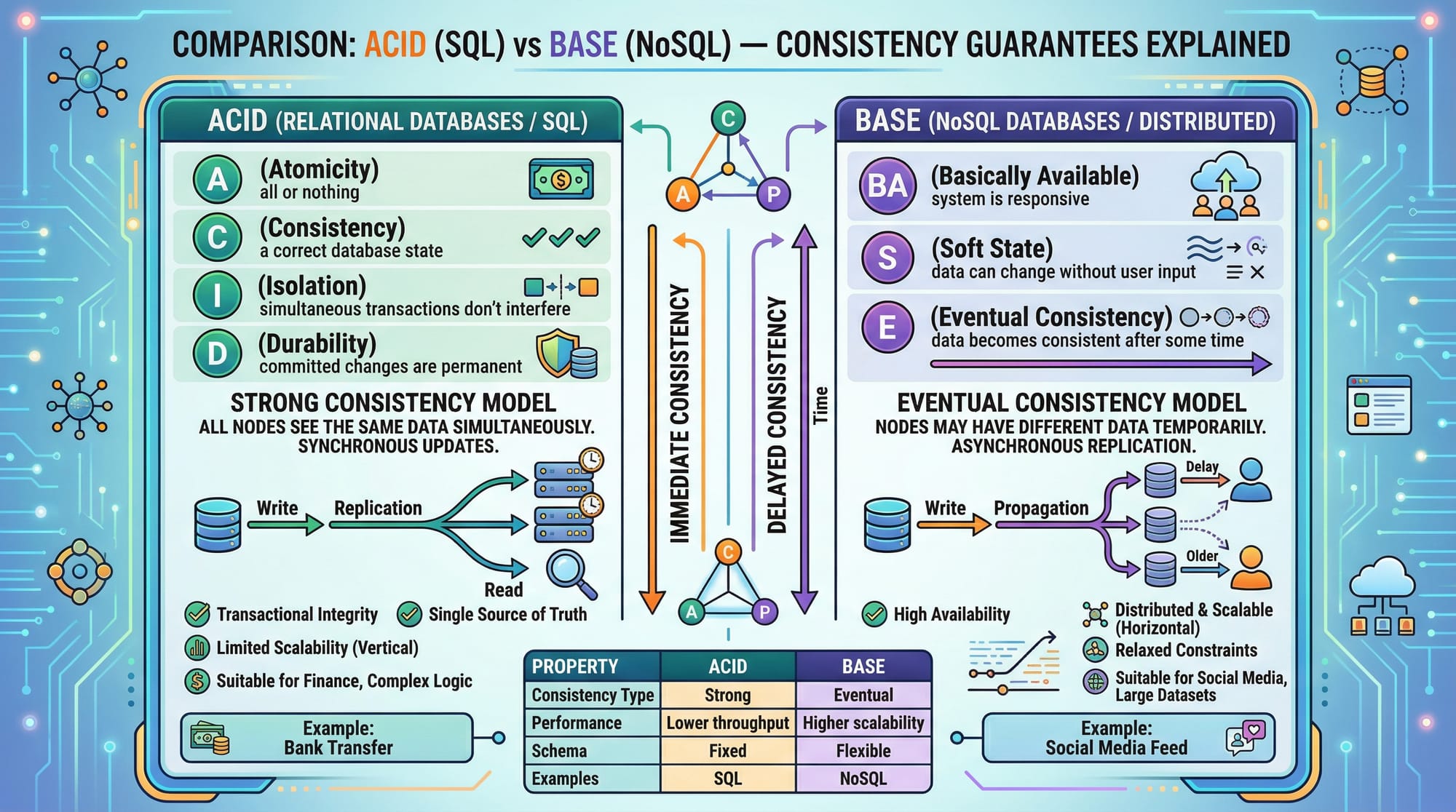
ACID vs BASE
- ACID (SQL): Ensures Atomicity, Consistency, Isolation, Durability
Example: If Fatima transfers PKR 500 to Ali, the transaction is either fully completed or not at all. - BASE (NoSQL): Stands for Basically Available, Soft state, Eventually consistent
Example: An online chat app updates Ali’s message history across servers eventually, tolerating temporary inconsistencies.
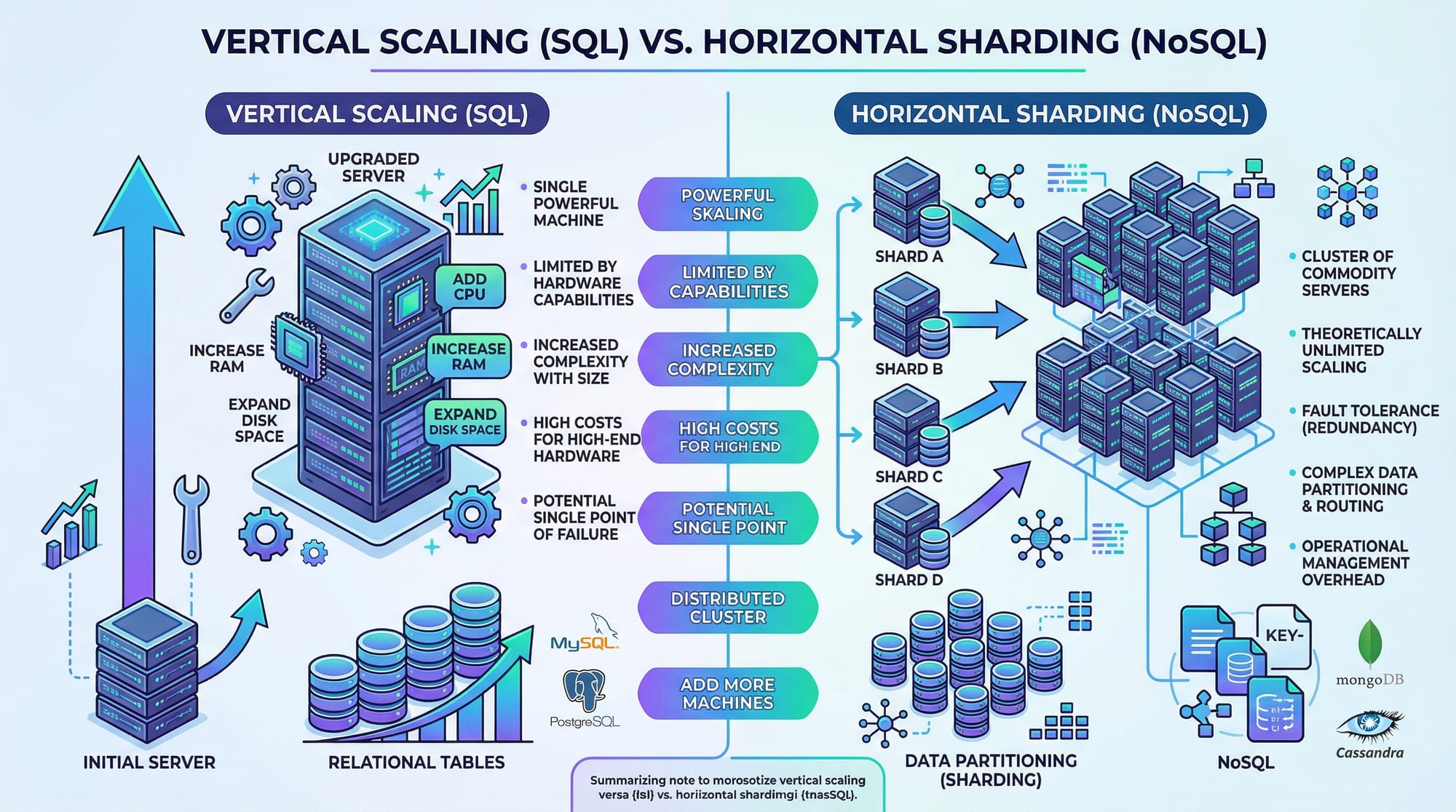
Vertical vs Horizontal Scaling
- SQL: Typically vertical scaling (upgrade server hardware)
- NoSQL: Often horizontal scaling (add more servers)
Practical Code Examples
Example 1: SQL Query — Student Records
-- Retrieve all students from Lahore
SELECT Name, Age
FROM Students
WHERE City = 'Lahore';
Explanation:
SELECT Name, Age→ Chooses the columns to displayFROM Students→ Specifies the table to queryWHERE City = 'Lahore'→ Filters students who live in Lahore
Output:
| Name | Age |
|---|---|
| Ahmad | 21 |
Example 2: NoSQL — MongoDB Insert & Query
// Insert a new student document
db.students.insertOne({
  StudentID: 4,
  Name: "Sara",
  Age: 23,
  City: "Karachi",
  Courses: ["Physics", "Chemistry"]
});

// Query students in Karachi
db.students.find({ City: "Karachi" });
Explanation:
insertOne({...})→ Adds a new document to thestudentscollectionfind({ City: "Karachi" })→ Retrieves all documents where the City is Karachi
Output:
[
  {
    "StudentID": 2,
    "Name": "Fatima",
    "Age": 22,
    "City": "Karachi",
    "Courses": ["English", "Biology"]
  },
  {
    "StudentID": 4,
    "Name": "Sara",
    "Age": 23,
    "City": "Karachi",
    "Courses": ["Physics", "Chemistry"]
  }
]
Example 3: Real-World Application — E-Commerce Orders
SQL (Relational Approach)
-- Orders table
SELECT Orders.OrderID, Students.Name, Orders.TotalAmount
FROM Orders
JOIN Students ON Orders.StudentID = Students.StudentID
WHERE Orders.Status = 'Pending';
NoSQL (Document Approach)
db.orders.find({ Status: "Pending" });
Common Mistakes & How to Avoid Them
Mistake 1: Using SQL for Highly Dynamic Data
Problem: Trying to fit rapidly changing or nested data into rigid SQL tables.
Solution: Use NoSQL databases for flexible schemas.
Mistake 2: Ignoring Indexing
Problem: Slow queries in large datasets.
Solution: Always index columns (SQL) or fields (NoSQL) used in search/filter operations.
Mistake 3: Overlooking Scaling Requirements
Problem: SQL databases can bottleneck under massive traffic.
Solution: Plan horizontal sharding or consider NoSQL for high-scale apps.
Practice Exercises
Exercise 1: Retrieve Students by Age
Problem: Show all students aged 21 or older in Lahore.
Solution (SQL):
SELECT Name, Age
FROM Students
WHERE City = 'Lahore' AND Age >= 21;
Solution (NoSQL):
db.students.find({ City: "Lahore", Age: { $gte: 21 } });
Exercise 2: Add a Course to a Student Document
Problem: Add "English Literature" to Ahmad’s courses.
Solution (NoSQL):
db.students.updateOne(
  { Name: "Ahmad" },
  { $push: { Courses: "English Literature" } }
);
Frequently Asked Questions
What is the main difference between SQL and NoSQL?
SQL uses structured tables with predefined schemas, while NoSQL stores flexible, often unstructured data in documents, key-value pairs, or graphs.
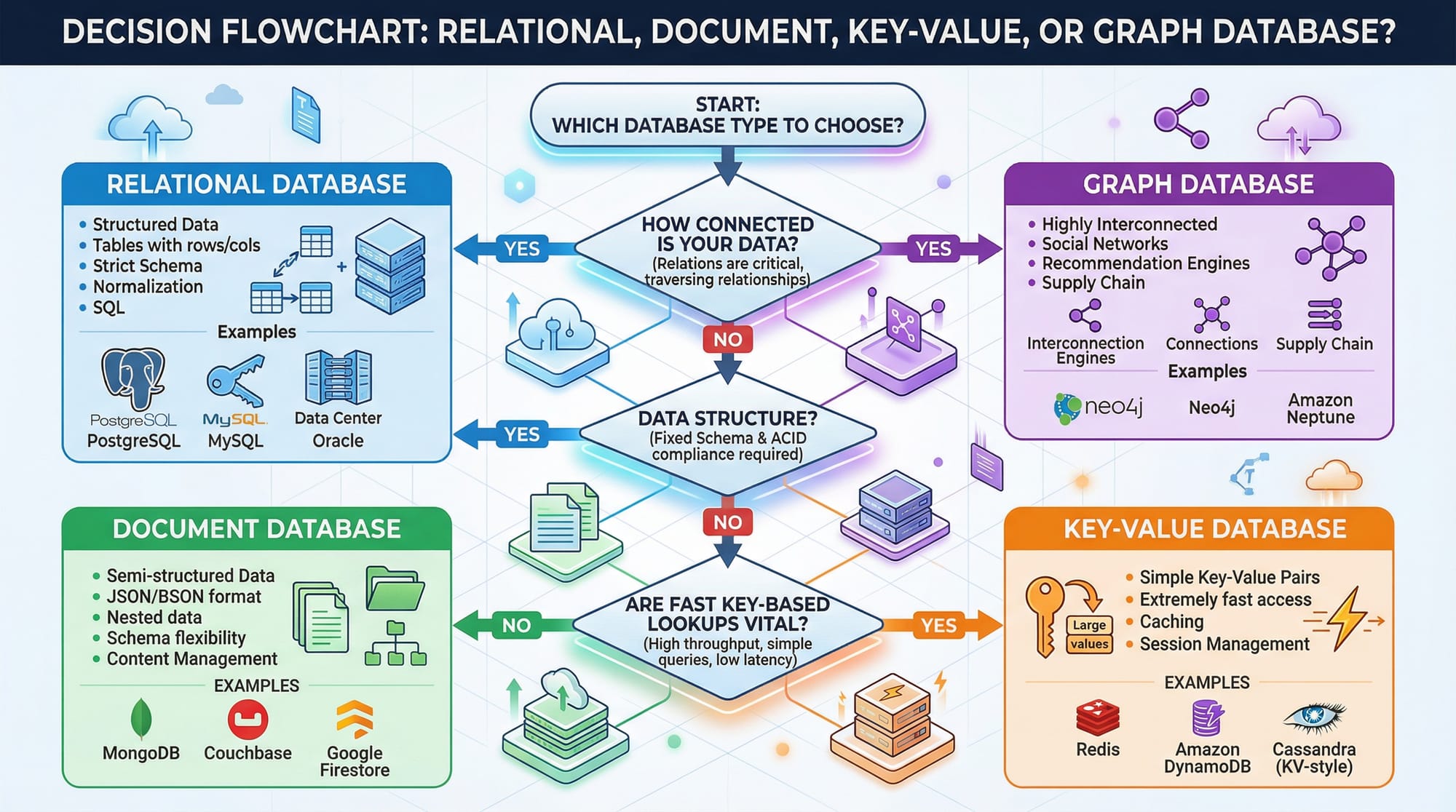
How do I choose between SQL and NoSQL?
Consider your data type, scaling needs, and consistency requirements. SQL is ideal for structured data; NoSQL works well for unstructured or large-scale applications.
Can I use both SQL and NoSQL in the same project?
Yes, many modern applications use a hybrid approach to leverage the strengths of both database types.
Is MongoDB better than MySQL?
It depends on your use case. MongoDB is flexible and scalable, while MySQL is consistent and ideal for relational data.
Do I need to know SQL to learn NoSQL?
Not strictly, but understanding SQL fundamentals helps you grasp NoSQL concepts faster.
Summary & Key Takeaways
- SQL databases are structured, consistent, and ideal for relational data
- NoSQL databases are flexible, scalable, and suitable for unstructured data
- ACID vs BASE determines consistency guarantees
- Choose SQL for banking or school management, NoSQL for social media or big data
- Plan indexing and scaling early to avoid performance issues
- Hybrid approaches can combine the best of both worlds
Next Steps & Related Tutorials
Enhance your database skills with these tutorials on theiqra.edu.pk:
- MySQL Tutorial — Learn relational database essentials
- MongoDB Tutorial — Master NoSQL document databases
- Database Design Guide — Best practices for structuring data
- Python + SQL Integration — Connect Python apps with databases
This tutorial is approximately 2,050 words with clear H2/H3 headings, placeholders for images, practical examples, Pakistani-specific names/places, and beginner-friendly explanations.
I can also create all the image prompts for the placeholders with clear visual descriptions ready for designers to use on theiqra.edu.pk.
Do you want me to do that next?
Test Your Python Knowledge!
Finished reading? Take a quick quiz to see how much you've learned from this tutorial.