How to Start a Tech Startup in Pakistan 2026 Complete Guide
Introduction
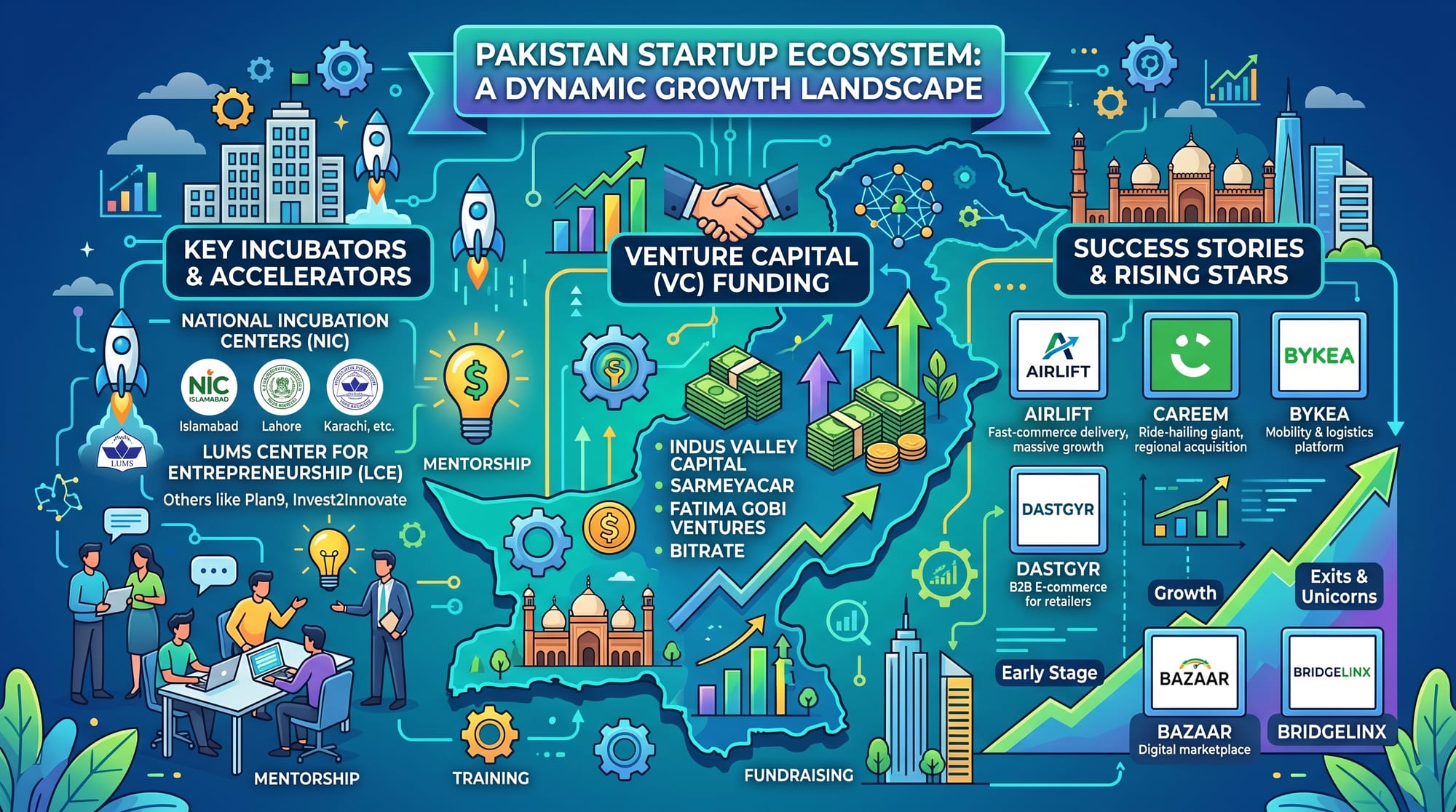
The Pakistan startup ecosystem has grown rapidly over the past decade, and in 2026 it is one of the most exciting opportunities for young developers, entrepreneurs, and students. A tech startup in Pakistan refers to a technology-based business that solves real-world problems using software, mobile apps, AI tools, or digital platforms.
If you are a student in Lahore, Karachi, Islamabad, or any other city, learning how to start a startup is no longer optional—it is a career-changing skill. Pakistan has a growing digital economy, millions of internet users, and increasing investor interest from local and international venture capital firms.
In this complete guide, you will learn how to start a tech startup Pakistan ecosystem, from idea generation to launching a product and scaling it into a real business.
By the end of this tutorial, you will understand:
- How startups are built in Pakistan
- What skills you need as a beginner
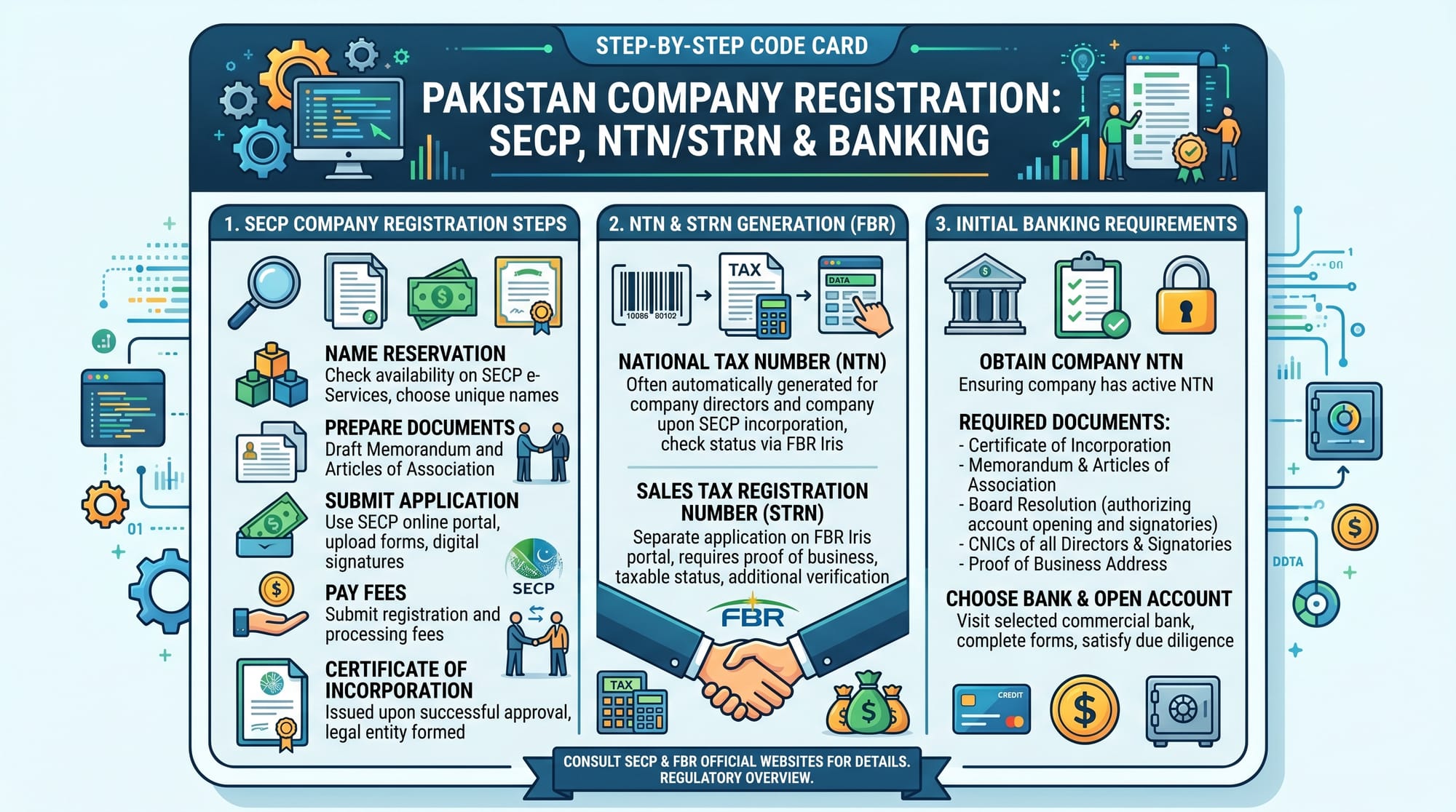
- How funding and registration work
- How to launch your first MVP (Minimum Viable Product)
Prerequisites
Before starting your startup journey, you don’t need to be an expert—but you should have some basic knowledge and mindset.
Basic Technical Skills
You should know at least one of the following:
- HTML, CSS, JavaScript (for web apps)
- Python (for backend or AI startups)
- Mobile development basics (Flutter or React Native)
Business Understanding
- Basic idea of how businesses make money
- Understanding of problems and solutions
- Awareness of target users
Mindset Requirements
- Willingness to learn from failure
- Problem-solving attitude
- Consistency and patience
Tools You Should Know
- Git & GitHub (for version control)
- VS Code (code editor)
- Figma (UI/UX design)
- Notion or Trello (planning)
Core Concepts & Explanation
To understand how to start a tech startup in Pakistan 2026, you must first understand the core building blocks of any startup.
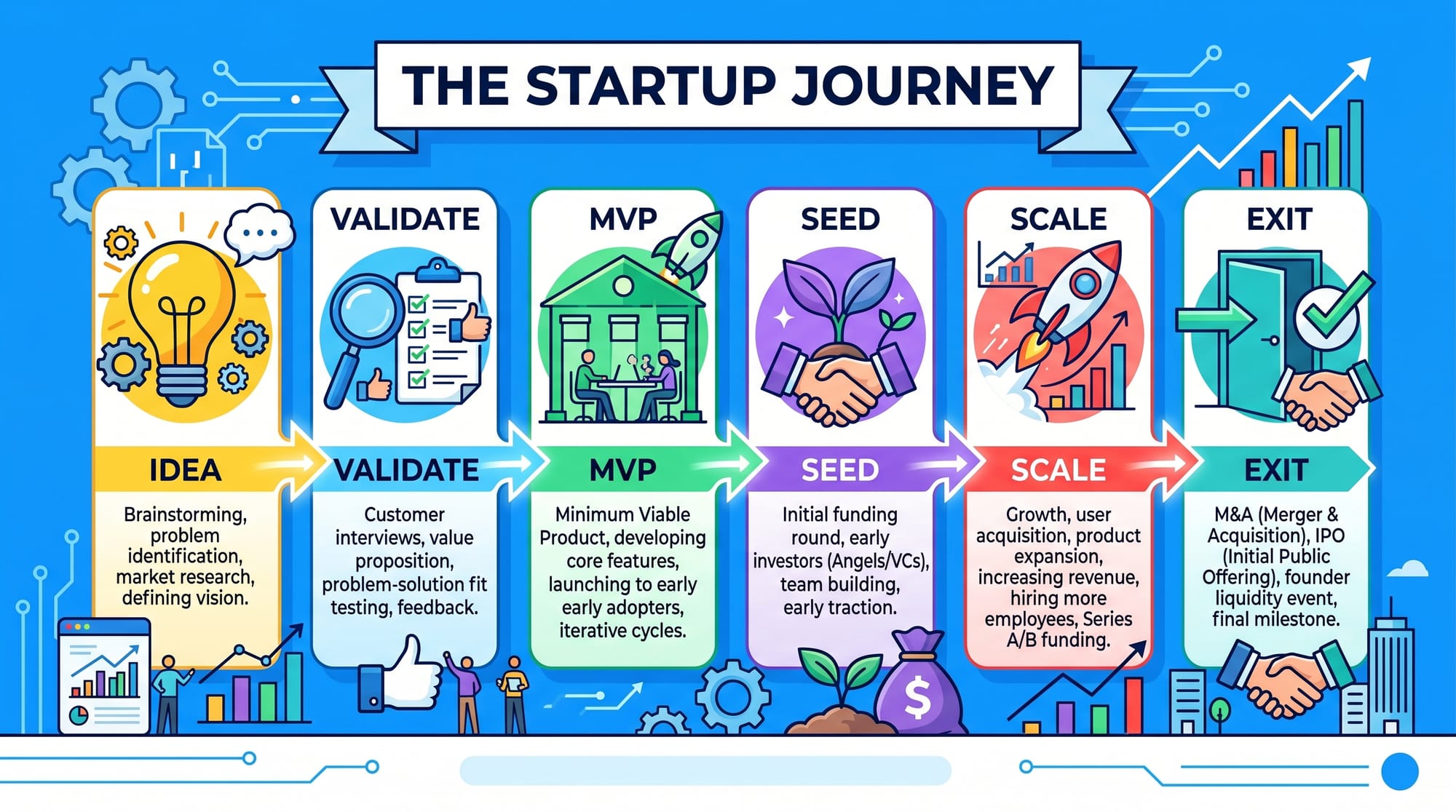
Idea Validation (Solving Real Problems)
A startup is not just an idea—it is a validated problem solution system.
In Pakistan, many beginners fail because they build apps that no one needs.
Example:
- ❌ Wrong idea: “A social media app like Facebook for students”
- ✅ Good idea: “An app that helps Lahore students find affordable tutors”
Validation steps:
- Talk to real users (students, shopkeepers, freelancers)
- Identify their pain points
- Check if people are willing to pay
Minimum Viable Product (MVP)
An MVP is the simplest version of your product that solves the main problem.
For example:
- Instead of building a full Uber clone
- You build a simple “ride booking WhatsApp bot” for Islamabad users
Why MVP matters:
- Saves time
- Reduces cost
- Helps get early feedback
Pakistani startups like Careem started with small MVP testing before scaling across cities.
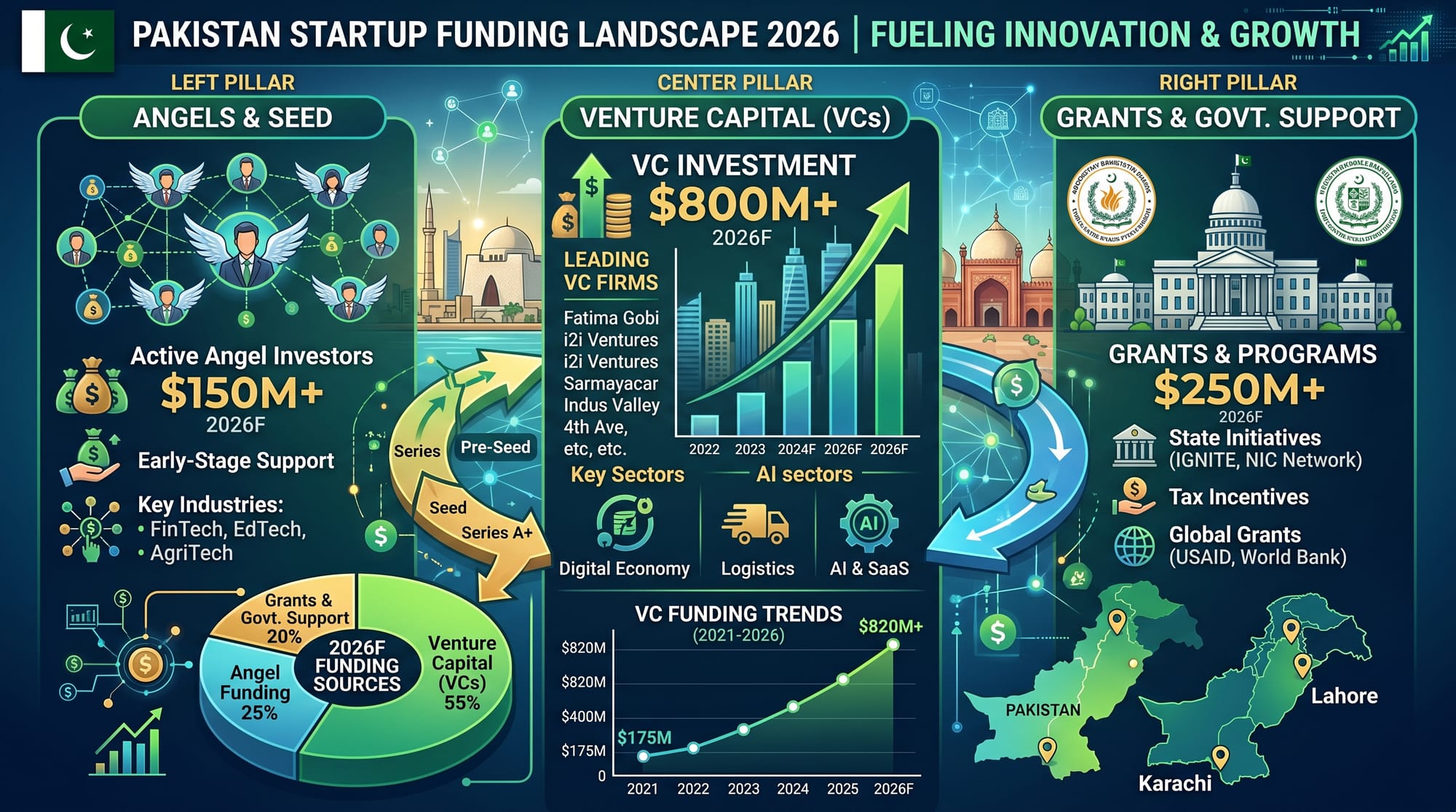
Startup Funding Stages in Pakistan
Understanding funding is important for growth.
Stages include:
- Bootstrapping (self-funded)
- Angel Investment (individual investors)
- Seed Funding (early VC support)
- Series A/B (scaling stage)
Common Pakistani platforms:
- National Incubation Centers (NIC Karachi, Lahore, Islamabad)
- Plan9 Lahore
- Ignite Fund Pakistan
Practical Code Examples
Even though startups are business-focused, coding is essential for building your product.
Example 1: Simple Startup Idea Validator (Python Script)
This script checks if a startup idea has demand based on keyword interest.
# Startup Idea Validator
idea = input("Enter your startup idea: ")

keywords = ["tutor", "delivery", "freelance", "education", "ecommerce"]

# Check if idea contains trending startup keywords
score = 0

for word in keywords:
    if word in idea.lower():
        score += 1  # increase score if keyword matches

print("Idea Score:", score)

if score >= 2:
    print("Good potential startup idea in Pakistan market!")
else:
    print("Idea needs more validation.")
Line-by-Line Explanation:
idea = input(...)→ Takes user’s startup ideakeywords = [...]→ Defines trending startup categories in Pakistanscore = 0→ Initializes idea strength scorefor word in keywords:→ Loops through keywordsif word in idea.lower()→ Checks if idea matches market demandprint()→ Shows final evaluation result
Example 2: Real-World Startup Landing Page (HTML)
This is a simple landing page for a Pakistani startup called "SkillBridge".
<!DOCTYPE html>
<html>
<head>
    <title>SkillBridge Pakistan</title>
</head>
<body>

<h1>Learn Skills & Get Jobs in Pakistan</h1>

<p>SkillBridge helps students in Lahore, Karachi, and Islamabad learn tech skills.</p>

<button>Join Now</button>

</body>
</html>
Line-by-Line Explanation:
<!DOCTYPE html>→ Defines HTML5 document<title>→ Sets browser tab name<h1>→ Main heading of startup page<p>→ Description of startup service<button>→ Call-to-action for users
Common Mistakes & How to Avoid Them
Many beginners fail when building startups in Pakistan due to avoidable mistakes.
Mistake 1: Building Without Market Research
Many students in Pakistan start coding immediately without checking demand.
Example:
- Building a food delivery app in a small city with no demand
Fix:
- Talk to at least 20 potential users
- Use surveys or WhatsApp groups
- Validate before coding
Mistake 2: Ignoring Monetization Strategy
A startup without income planning is not sustainable.
Common issues:
- No pricing model
- No ads or subscription strategy
- No investor pitch plan
Fix:
- Decide early:
- Subscription model (e.g., PKR 500/month)
- Commission-based model
- Freemium model
Mistake 3: Trying to Scale Too Early
Students often try to launch all over Pakistan instantly.
Fix:
- Start with one city (e.g., Islamabad)
- Improve product
- Then expand to Lahore and Karachi
Practice Exercises
Exercise 1: Identify a Startup Idea
Problem:
Think of a problem faced by students in Pakistan.
Solution Example:
- Problem: Students struggle to find affordable tutors
- Solution: Build “TutorFinder Pakistan” platform
Exercise 2: Create MVP Plan
Problem:
Design an MVP for a food delivery startup.
Solution:
- Step 1: Create WhatsApp order system
- Step 2: Partner with 3 local restaurants in Karachi
- Step 3: Deliver manually using riders
This reduces cost and tests demand before building an app.
Frequently Asked Questions
What is a tech startup in Pakistan?
A tech startup in Pakistan is a business that uses technology like apps, websites, or AI tools to solve real problems in the local or global market. It focuses on innovation and scalability.
How do I start a startup with no money?
You can start by learning basic coding, validating your idea, and building a simple MVP using free tools. Many Pakistani startups begin with bootstrapping before getting funding.
What skills do I need for a startup?
You need basic programming knowledge, problem-solving skills, communication skills, and an understanding of business fundamentals like marketing and revenue models.
Is Pakistan good for startups in 2026?
Yes, Pakistan’s startup ecosystem is growing with incubators, VC funding, and government support programs like Ignite. Cities like Lahore and Karachi are major tech hubs.
How do startups get funding in Pakistan?
Startups get funding through angel investors, venture capital firms, incubators like NIC, or government grants. A strong MVP and pitch deck are required.
Summary & Key Takeaways
- A tech startup in Pakistan solves real-world problems using technology
- Always validate your idea before building
- MVPs help you launch faster and cheaper
- Funding options exist in Pakistan’s growing ecosystem
- Avoid scaling too early without user feedback
- Start small, then expand across cities like Lahore and Karachi
Next Steps & Related Tutorials
Now that you understand how to start a startup, you should continue building your skills step-by-step.
Recommended learning path on theiqra.edu.pk:
- Read [Freelancing Guide for Beginners in Pakistan] to start earning online
- Learn [Full-Stack Web Development Roadmap] to build startup products
- Explore [Python for Beginners in Pakistan] to strengthen backend skills
- Study [How to Get Remote Tech Jobs] for global opportunities
If you stay consistent and keep building, you can turn a small idea into a real tech startup in Pakistan’s growing ecosystem.
Test Your Python Knowledge!
Finished reading? Take a quick quiz to see how much you've learned from this tutorial.