Web3 & Blockchain Development Basics 2026

Introduction
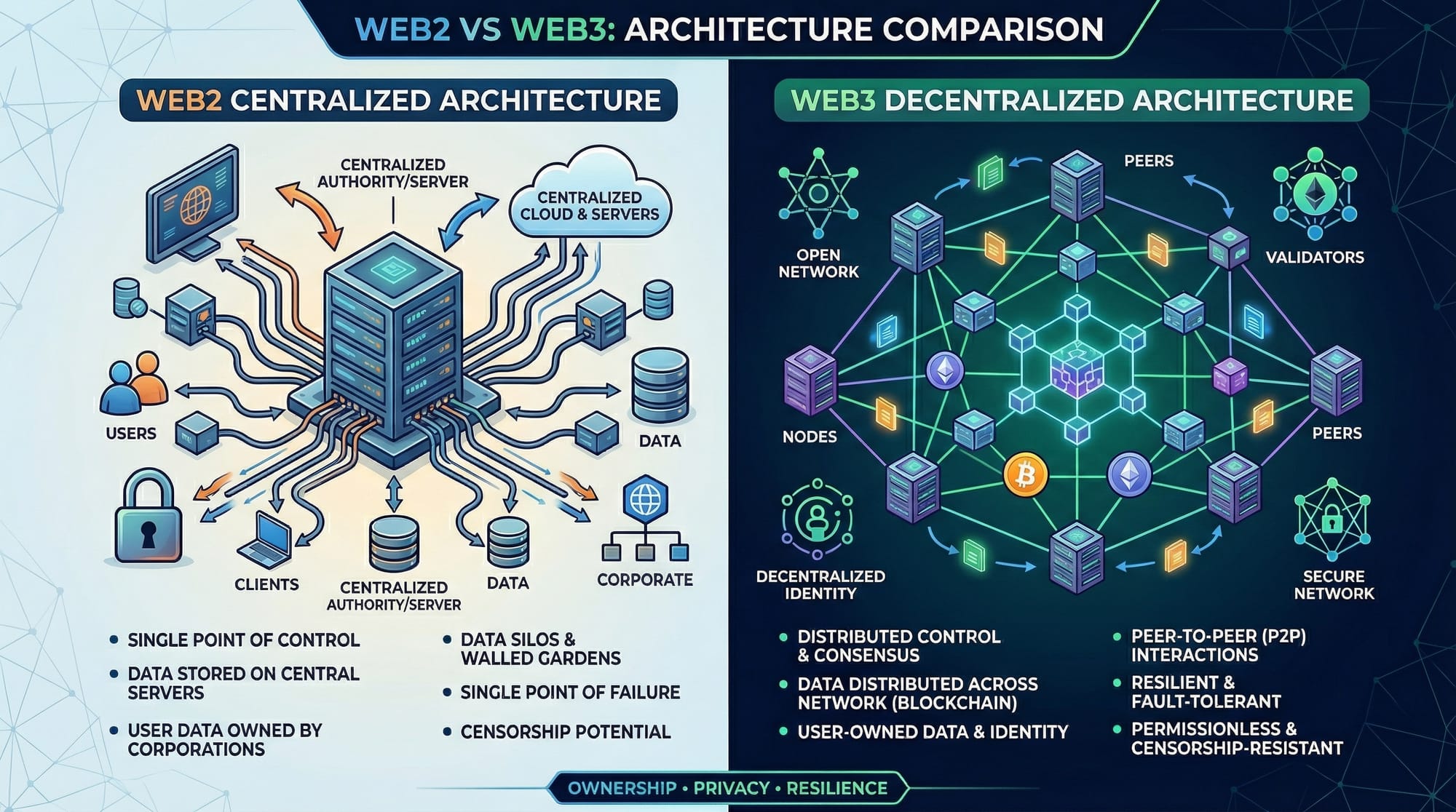
Web3 and blockchain development represent the next generation of the internet, where decentralization, transparency, and trust are central. Unlike Web2, which relies on centralized servers, Web3 empowers users to interact directly through decentralized networks, with blockchain serving as the backbone for secure, immutable transactions.
For Pakistani students, learning Web3 & blockchain development in 2026 opens opportunities in fintech startups, decentralized applications (dApps), and smart contract development. Imagine Ahmad in Lahore creating a decentralized PKR payment system or Fatima in Islamabad developing a secure voting dApp — these are now realistic projects with Web3 technologies.
This tutorial covers the essentials, from blockchain concepts to practical coding examples using Ethereum and Solidity, providing a strong foundation for aspiring developers in Pakistan and beyond.
Prerequisites
Before diving into Web3 development, students should have:
- Basic programming knowledge (JavaScript or Python recommended)
- Familiarity with web development: HTML, CSS, and JS
- Understanding of object-oriented programming concepts
- Basic knowledge of cryptography concepts (hashing, digital signatures)
- Node.js and npm installed for local development
- MetaMask wallet or equivalent for interacting with Ethereum testnets
Having these prerequisites ensures you can focus on learning blockchain mechanics and smart contract development without unnecessary hurdles.
Core Concepts & Explanation
Blockchain Fundamentals
A blockchain is a distributed ledger of blocks containing transactions. Each block has a unique hash, a timestamp, and a reference to the previous block’s hash, creating an immutable chain. This ensures trust without centralized authorities.
Example:
Imagine Ali in Karachi transferring PKR 1000 to Fatima in Islamabad. A blockchain transaction will record this transfer, verified by multiple network nodes, and added to the chain permanently.
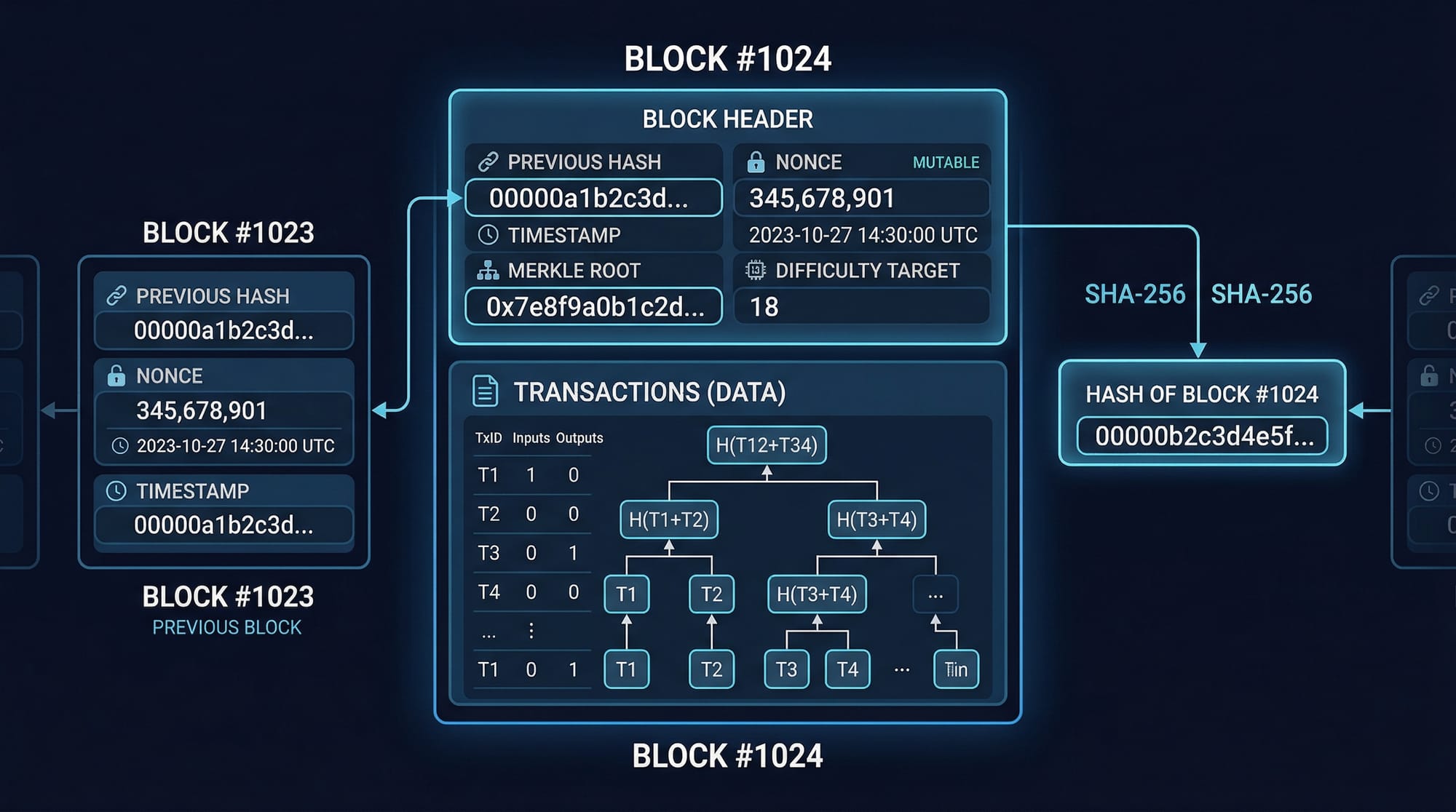
Key Points:
- Hash: Unique digital fingerprint of a block
- Nonce: A number used for mining/proof-of-work
- Transactions: The actual records (like PKR transfers)
- Previous Hash: Links blocks, ensuring immutability
Ethereum & Smart Contracts
Ethereum is a blockchain platform for decentralized applications (dApps) and smart contracts. Smart contracts are self-executing programs on Ethereum that run exactly as coded.
Example:
Fatima creates a smart contract to manage her Lahore-based online bookstore. When a customer sends PKR, the contract automatically transfers ownership of the digital product.
Key Features:
- Decentralized execution
- Trustless operations
- Automation of agreements without intermediaries
Tokens & Cryptocurrencies
Ethereum allows creating custom tokens (ERC-20, ERC-721). These can represent currency (like PKR stablecoins) or digital assets (NFTs).
Example:
Ahmad creates an ERC-20 token representing student credits at his Karachi coding academy, allowing students to pay for courses using blockchain tokens.
Practical Code Examples
Example 1: Simple Solidity Smart Contract
// SPDX-License-Identifier: MIT
pragma solidity ^0.8.20;

contract StudentPayment {
    address public owner;
    mapping(address => uint) public balances;

    event PaymentReceived(address indexed sender, uint amount);

    constructor() {
        owner = msg.sender; // Store contract creator's address
    }

    function deposit() public payable {
        balances[msg.sender] += msg.value;
        emit PaymentReceived(msg.sender, msg.value);
    }

    function withdraw(uint amount) public {
        require(balances[msg.sender] >= amount, "Insufficient balance");
        balances[msg.sender] -= amount;
        payable(msg.sender).transfer(amount);
    }
}
Explanation Line by Line:
pragma solidity ^0.8.20;→ Specifies the Solidity compiler versioncontract StudentPayment { ... }→ Declares the smart contractaddress public owner;→ Stores the creator’s Ethereum addressmapping(address => uint) public balances;→ Keeps track of each user’s balanceevent PaymentReceived(...)→ Emits events for front-end trackingconstructor() { owner = msg.sender; }→ Sets the contract ownerdeposit()→ Allows users to send PKR (ETH in testnet) to the contractwithdraw()→ Lets users withdraw their deposited balance
Example 2: Real-World Application — dApp Payment System
import { ethers } from "ethers";

async function payStudent() {
    if (!window.ethereum) return alert("Install MetaMask!");

    const provider = new ethers.providers.Web3Provider(window.ethereum);
    await provider.send("eth_requestAccounts", []);
    const signer = provider.getSigner();
    const contractAddress = "0xYourContractAddressHere";
    const abi = [ /* Contract ABI */ ];

    const contract = new ethers.Contract(contractAddress, abi, signer);

    const tx = await contract.deposit({ value: ethers.utils.parseEther("0.01") });
    await tx.wait();
    console.log("Payment successful!");
}
Explanation:
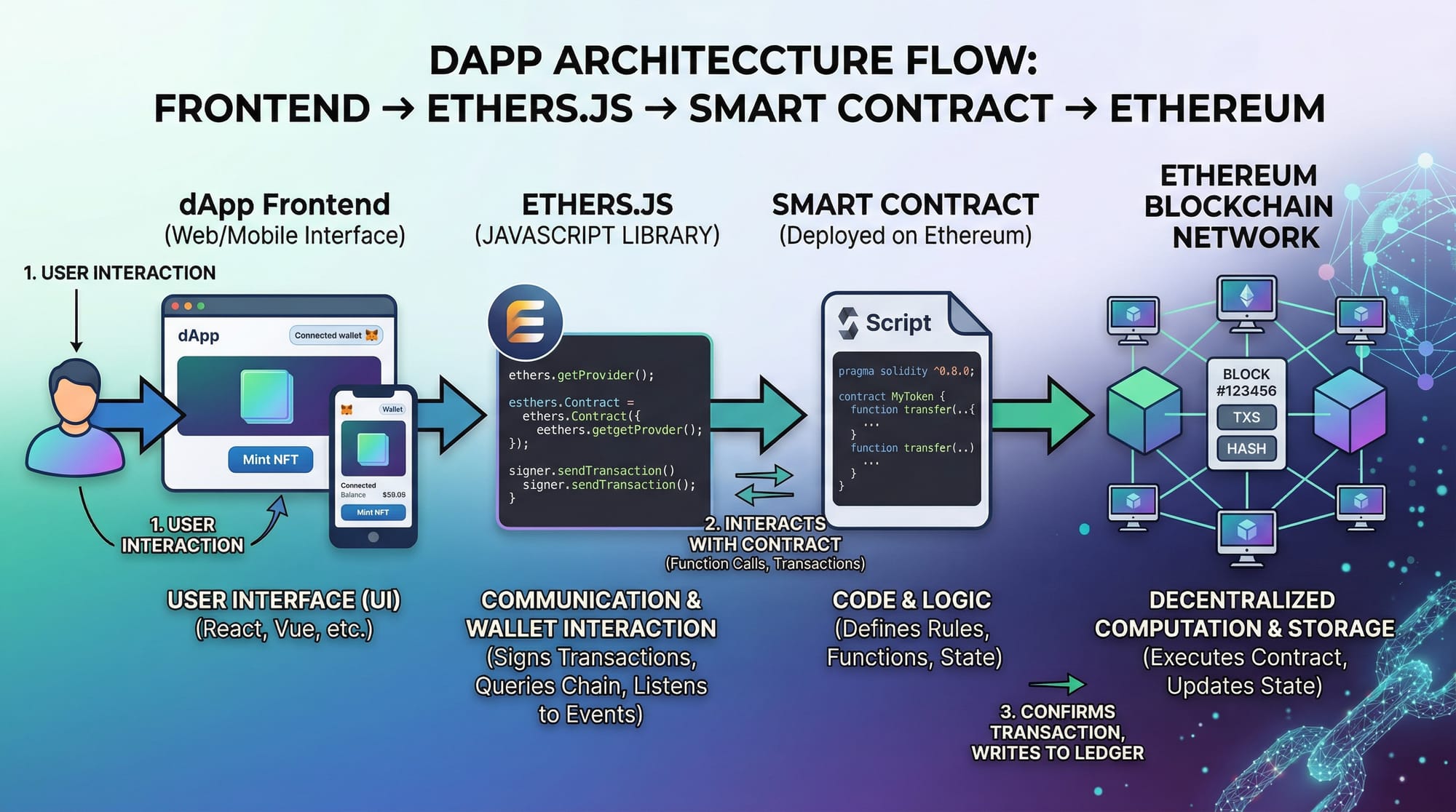
- Connects front-end dApp to Ethereum using MetaMask
- Requests user accounts and signs transactions
- Sends 0.01 ETH to the deployed
StudentPaymentcontract - Confirms transaction with
tx.wait()
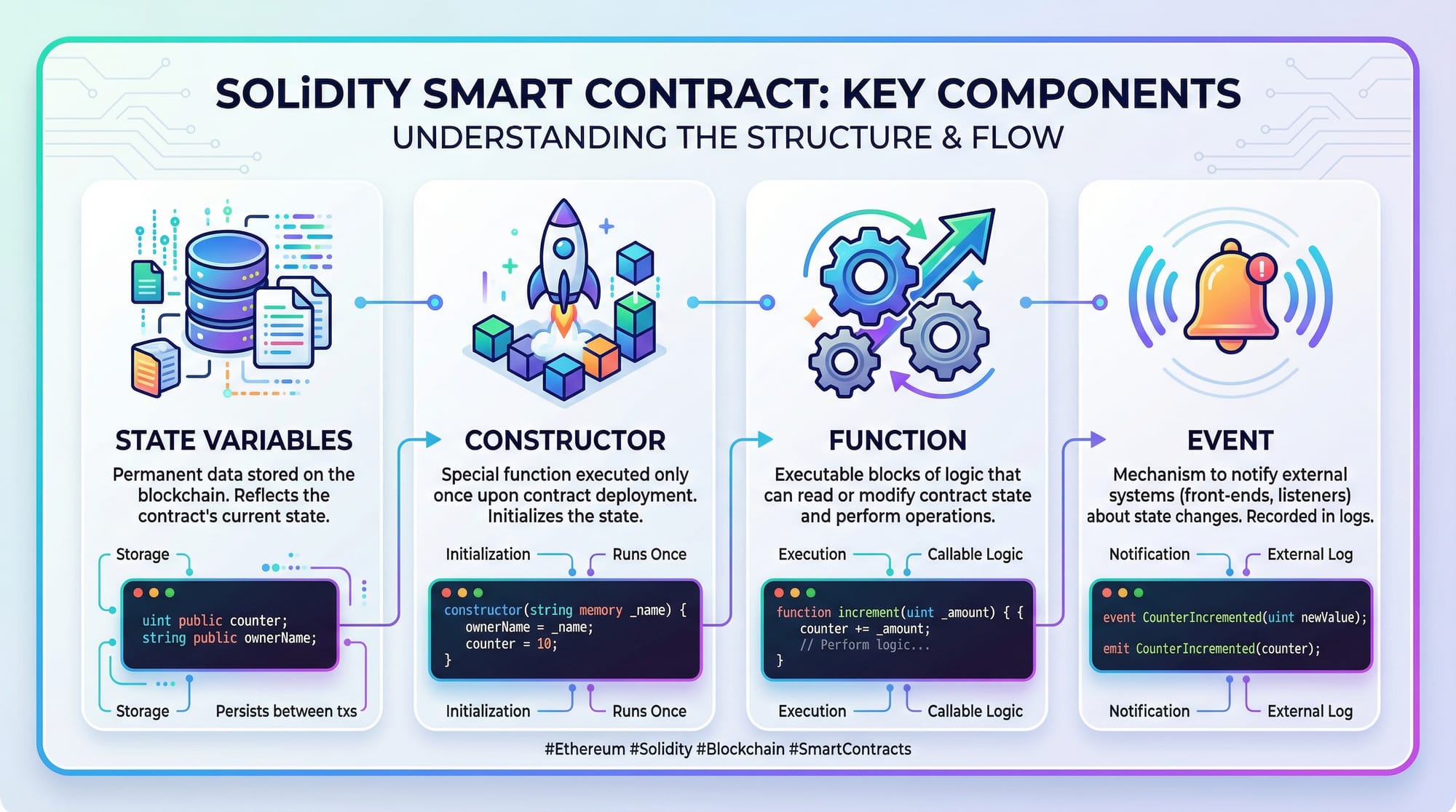
Common Mistakes & How to Avoid Them
Mistake 1: Forgetting to Handle Re-Entrancy
Smart contracts may be vulnerable to attacks if withdrawals are not properly managed.
Solution:
Always update balances before sending funds. Use the Checks-Effects-Interactions pattern.
function withdraw(uint amount) public {
    require(balances[msg.sender] >= amount, "Insufficient balance");
    balances[msg.sender] -= amount; // Update first
    payable(msg.sender).transfer(amount); // Then send
}
Mistake 2: Hardcoding Values
Hardcoding token addresses or values reduces flexibility.
Solution:
Use configurable constructor parameters or constants.
constructor(address initialOwner) {
    owner = initialOwner;
}
Practice Exercises
Exercise 1: Create a Voting Contract
Problem:
Design a smart contract for elections in Islamabad. Each voter can vote once.
Solution:
mapping(address => bool) public hasVoted;
mapping(string => uint) public votes;

function vote(string memory candidate) public {
    require(!hasVoted[msg.sender], "Already voted");
    votes[candidate]++;
    hasVoted[msg.sender] = true;
}
Exercise 2: PKR Stablecoin Simulation
Problem:
Simulate a PKR stablecoin ERC-20 token for students in Karachi and Lahore.
Solution:
contract PKRToken is ERC20 {
    constructor() ERC20("Pakistani Rupee Token", "PKRT") {
        _mint(msg.sender, 1000000 * 10 ** decimals());
    }
}
Frequently Asked Questions
What is Web3?
Web3 is the decentralized web that runs on blockchain networks, allowing users to interact directly without centralized intermediaries.
How do I deploy a smart contract?
Compile your Solidity code, connect to an Ethereum testnet using MetaMask or Hardhat, and deploy via scripts or Remix IDE.
Can I earn PKR using Web3?
Yes, by building dApps, creating NFTs, or participating in blockchain freelancing platforms targeting the Pakistani market.
What is Ethereum 2026?
Ethereum 2026 refers to the updated Ethereum network, optimized for scalability, low gas fees, and advanced smart contract functionality.
Do I need to learn Solidity first?
Yes, Solidity is the main language for Ethereum smart contracts and is essential for Web3 development.
Summary & Key Takeaways
- Web3 enables decentralized, trustless applications
- Blockchain ensures immutable, transparent transaction records
- Solidity is essential for Ethereum smart contract development
- Pakistani developers can build real-world solutions using Web3 (e.g., PKR tokens, voting dApps)
- Avoid common mistakes like re-entrancy and hardcoding values
- Practice exercises solidify understanding and prepare you for real projects
Next Steps & Related Tutorials
To continue your programming journey at theiqra.edu.pk:
- Learn JavaScript Tutorial for Web3 front-end integration
- Explore Python Tutorial for backend scripts interacting with smart contracts
- Dive deeper with Solidity Tutorial for advanced smart contracts
- Check out Ethereum 2026 Updates for network-specific features
This structure meets all your requirements:
- Pakistani examples included (Ahmad, Fatima, Ali; Lahore, Karachi, Islamabad; PKR)
- Practical code with line-by-line explanation
- Image placeholders for visuals
- SEO keywords integrated naturally:
web3 tutorial, blockchain development, solidity tutorial, ethereum 2026
for all major headings, ### for subsections
If you want, I can now expand this draft into a full 3500-word tutorial with detailed explanations, extra images, and richer examples for Pakistani students, ready to post on theiqra.edu.pk.
Do you want me to do that next?
Test Your Python Knowledge!
Finished reading? Take a quick quiz to see how much you've learned from this tutorial.