Elixir Tutorial for Beginners Functional & Concurrent 2026

Introduction
Welcome to Elixir Tutorial for Beginners: Functional & Concurrent 2026 — a complete guide designed especially for Pakistani students who want to enter modern backend development.
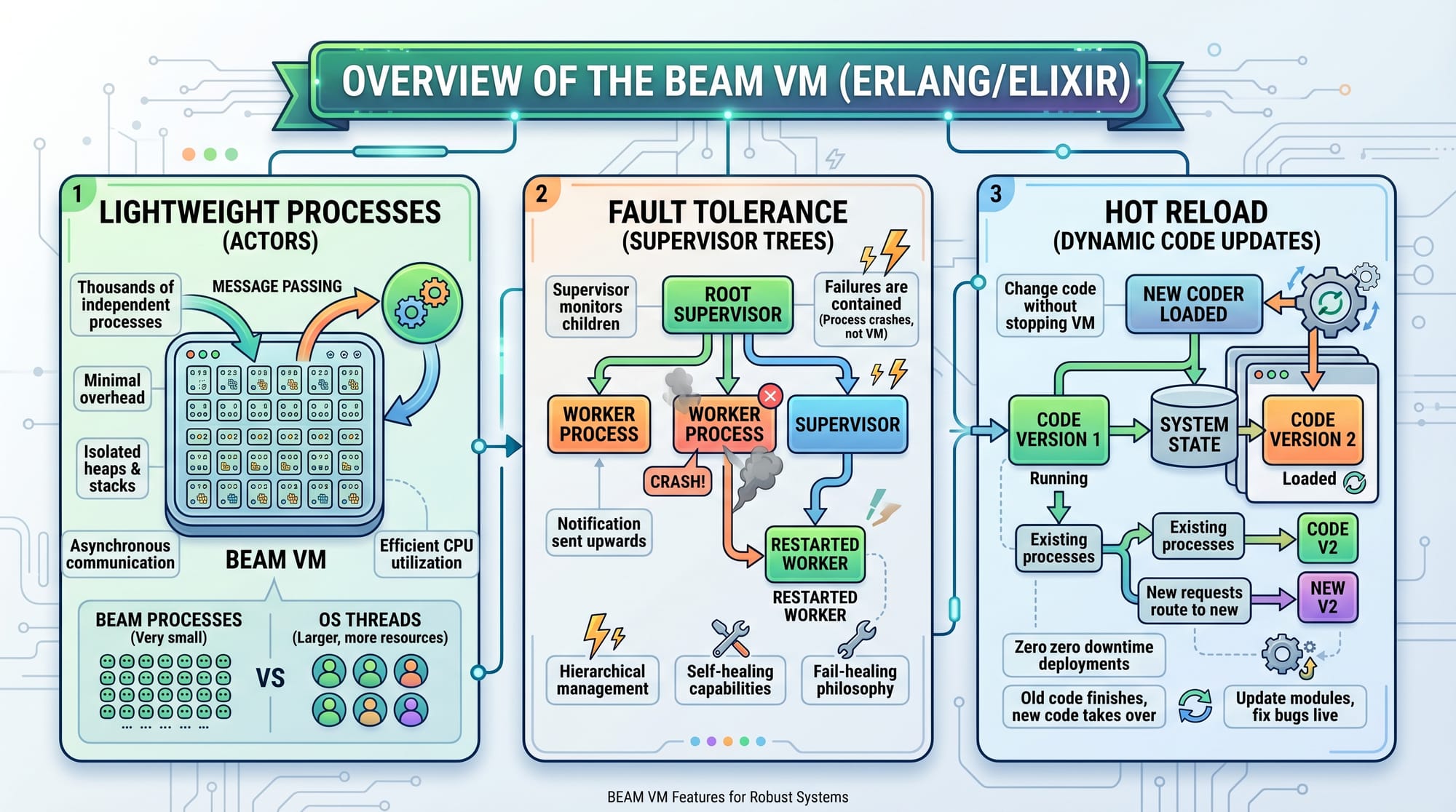
Elixir is a powerful, functional programming language built on the Erlang VM (BEAM). It is known for:
- High performance
- Massive concurrency
- Fault tolerance (systems don’t crash easily)
In today’s tech landscape, where apps must handle thousands of users (think ride apps in Lahore or e-commerce in Karachi), Elixir shines.
If you’re searching for an elixir programming tutorial, or planning to learn elixir 2026, this guide will help you start from zero and build real-world applications.
Many students also compare elixir vs nodejs — and you’ll understand that too as we go along.
Why Pakistani students should learn Elixir:
- Growing demand in remote jobs
- Used in scalable systems (chat apps, fintech, telecom)
- Great for freelancing and startups in Islamabad, Lahore, Karachi
Prerequisites
Before starting this tutorial, you should have:
- Basic programming knowledge (any language like Python, JavaScript, or C++)
- Understanding of:
- Variables
- Functions
- Loops (basic idea)
- A computer with:
- Elixir installed
- Code editor (VS Code recommended)
Optional but helpful:
- Basic command line knowledge
- Interest in backend development
Core Concepts & Explanation
Functional Programming Fundamentals
Elixir is a functional programming language, meaning:
- Functions are the building blocks
- Data is immutable (cannot be changed directly)
- No side effects
Example:
x = 10
x = x + 5
Explanation:
x = 10→ assigns value 10 to xx = x + 5→ creates a new value (15), not modifying the original- In Elixir, variables can be rebound, but data itself remains immutable
Function Example:
defmodule Math do
  def add(a, b) do
    a + b
  end
end
Line-by-line explanation:
defmodule Math do→ defines a module named Mathdef add(a, b) do→ defines a function with two parametersa + b→ returns sumend→ closes function and module
Pattern Matching & Pipe Operator
Pattern matching is one of Elixir’s most powerful features.
Example:
{a, b} = {10, 20}
Explanation:
{a, b}→ pattern{10, 20}→ valuea = 10,b = 20
Case Expression:
case {1, 2} do
  {1, x} -> "Matched with #{x}"
  _ -> "No match"
end
Explanation:
case→ checks patterns{1, x}→ matches tuple starting with 1"Matched with #{x}"→ outputs value of x_→ fallback pattern
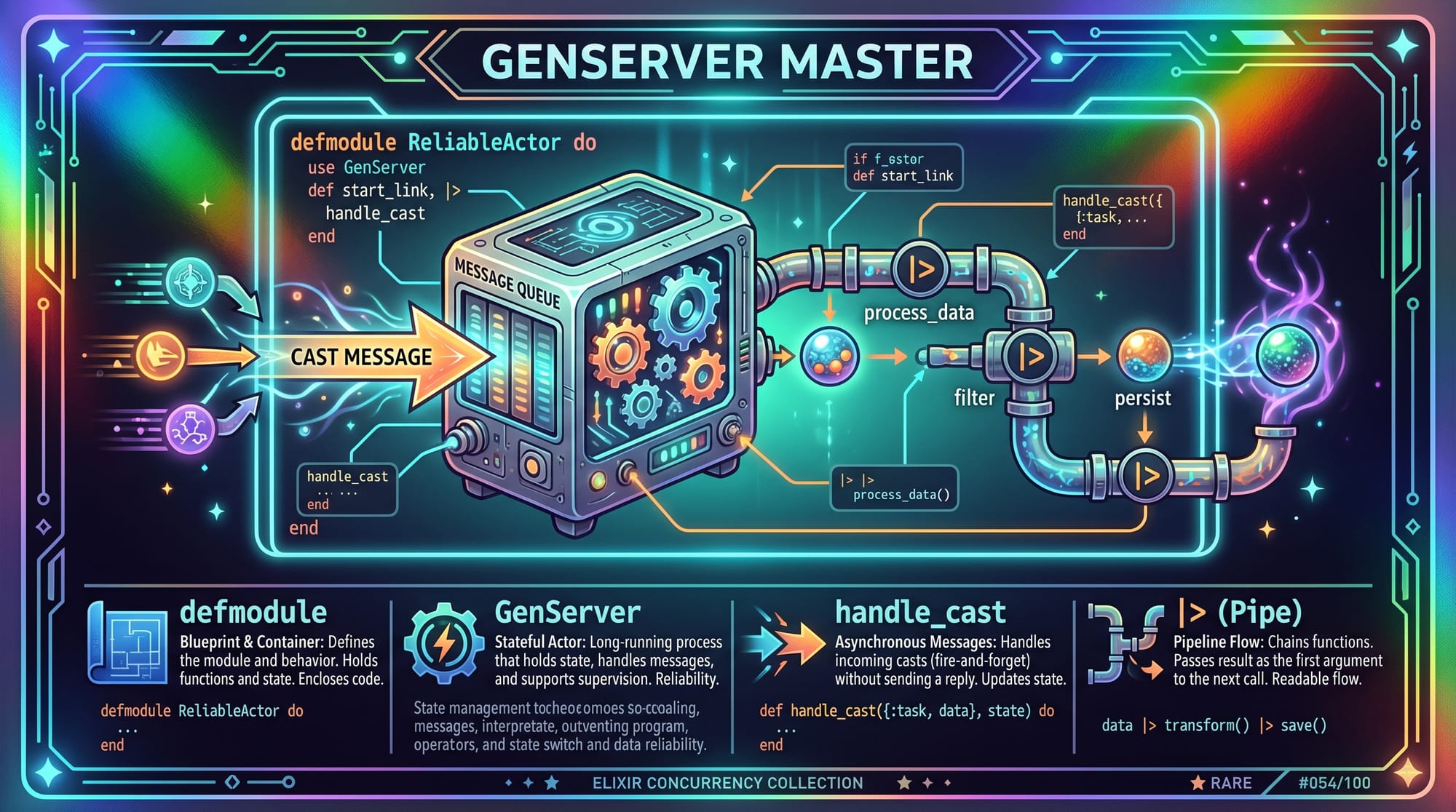
Pipe Operator (|>)
"ahmad"
|> String.upcase()
|> String.reverse()
Explanation:
"ahmad"→ input string|>→ passes result to next functionString.upcase()→ converts to uppercaseString.reverse()→ reverses string- Output:
"DAMHA"
Practical Code Examples
Example 1: Student Fee Calculator (PKR)
defmodule FeeCalculator do
  def calculate_fee(base_fee, discount) do
    base_fee - discount
  end
end

result = FeeCalculator.calculate_fee(50000, 5000)
IO.puts("Final Fee: PKR #{result}")
Line-by-line explanation:
defmodule FeeCalculator do→ defines moduledef calculate_fee(base_fee, discount)→ function with two inputsbase_fee - discount→ subtracts discountend→ closes moduleresult = ...→ calls functionIO.puts→ prints output- Output:
Final Fee: PKR 45000
Example 2: Real-World Application (Simple Chat Simulation)
defmodule Chat do
  def send_message(user, message) do
    "#{user} says: #{message}"
  end
end

IO.puts(Chat.send_message("Ali", "Hello from Lahore!"))
Explanation:
defmodule Chat→ module for chat systemdef send_message(user, message)→ function"#{user} says: #{message}"→ string interpolationIO.puts(...)→ prints message
Output:
Ali says: Hello from Lahore!
This mimics messaging apps — a common backend use case.
Common Mistakes & How to Avoid Them
Mistake 1: Treating Variables as Mutable
❌ Wrong:
x = 10
x = 20
Students think this “changes” x.
✔️ Correct understanding:
- Elixir rebinds variables
- It does NOT mutate data
Mistake 2: Ignoring Pattern Matching Failures
❌ Wrong:
{a, b} = {1, 2, 3}
Error: pattern mismatch
✔️ Fix:
[a, b, c] = [1, 2, 3]
Explanation:
- Pattern must match structure exactly
- Tuples vs lists matter

Practice Exercises
Exercise 1: Calculate Monthly Salary
Problem:
Ahmad earns PKR 60,000 and gets a bonus of PKR 10,000. Calculate total salary.
Solution:
defmodule Salary do
  def total_salary(base, bonus) do
    base + bonus
  end
end

IO.puts(Salary.total_salary(60000, 10000))
Explanation:
- Defines module
- Adds base + bonus
- Prints result:
70000
Exercise 2: Reverse a Name
Problem:
Reverse the name "Fatima".
Solution:
name = "Fatima"
reversed = String.reverse(name)
IO.puts(reversed)
Explanation:
namestores stringString.reversereverses it- Output:
amitaf
Frequently Asked Questions
What is Elixir used for?
Elixir is used for building scalable and fault-tolerant applications like chat systems, fintech platforms, and real-time dashboards. It is especially useful where high concurrency is required.
How do I install Elixir in Pakistan?
You can install Elixir using package managers like apt (Linux), brew (Mac), or download from the official website. Pakistani students can follow step-by-step guides easily available online.
Is Elixir better than Node.js?
In the elixir vs nodejs comparison, Elixir excels in concurrency and fault tolerance, while Node.js is easier for beginners. For large-scale systems, Elixir often performs better.
Do I need to learn Erlang first?
No, you don’t need to learn Erlang before Elixir. However, understanding Erlang concepts later can help you master Elixir deeply.
Can I get jobs using Elixir in 2026?
Yes! Many international companies hire Elixir developers remotely. Pakistani developers can find freelance and remote opportunities, especially in backend and distributed systems.
Summary & Key Takeaways
- Elixir is a functional, concurrent programming language
- Built on BEAM VM for high performance and reliability
- Pattern matching and pipe operator are core features
- Ideal for real-time apps and scalable systems
- Strong alternative in elixir vs nodejs comparison
- Great choice to learn elixir 2026 for future careers
Next Steps & Related Tutorials
To continue your journey on theiqra.edu.pk, explore:
- Learn distributed systems in our Erlang Tutorial for Beginners
- Build backend apps with our Node.js Tutorial for Pakistani Students
- Understand web frameworks with Phoenix Framework Tutorial
- Explore APIs with our REST API Development Guide
Start practicing daily, build small projects, and soon you’ll be ready for real-world Elixir development.
Test Your Python Knowledge!
Finished reading? Take a quick quiz to see how much you've learned from this tutorial.