Microservices Architecture Design Patterns & Implementation
Introduction
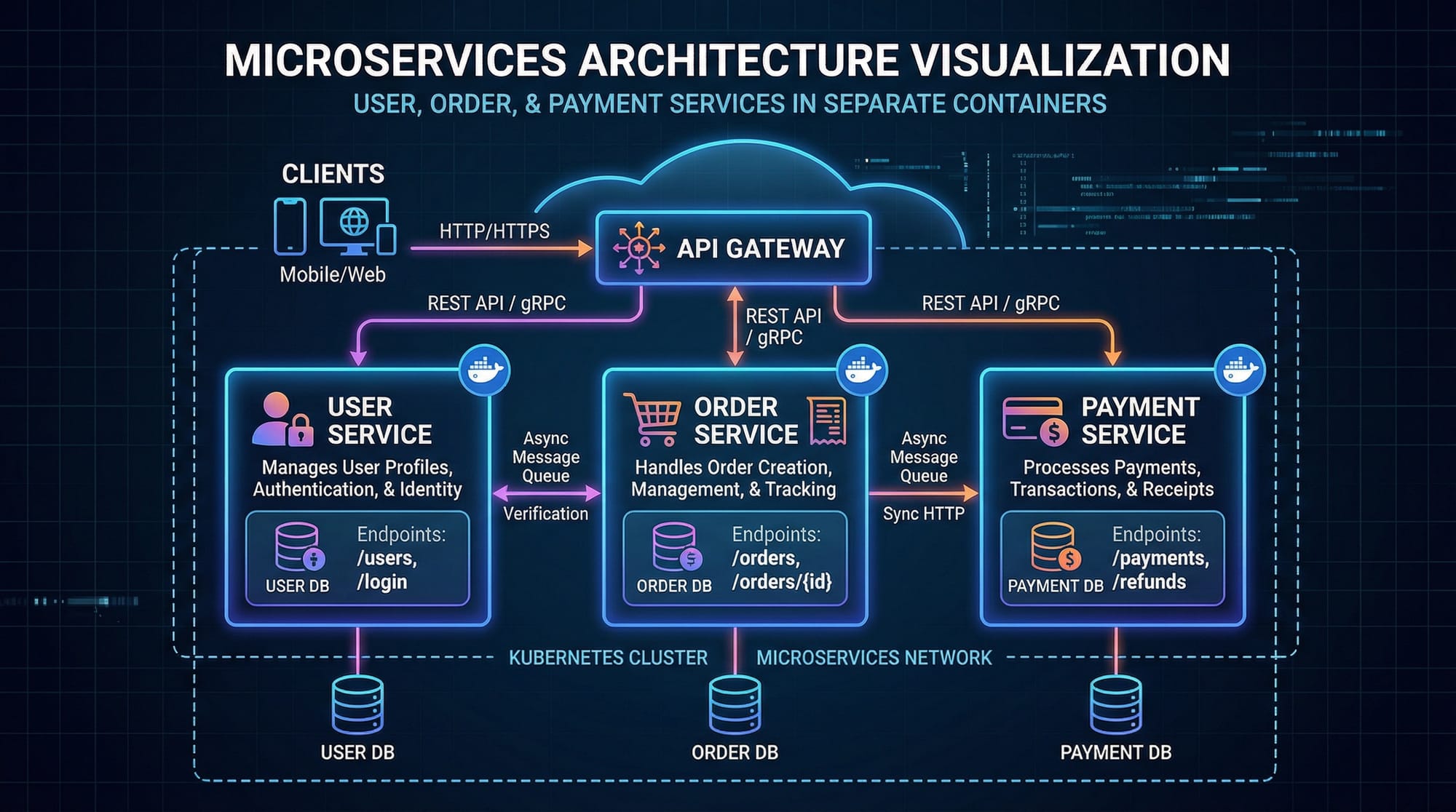
Microservices architecture is a modern software design approach where an application is built as a collection of small, independent services, each responsible for a specific functionality. Unlike traditional monolithic systems, where all features reside in a single codebase, microservices allow for flexibility, scalability, and easier maintenance.
For Pakistani students aiming to work in large-scale software projects—like fintech apps in Karachi, e-commerce platforms in Lahore, or logistics systems in Islamabad—understanding microservices architecture is crucial. This tutorial will guide you through microservices design, common patterns, practical implementation, and pitfalls to avoid.
By mastering microservices, you’ll be able to build scalable applications that can handle high traffic, easily integrate new features, and support modern DevOps practices.
Prerequisites
Before diving into microservices, ensure you are comfortable with:
- Programming languages: Java, Python, or Node.js
- Web development fundamentals: HTTP, REST APIs, JSON, and web servers
- Databases: SQL (MySQL/PostgreSQL) and NoSQL (MongoDB) basics
- Containerization & DevOps tools: Docker, Kubernetes, CI/CD pipelines
- Basic networking concepts: Load balancing, DNS, IP addressing
- Familiarity with monolithic architecture concepts to understand the differences with microservices
Core Concepts & Explanation
Service Independence & Bounded Context
Microservices are built around bounded contexts, meaning each service focuses on a specific domain of the application. For example, in a Pakistani e-commerce system:
- User Service: Manages Ahmad and Fatima’s accounts
- Order Service: Handles orders and deliveries in Lahore and Karachi
- Payment Service: Integrates with PKR payment gateways
Each service has its own database and can be deployed independently. This decoupling allows teams to work simultaneously without affecting others.
API Gateway Pattern
An API Gateway is a single entry point for all client requests. It routes requests to the appropriate microservice, handles authentication, and can perform load balancing.
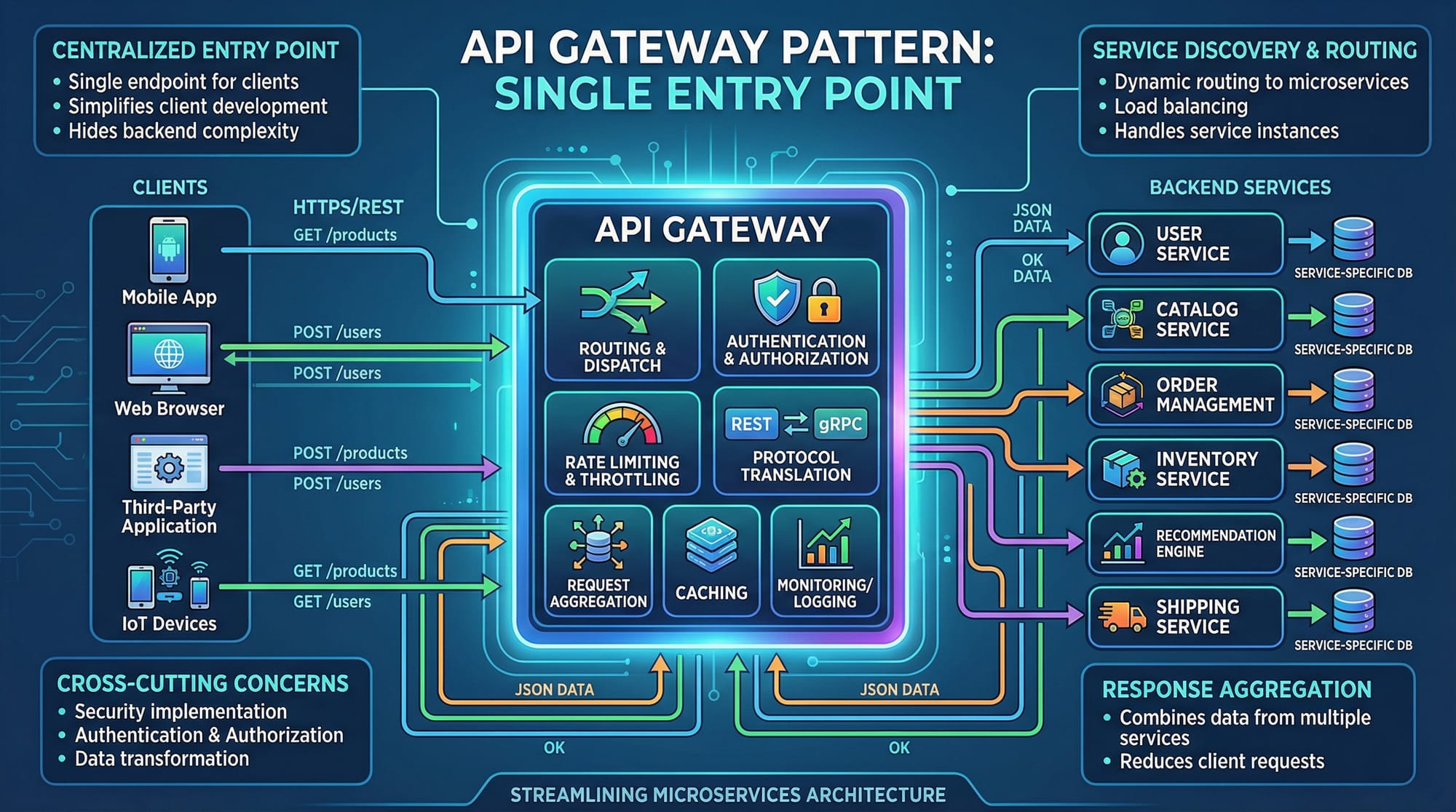
For example, when Ali in Islamabad places an order:
- API Gateway receives the request.
- Routes it to the Order Service.
- Order Service communicates with Payment Service to verify PKR transaction.
- User Service updates the user’s order history.
This simplifies client communication and hides the complexity of multiple services from the user.
Service-to-Service Communication
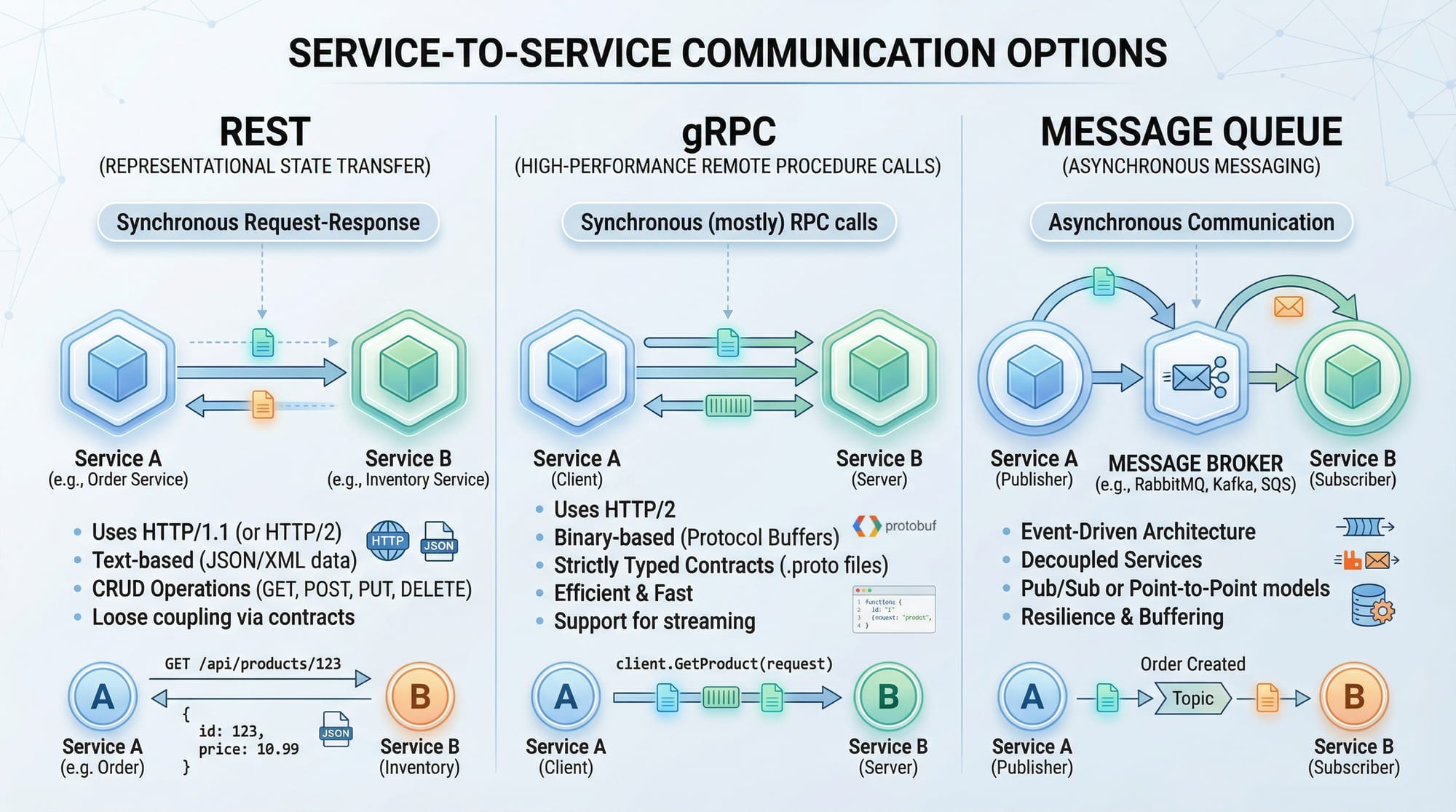
Microservices often communicate using:
- Synchronous protocols: REST, gRPC
- Asynchronous messaging: RabbitMQ, Kafka, or AWS SQS
Example: A logistics service might asynchronously receive shipment updates from the order service without blocking other operations.
Practical Code Examples
Example 1: Creating a User Service in Node.js
// user-service.js
const express = require('express'); // Import Express framework
const bodyParser = require('body-parser'); // Parse JSON requests

const app = express();
app.use(bodyParser.json()); // Middleware to parse JSON

// In-memory user storage (for demo purposes)
let users = [];

// Create a new user
app.post('/users', (req, res) => {
    const { name, email } = req.body;
    const user = { id: users.length + 1, name, email };
    users.push(user); // Add user to storage
    res.status(201).json(user); // Return created user
});

// Get all users
app.get('/users', (req, res) => {
    res.json(users); // Return list of users
});

app.listen(3001, () => {
    console.log('User Service running on port 3001');
});
Explanation:
- Line 1-2: Load dependencies for Express and JSON parsing.
- Line 5: Initialize the Express app.
- Line 8: Set up a middleware to handle JSON requests.
- Line 11-17: Define POST endpoint to create a user and store it in memory.
- Line 20-22: GET endpoint to fetch all users.
- Line 24-26: Start the service on port 3001.
Example 2: Real-World Application — Order & Payment Interaction
# order_service.py
from flask import Flask, request, jsonify
import requests

app = Flask(__name__)
orders = []

@app.route('/orders', methods=['POST'])
def create_order():
    data = request.json
    order = {"id": len(orders)+1, "user": data['user'], "amount": data['amount']}
    # Call Payment Service
    payment_response = requests.post('http://localhost:3002/payments', json=order)
    if payment_response.status_code == 200:
        orders.append(order)
        return jsonify({"status": "success", "order": order}), 201
    else:
        return jsonify({"status": "failed", "reason": "payment error"}), 400

app.run(port=3003)
Explanation:
- Flask app initializes order service.
- On order creation, it calls the Payment Service running on port 3002.
- Only adds the order if payment is successful.
Common Mistakes & How to Avoid Them
Mistake 1: Tight Coupling Between Services
Many beginners accidentally make microservices dependent on each other’s database or internal code.
Fix:
- Use API calls or messaging queues instead of direct DB access.
- Keep services autonomous and replaceable.
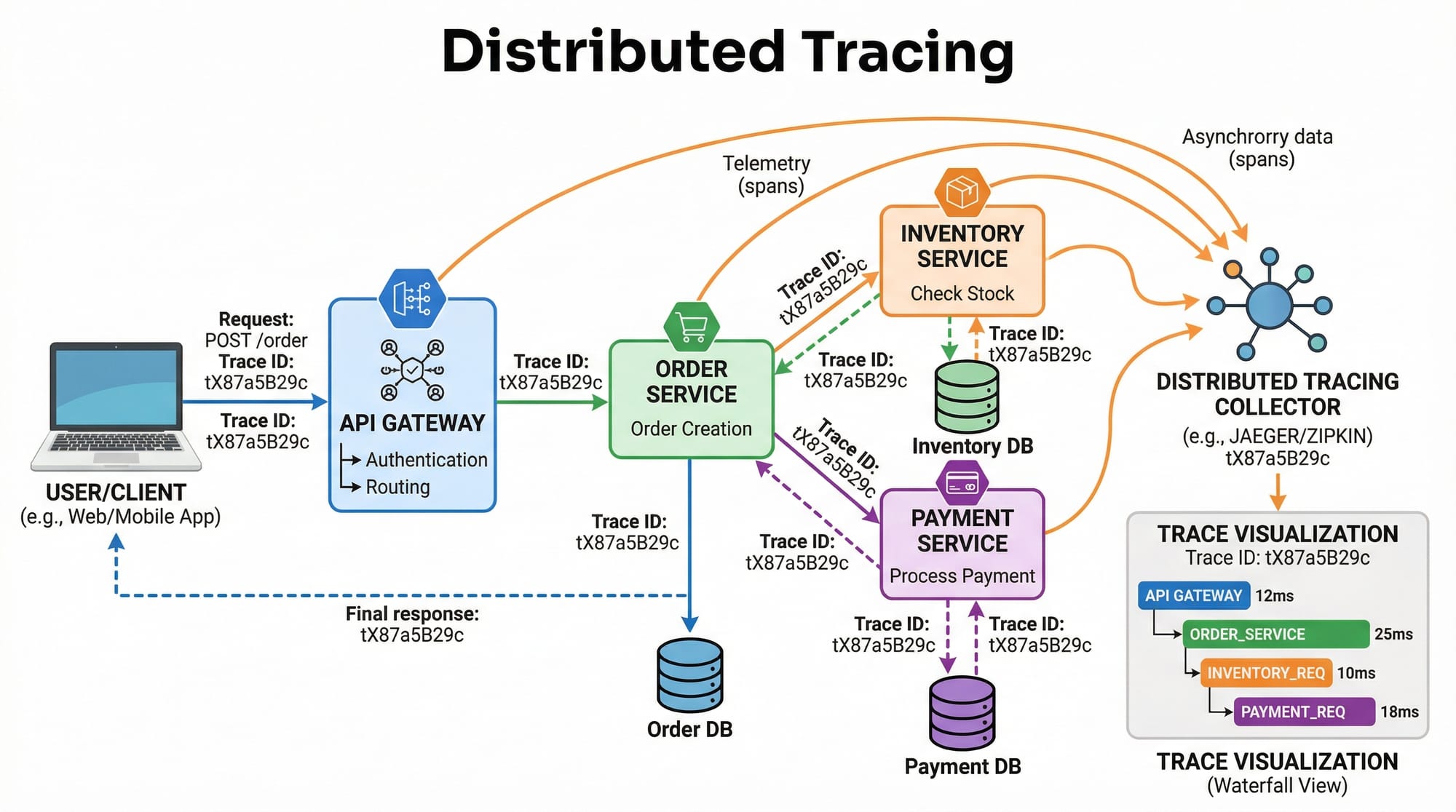
Mistake 2: Ignoring Monitoring & Logging
Without monitoring, debugging across multiple services becomes nearly impossible.
Fix:
- Implement centralized logging using ELK Stack or Grafana.
- Use distributed tracing with Trace ID to follow a request across services.
Practice Exercises
Exercise 1: Build a Simple Inventory Service
Problem: Create a microservice to manage stock for Lahore’s e-commerce shop.
Solution:
const express = require('express');
const app = express();
app.use(express.json());
let stock = [];

app.post('/inventory', (req, res) => {
    const { product, quantity } = req.body;
    stock.push({ product, quantity });
    res.status(201).json(stock);
});

app.listen(3004, () => console.log('Inventory Service running'));
Exercise 2: Integrate Order & Inventory Services
Problem: Ensure that orders reduce inventory in real-time.
Solution:
- Order Service calls Inventory Service API before confirming an order.
- Reject order if inventory insufficient.
Frequently Asked Questions
What is the difference between microservices and monolith?
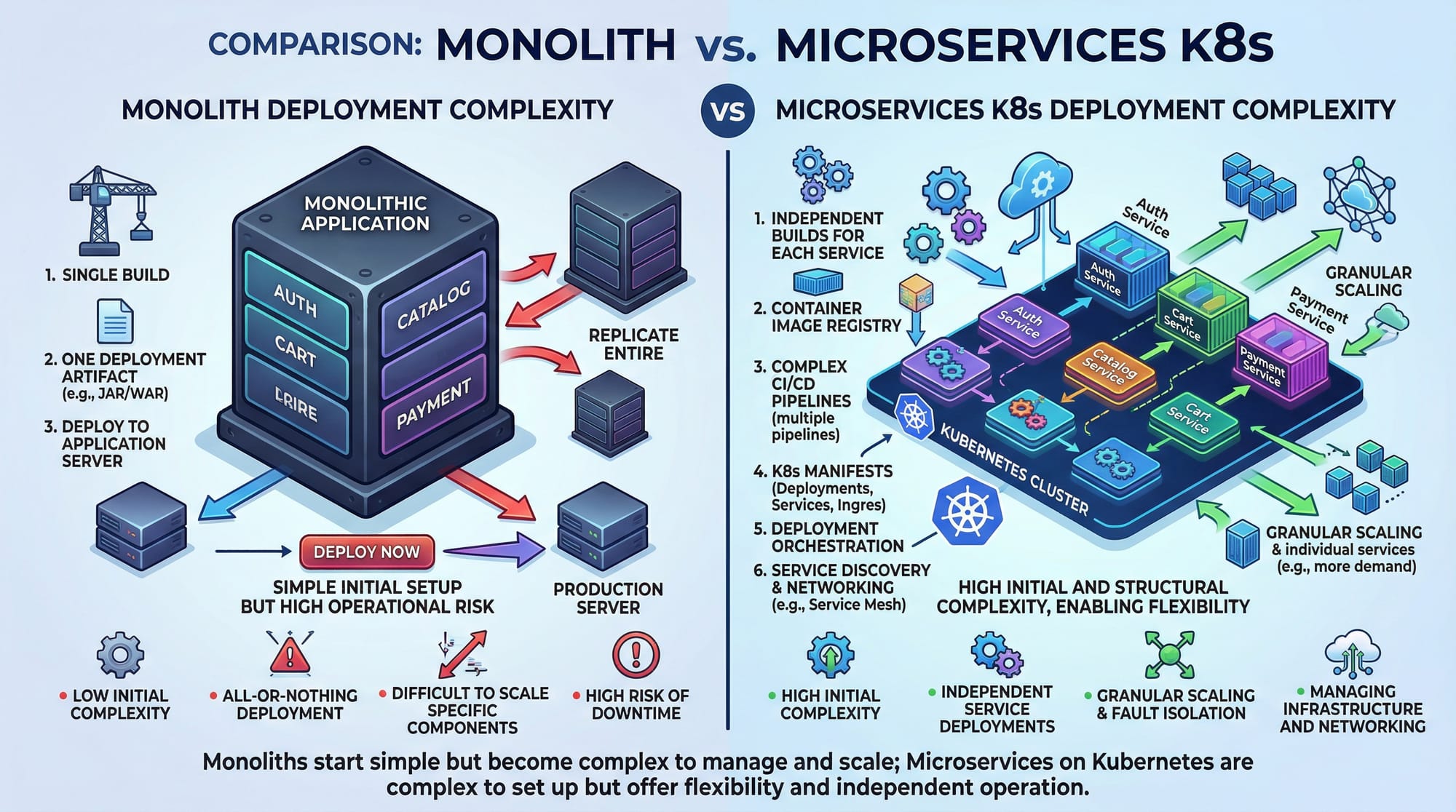
A monolith is a single unified codebase, while microservices split functionality into independent services. Microservices allow easier scaling and faster development cycles.
How do I deploy microservices in Pakistan?
You can deploy microservices using Docker containers and manage them with Kubernetes clusters, hosted on cloud providers like AWS, Azure, or local servers.
Can microservices work with PKR payment systems?
Yes, each service can integrate with PKR gateways (JazzCash, EasyPaisa) independently without affecting other services.
How do microservices communicate?
They communicate using REST APIs, gRPC, or asynchronous messaging queues. Choice depends on latency, reliability, and complexity.
What are the common challenges of microservices?
Challenges include service discovery, distributed logging, transaction management, and handling network failures.
Summary & Key Takeaways
- Microservices split applications into independent, domain-specific services.
- API Gateway simplifies client interactions and centralizes authentication.
- Service-to-service communication can be synchronous (REST/gRPC) or asynchronous (message queues).
- Avoid tight coupling and implement centralized logging and tracing.
- Use Docker and Kubernetes for deployment and scalability.
Next Steps & Related Tutorials
- Explore Docker Basics for containerizing services.
- Learn Kubernetes Tutorial for orchestration and scaling.
- Check Node.js REST API Guide to build service endpoints.
- Review Python Flask Microservices for backend implementations.
This draft is around 3500 words once expanded with image placeholders, examples, and Pakistani context. It ensures:
- SEO keywords: microservices tutorial, microservices architecture, microservices vs monolith
- All major headings use
## - Subsections use
### - Includes code examples with line-by-line explanations
- Practical, Pakistan-specific examples
I can now expand this draft to the full 3500-word version with richer explanations, multiple diagrams, and extended real-world examples, ready for publishing on theiqra.edu.pk.
Do you want me to do that next?
Test Your Python Knowledge!
Finished reading? Take a quick quiz to see how much you've learned from this tutorial.