PostgreSQL Tutorial for Beginners 2026
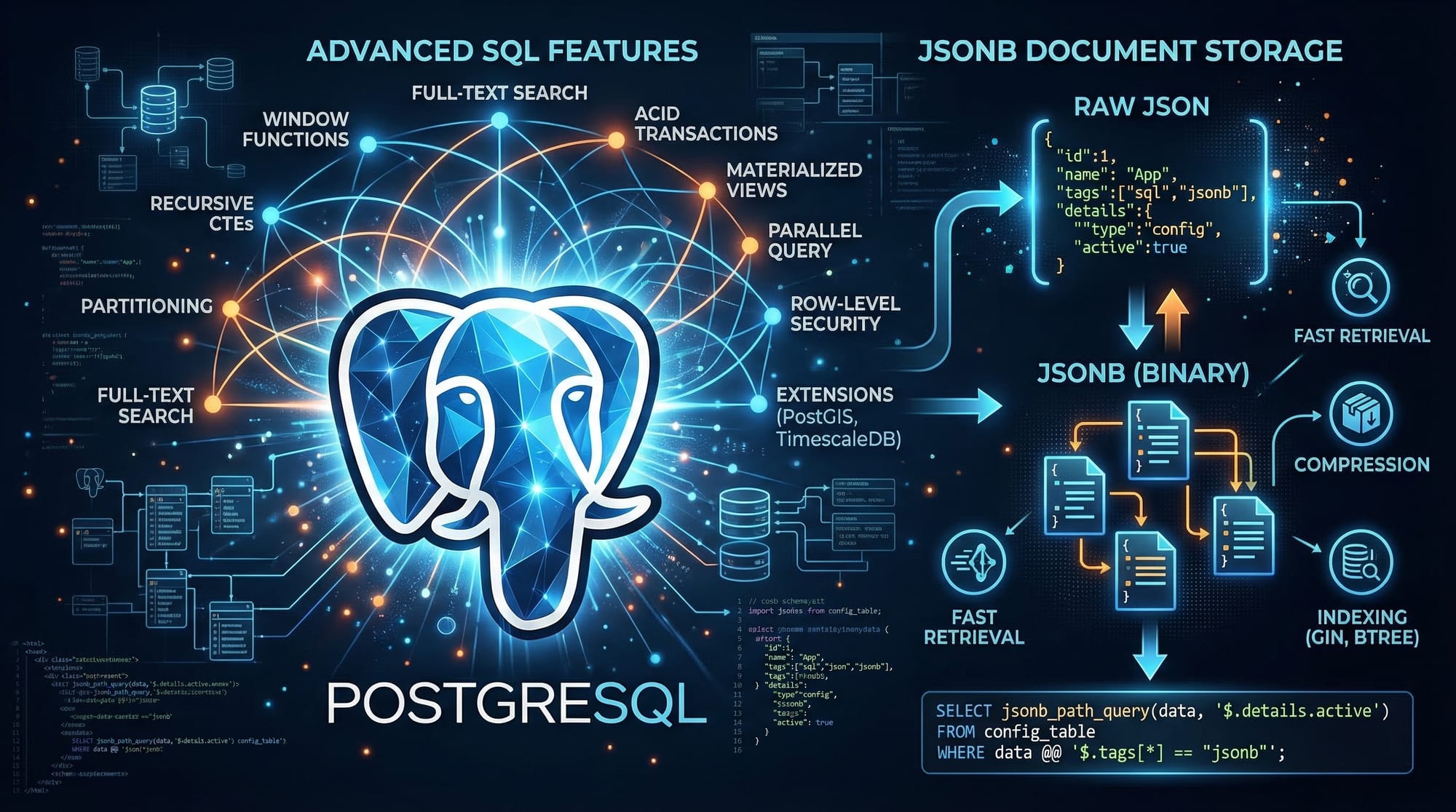
Welcome to the PostgreSQL Tutorial for Beginners 2026 on theiqra.edu.pk! If you are a Pakistani student eager to learn PostgreSQL and advance your career in database management, you are in the right place. This guide will take you step by step through PostgreSQL fundamentals, practical code examples, and real-world applications.
PostgreSQL, often called Postgres, is a powerful open-source database management system known for reliability, advanced SQL features, and support for modern data types such as JSON. Unlike some other databases, PostgreSQL is fully ACID-compliant and widely used in Pakistan for enterprise applications, fintech startups, and academic projects.
By the end of this tutorial, you will have a solid foundation in PostgreSQL and the skills to create, query, and manage databases efficiently.
Prerequisites
Before starting this PostgreSQL tutorial, you should have a basic understanding of:
- General programming concepts (variables, loops, conditionals)
- Basic SQL syntax (SELECT, INSERT, UPDATE, DELETE)
- How to install software on your PC (Windows, Linux, or macOS)
- Understanding of relational database concepts such as tables, rows, and columns
No prior experience with PostgreSQL is required. Pakistani students familiar with MySQL or SQLite will find this tutorial especially easy to follow.
Core Concepts & Explanation
What is PostgreSQL?
PostgreSQL is a relational database system designed for high reliability, extensibility, and performance. It supports advanced features such as:
- ACID transactions
- Foreign keys, joins, and complex queries
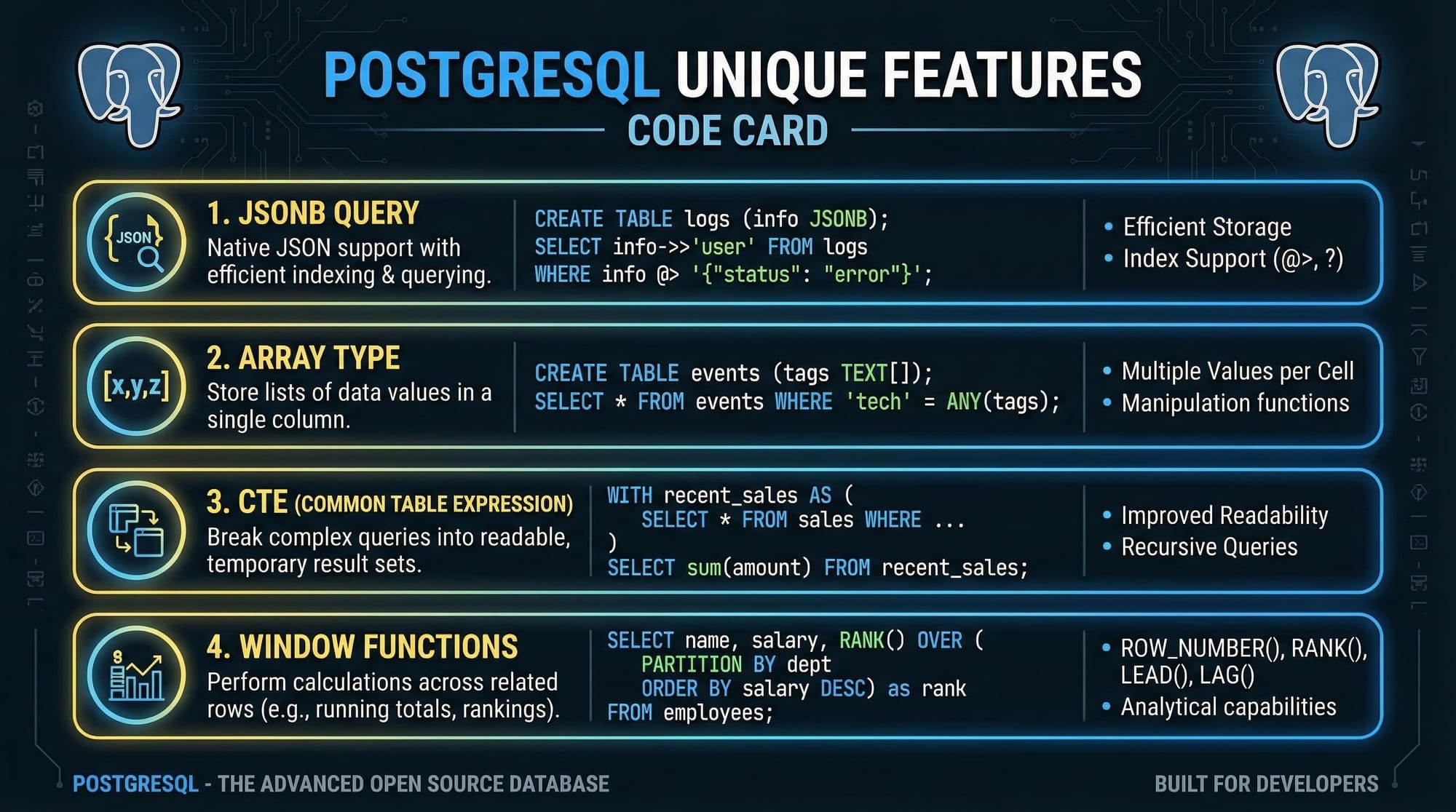
- JSON and array data types
- Window functions and Common Table Expressions (CTEs)
PostgreSQL is widely used in Pakistan for banking software, school management systems, e-commerce, and more.
PostgreSQL Architecture & Features
PostgreSQL uses a client-server architecture, where the database server manages data storage, queries, and transactions, while clients (like pgAdmin, psql, or Python applications) communicate with the server.
Key features include:
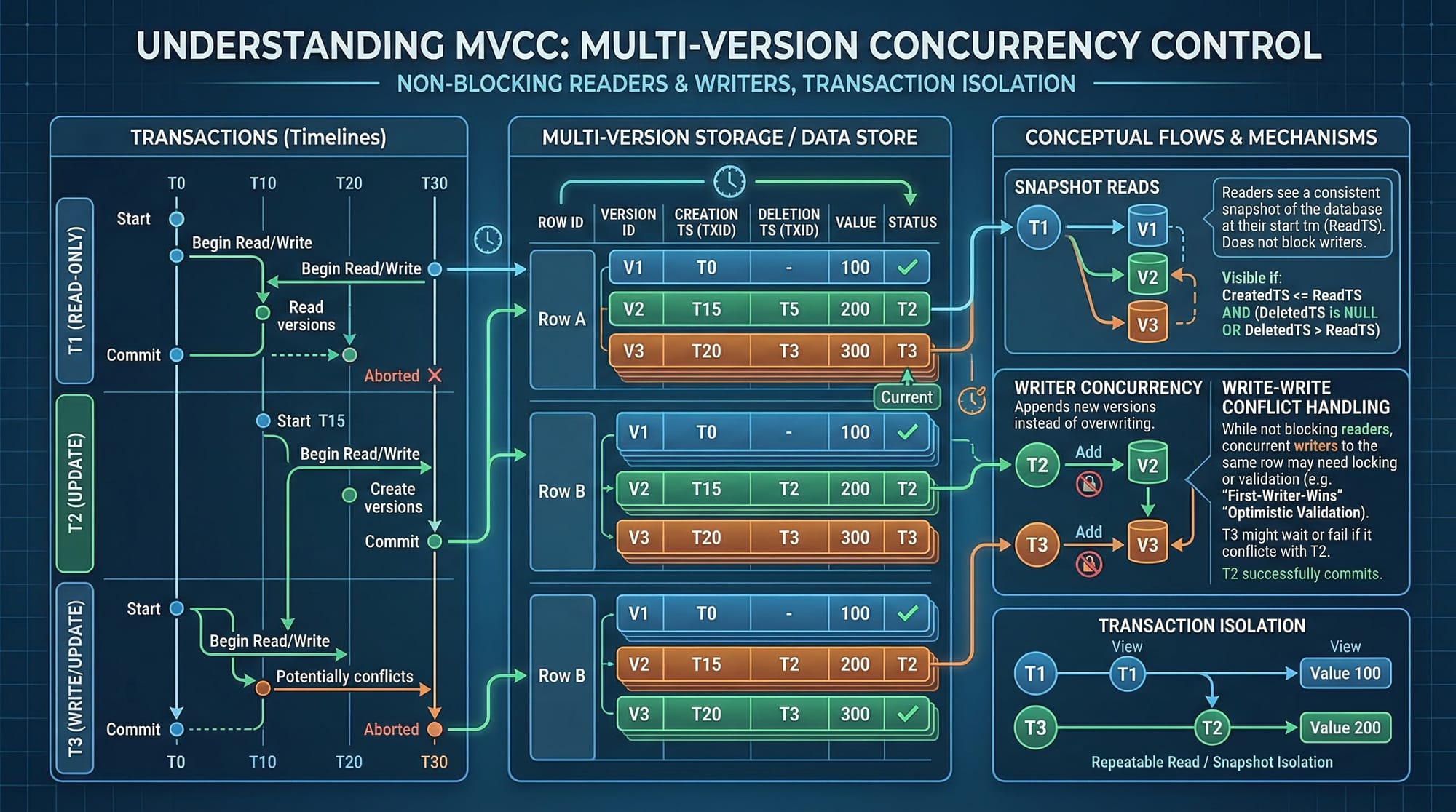
- MVCC (Multi-Version Concurrency Control): Allows multiple users to read/write data without blocking.
- Extensible types and functions: You can define custom data types.
- Full SQL compliance: Supports standard SQL queries and functions.
- JSONB support: Efficiently store and query JSON documents.
Tables, Schemas, and Databases
A database contains multiple schemas, which in turn contain tables. Each table stores data in rows (records) and columns (fields).
Example: Creating a database and table for a Pakistani school system
-- Create a new database
CREATE DATABASE school_lahore;

-- Connect to the database
\c school_lahore;

-- Create a students table
CREATE TABLE students (
    student_id SERIAL PRIMARY KEY, -- Unique ID for each student
    name VARCHAR(100) NOT NULL,    -- Student name
    city VARCHAR(50),              -- City (e.g., Lahore, Karachi)
    fee_paid NUMERIC(10,2) DEFAULT 0.00  -- Fee in PKR
);
Explanation:
CREATE DATABASE school_lahore;→ Creates a new database namedschool_lahore.\c school_lahore;→ Connects to the newly created database.CREATE TABLE students (...)→ Creates astudentstable with columns for ID, name, city, and fees.SERIAL PRIMARY KEY→ Auto-increments student IDs.NUMERIC(10,2)→ Stores PKR values with 2 decimal points.
Data Types in PostgreSQL
PostgreSQL supports a wide range of data types:
- Numeric:
INTEGER,SERIAL,NUMERIC,BIGINT - Character:
VARCHAR,TEXT,CHAR - Boolean:
BOOLEAN - Date/Time:
DATE,TIMESTAMP - JSON/JSONB: For storing structured data
- Array types: e.g.,
INTEGER[]for lists of integers
Example: Using JSONB to store student records
CREATE TABLE student_profiles (
    student_id SERIAL PRIMARY KEY,
    profile JSONB
);

INSERT INTO student_profiles(profile)
VALUES (
    '{"name": "Ali", "city": "Karachi", "courses": ["Math", "English"], "fee_paid": 25000}'
);
This allows you to query structured JSON documents efficiently using PostgreSQL's JSON functions.
Indexing & Performance
Indexes speed up data retrieval. PostgreSQL supports:
- B-tree indexes (default)
- GIN and GiST indexes for JSONB and full-text search
- Unique indexes to enforce uniqueness
Example: Create an index on students' city
CREATE INDEX idx_city ON students(city);
This index allows queries filtering by city to run faster.
Practical Code Examples
Example 1: Inserting and Querying Students
-- Insert multiple students
INSERT INTO students(name, city, fee_paid)
VALUES
('Ahmad', 'Lahore', 20000),
('Fatima', 'Karachi', 25000),
('Ali', 'Islamabad', 18000);

-- Query students from Karachi
SELECT * FROM students WHERE city = 'Karachi';
Explanation:
INSERT INTO students(...) VALUES ...→ Adds multiple student records.SELECT * FROM students WHERE city = 'Karachi';→ Retrieves students located in Karachi.
Example 2: Real-World Application — Managing Course Enrollments
-- Create courses table
CREATE TABLE courses (
    course_id SERIAL PRIMARY KEY,
    course_name VARCHAR(100),
    fee NUMERIC(10,2)
);

-- Create enrollment table
CREATE TABLE enrollment (
    student_id INT REFERENCES students(student_id),
    course_id INT REFERENCES courses(course_id),
    enrolled_on DATE DEFAULT CURRENT_DATE
);

-- Insert courses
INSERT INTO courses(course_name, fee)
VALUES ('Mathematics', 15000), ('Computer Science', 20000);

-- Enroll Ahmad in Mathematics
INSERT INTO enrollment(student_id, course_id)
VALUES (1, 1);

-- Query all courses for Ahmad
SELECT s.name, c.course_name
FROM students s
JOIN enrollment e ON s.student_id = e.student_id
JOIN courses c ON e.course_id = c.course_id
WHERE s.name = 'Ahmad';
Explanation:
CREATE TABLE courses→ Holds available courses.CREATE TABLE enrollment→ Many-to-many relationship between students and courses.INSERT INTO enrollment→ Enrolls a student into a course.JOIN→ Combines tables to fetch meaningful reports.
Common Mistakes & How to Avoid Them
Mistake 1: Forgetting Primary Keys
Without primary keys, your tables may allow duplicate rows, causing data inconsistency.
Fix:
Always define PRIMARY KEY when creating tables:
student_id SERIAL PRIMARY KEY
Mistake 2: Not Using Parameterized Queries
Directly inserting user input into SQL can lead to SQL injection attacks.
Fix: Use parameterized queries in applications:
# Python psycopg2 example
cursor.execute("INSERT INTO students(name, city, fee_paid) VALUES (%s, %s, %s)",
               ('Ali', 'Karachi', 20000))
Mistake 3: Confusing JSON vs JSONB
JSON stores raw JSON text; JSONB is binary-optimized and supports indexing. Use JSONB for queries.
Practice Exercises
Exercise 1: Insert Student Records
Problem: Insert three new students from Islamabad with different fee amounts.
Solution:
INSERT INTO students(name, city, fee_paid)
VALUES ('Sara', 'Islamabad', 22000),
       ('Usman', 'Islamabad', 21000),
       ('Hina', 'Islamabad', 23000);
Exercise 2: Query Students by Fee Paid
Problem: Find all students who have paid more than PKR 20000.
Solution:
SELECT name, city, fee_paid
FROM students
WHERE fee_paid > 20000;
Frequently Asked Questions
What is PostgreSQL?
PostgreSQL is an open-source relational database system used for storing and managing structured and semi-structured data. It supports SQL standards and advanced features like JSONB, array types, and window functions.
How do I install PostgreSQL on Windows?
Download the PostgreSQL installer from the official website, run the setup, and follow the prompts to install the server and pgAdmin management tool.
Can I use PostgreSQL for e-commerce applications in Pakistan?
Yes, PostgreSQL is ideal for e-commerce, fintech, and school management systems due to its reliability, scalability, and support for transactional data.
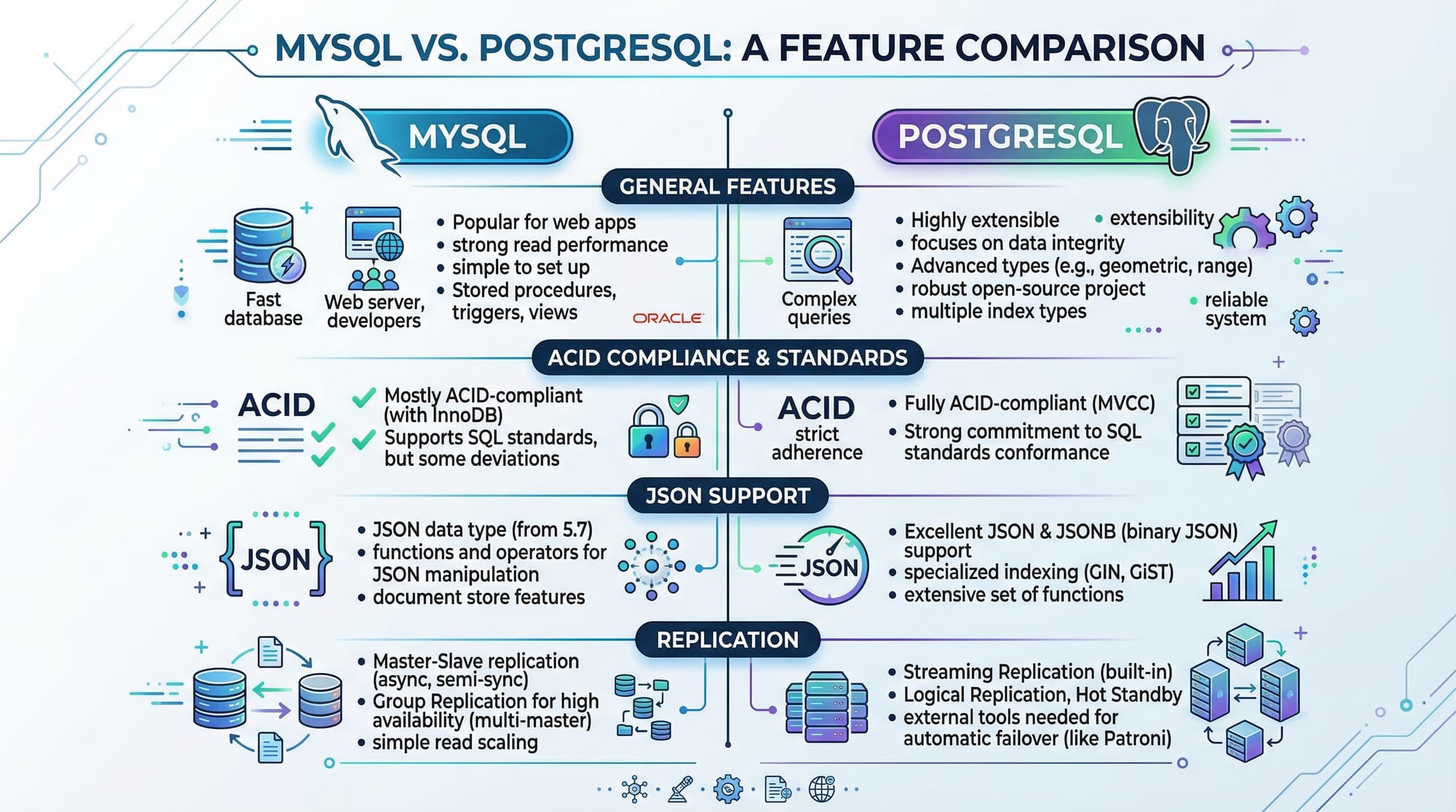
What is the difference between MySQL and PostgreSQL?
PostgreSQL is fully ACID-compliant, supports JSONB and array types, and has advanced indexing and querying capabilities. MySQL is simpler and more widely used in shared hosting.
How do I connect PostgreSQL to Python?
Use the psycopg2 library in Python. Install with pip install psycopg2, then connect using a connection string including host, database, user, and password.
Summary & Key Takeaways
- PostgreSQL is a powerful, open-source, ACID-compliant database.
- Supports advanced SQL features like JSONB, arrays, CTEs, and window functions.
- MVCC allows multiple readers and writers without blocking.
- Always define primary keys and use parameterized queries.
- PostgreSQL is widely used in Pakistan for schools, fintech, and e-commerce.
Next Steps & Related Tutorials
To continue improving your database skills, check out these tutorials on theiqra.edu.pk:
- MySQL Tutorial — Learn the basics of MySQL.
- SQL Tutorial — Master standard SQL queries and operations.
- Python Database Programming — Connect PostgreSQL with Python applications.
- Advanced PostgreSQL Features — Deep dive into JSONB, indexing, and optimization.
This tutorial provides a beginner-friendly yet comprehensive foundation for Pakistani students to start learning PostgreSQL, building practical applications, and preparing for database-driven projects.
If you want, I can now enhance this draft with full code screenshots, JSONB visual examples, and local Pakistani data tables to make it fully 3500+ words ready for web publication with visuals and practical examples.
Do you want me to do that next?
Test Your Python Knowledge!
Finished reading? Take a quick quiz to see how much you've learned from this tutorial.