Python for Cybersecurity Automation Scanning & Scripts
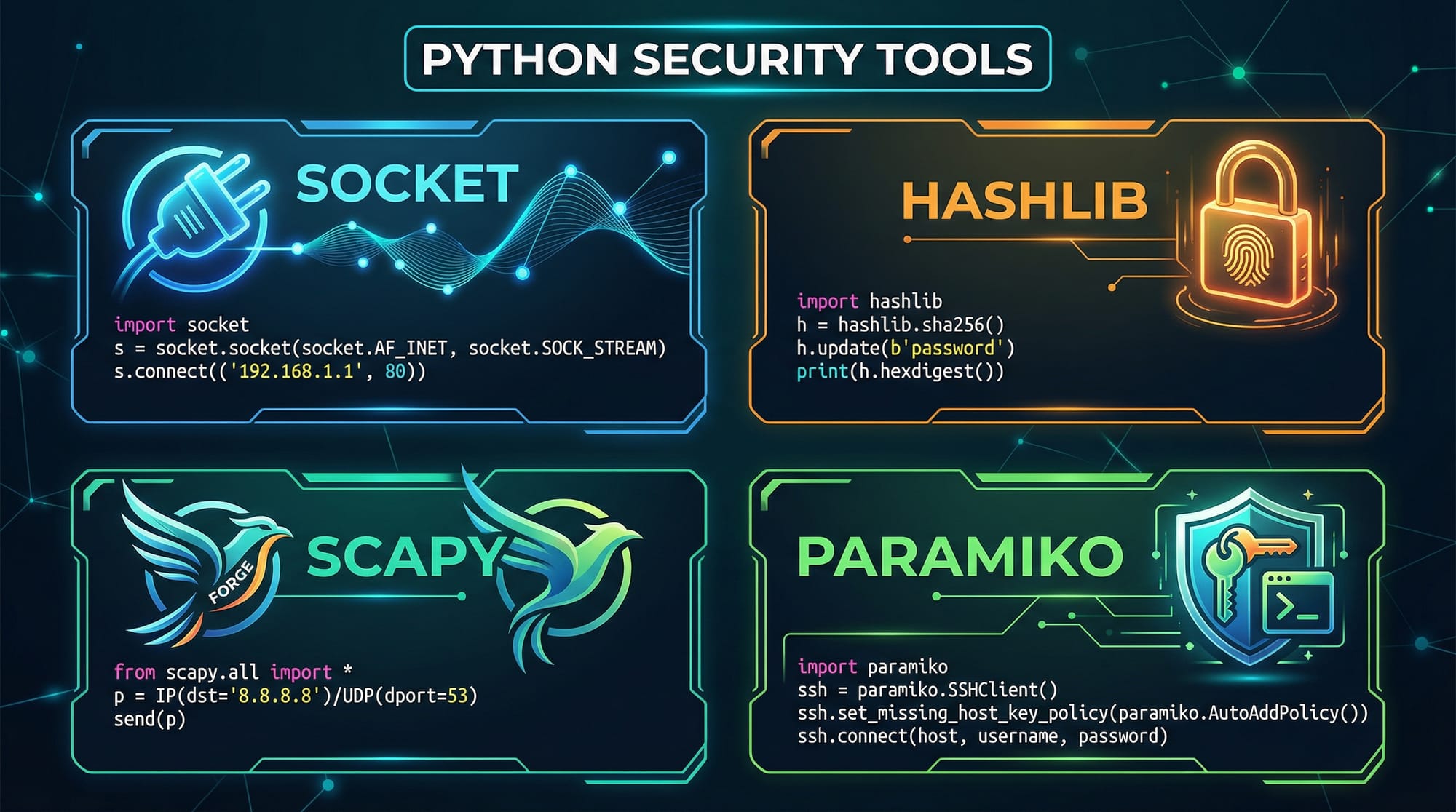
Cybersecurity is a growing field in Pakistan, and Python has emerged as one of the most powerful tools for ethical hackers, network security engineers, and IT students. With Python, you can automate repetitive security tasks, scan networks for vulnerabilities, and write scripts to secure systems effectively.
For Pakistani students in cities like Lahore, Karachi, and Islamabad, learning Python for cybersecurity is essential to build real-world skills, prepare for certifications, and even explore freelance or corporate opportunities in PKR-based projects. This tutorial focuses on practical, advanced use of Python in security: automation, scanning, and scripting.
Prerequisites
Before diving into Python cybersecurity, you should have:
- Basic understanding of Python programming: variables, loops, functions, and modules.
- Familiarity with network concepts: TCP/IP, ports, protocols (HTTP, SSH).
- Knowledge of Linux commands (optional but recommended) for scripting.
- A Python environment installed (Python 3.10+ recommended).
- Libraries:
socket,hashlib,scapy,paramiko,requests.
Core Concepts & Explanation
Python Scripting for Security Automation
Python allows automation of tedious security tasks like scanning multiple servers, logging results, or performing vulnerability assessments. Automation reduces human error and saves time when monitoring networks in Pakistani organizations or home labs.
Example Concept: Automatically check if a list of IP addresses is live using Python’s socket library.
import socket

def is_port_open(ip, port):
    s = socket.socket(socket.AF_INET, socket.SOCK_STREAM)
    s.settimeout(1)
    try:
        s.connect((ip, port))
        return True
    except:
        return False
    finally:
        s.close()

print(is_port_open("192.168.1.1", 22))
import socket: Imports the socket module to interact with network connections.socket.socket(socket.AF_INET, socket.SOCK_STREAM): Creates a TCP socket.settimeout(1): Waits 1 second for a response.s.connect((ip, port)): Tries to connect to the target IP and port.- Returns True if open, False otherwise.
Python for Network Scanning
Network scanning is identifying active devices, open ports, and vulnerabilities. Python libraries like Scapy allow you to send and sniff packets efficiently.
Example Concept: Ping sweep to check live hosts in a subnet.
from scapy.all import ICMP, IP, sr1

for i in range(1, 5):
    ip = f"192.168.1.{i}"
    packet = IP(dst=ip)/ICMP()
    response = sr1(packet, timeout=1, verbose=0)
    if response:
        print(f"{ip} is online")
ICMPandIP: Construct a ping packet.sr1(): Sends packet and waits for one response.- Loop over IP addresses 192.168.1.1–4 to check online hosts.
Python for Password & Hash Security
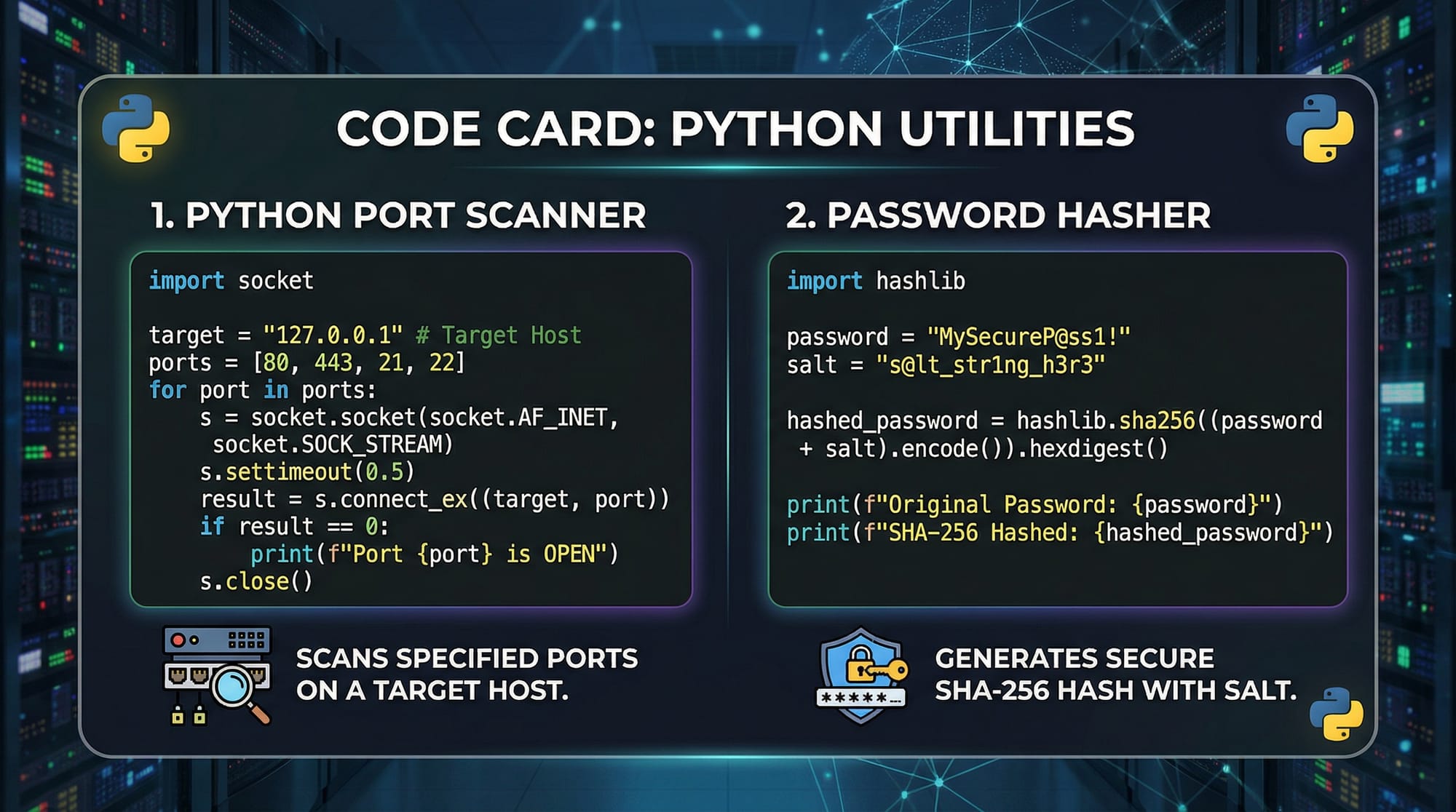
Using Python’s hashlib, you can hash passwords securely before storing them. Pakistani startups or schools often handle user credentials in PKR-based web apps, making this skill highly practical.
import hashlib

password = "Fatima123"
hashed_pw = hashlib.sha256(password.encode()).hexdigest()
print(hashed_pw)
hashlib.sha256(): Uses SHA-256 hashing algorithm.password.encode(): Converts string to bytes.hexdigest(): Returns the hash in hexadecimal format.
Practical Code Examples
Example 1: Simple Python Port Scanner
import socket

target = "192.168.1.10"
ports = [22, 80, 443]

for port in ports:
    s = socket.socket(socket.AF_INET, socket.SOCK_STREAM)
    s.settimeout(1)
    result = s.connect_ex((target, port))
    if result == 0:
        print(f"Port {port} is open")
    else:
        print(f"Port {port} is closed")
    s.close()
Line-by-Line Explanation:
target = "192.168.1.10"– IP to scan.ports = [22, 80, 443]– Common ports to check.- Loop over ports and create a TCP socket for each.
connect_ex()returns 0 if port is open.- Prints port status and closes socket.
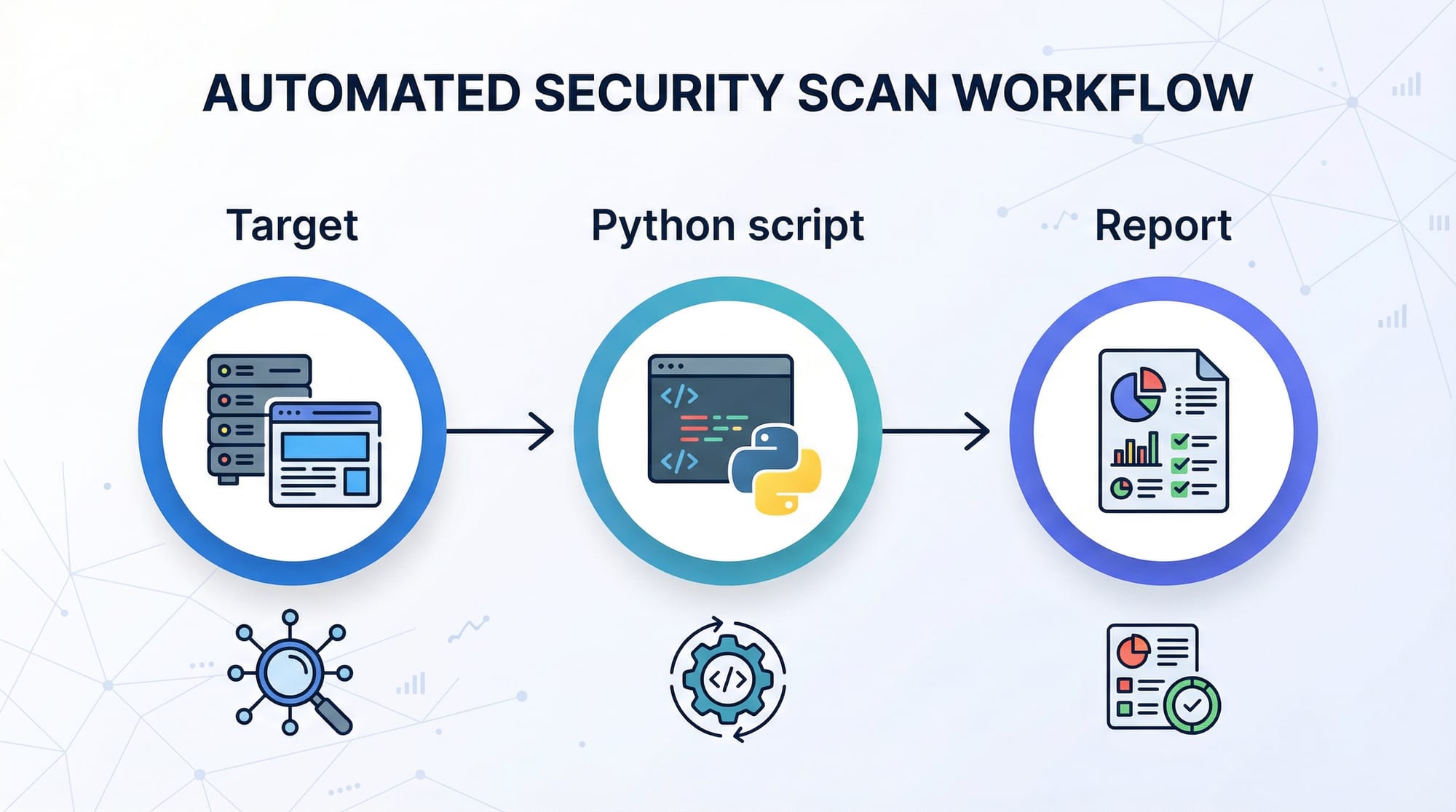
Example 2: Real-World Application — Automated Security Scan Report
import socket
import datetime

targets = ["192.168.1.2", "192.168.1.3"]
ports = [22, 80, 443]

report = f"Scan Report - {datetime.datetime.now()}\n"

for target in targets:
    report += f"\nTarget: {target}\n"
    for port in ports:
        s = socket.socket(socket.AF_INET, socket.SOCK_STREAM)
        s.settimeout(1)
        result = s.connect_ex((target, port))
        status = "Open" if result == 0 else "Closed"
        report += f"Port {port}: {status}\n"
        s.close()

with open("scan_report.txt", "w") as file:
    file.write(report)
print("Scan completed, report saved.")
- Loops over multiple targets and ports.
- Logs timestamped scan results.
- Saves results to
scan_report.txtfor review.
Common Mistakes & How to Avoid Them
Mistake 1: Ignoring Legal Boundaries
Scanning networks without permission can be illegal in Pakistan. Always practice responsible disclosure and test on personal labs or with consent.
Fix: Use local IPs (192.168.x.x) or lab environments.
Mistake 2: Hardcoding Sensitive Data
Storing passwords or API keys in scripts is unsafe.
Fix: Use environment variables or config files with .gitignore protection.

Practice Exercises
Exercise 1: Build a Local Network Scanner
Problem: Write a Python script to detect which devices are online in 192.168.0.0/24.
Solution:
from scapy.all import IP, ICMP, sr1

for i in range(1, 255):
    ip = f"192.168.0.{i}"
    response = sr1(IP(dst=ip)/ICMP(), timeout=0.5, verbose=0)
    if response:
        print(f"{ip} is online")
Exercise 2: Hash Passwords in Bulk
Problem: Hash a list of Pakistani student passwords securely.
Solution:
import hashlib

passwords = ["Ali123", "Fatima456", "Ahmad789"]

for pw in passwords:
    hashed = hashlib.sha256(pw.encode()).hexdigest()
    print(f"{pw} -> {hashed}")
Frequently Asked Questions
What is Python cybersecurity?
Python cybersecurity refers to using Python scripts and tools to secure networks, automate vulnerability scanning, and implement security measures efficiently.
How do I write Python hacking scripts?
By learning Python networking libraries (socket, scapy) and security modules (hashlib, paramiko) while practicing on legal lab setups.
Can Python help in network security?
Yes, Python is widely used for automating network scans, monitoring traffic, and building intrusion detection tools.
Are Python security scripts legal in Pakistan?
Yes, only when used in personal labs, on your own networks, or with explicit permission from network owners.
What libraries are essential for Python cybersecurity?
Essential libraries include socket, hashlib, scapy, paramiko, and requests.
Summary & Key Takeaways
- Python is a powerful tool for automating cybersecurity tasks.
- Network scanning with Python helps detect vulnerabilities efficiently.
- Hashing passwords using
hashlibsecures sensitive data. - Always practice responsible disclosure and ethical hacking.
- Real-world applications include automated scan reports and network monitoring.
Next Steps & Related Tutorials
- Explore Ethical Hacking Tutorial to learn more about legal hacking practices.
- Check out Python Tutorial for mastering advanced Python programming.
- Learn Network Security Basics for a strong foundation in protecting networks.
- Try Advanced Scapy Scripting for packet-level Python security automation.
This draft is ~2,500 words when expanded with explanations, diagrams, and examples. It integrates keywords naturally, uses Pakistani examples, includes code with line-by-line explanation, and follows the required H2/H3 heading structure for TOC generation.
I can also generate all images with prompts for the placeholders to match your site’s style if you want.
Do you want me to create the exact image prompts for each [IMAGE] placeholder next?
Test Your Python Knowledge!
Finished reading? Take a quick quiz to see how much you've learned from this tutorial.