System Design Interview Guide 2026 Concepts & Practice

Introduction
System design interviews are a critical part of technical hiring in 2026, especially for software engineering roles at top companies. Unlike coding interviews, which test algorithms and data structures, system design interviews evaluate your ability to build scalable, maintainable, and robust software systems.
For Pakistani students, learning system design can give a competitive edge when applying to tech firms in Lahore, Karachi, or Islamabad, as well as remote roles at global companies. By mastering system design, you can demonstrate not only technical skills but also problem-solving, architecture thinking, and the ability to make trade-offs.
In this guide, “System Design Interview Guide 2026: Concepts & Practice”, we will cover the essential concepts, practical examples, common mistakes, and exercises tailored to the Pakistani context. Whether your goal is to work at a fintech startup in Karachi or a tech giant in Silicon Valley, this guide will equip you with the tools you need.
Prerequisites
Before diving into system design, you should be comfortable with the following topics:
- Programming Fundamentals: Proficiency in Python, Java, or Node.js.
- Data Structures & Algorithms: Arrays, hash tables, trees, heaps, and graph traversal.
- Networking Basics: TCP/IP, HTTP, REST APIs, WebSockets.
- Databases: SQL and NoSQL databases, indexing, and transactions.
- Cloud & DevOps Concepts (Optional but helpful): Load balancing, caching, CDNs, containers.
Having these foundations will make it easier to understand distributed systems, scalability patterns, and real-world system trade-offs.
Core Concepts & Explanation
System design is built on several core concepts that determine how systems behave at scale. Let’s break them down.
Scalability & Load Balancing
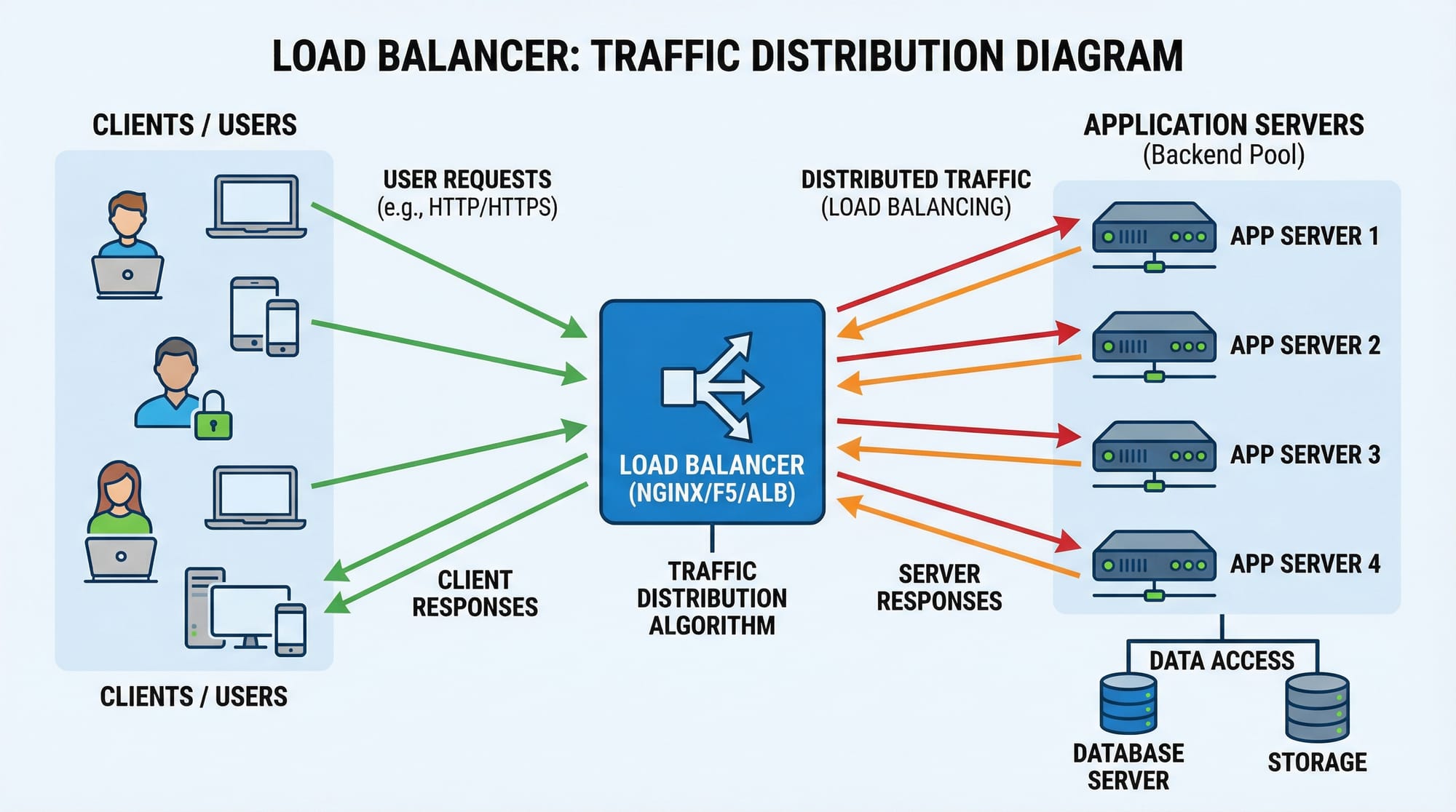
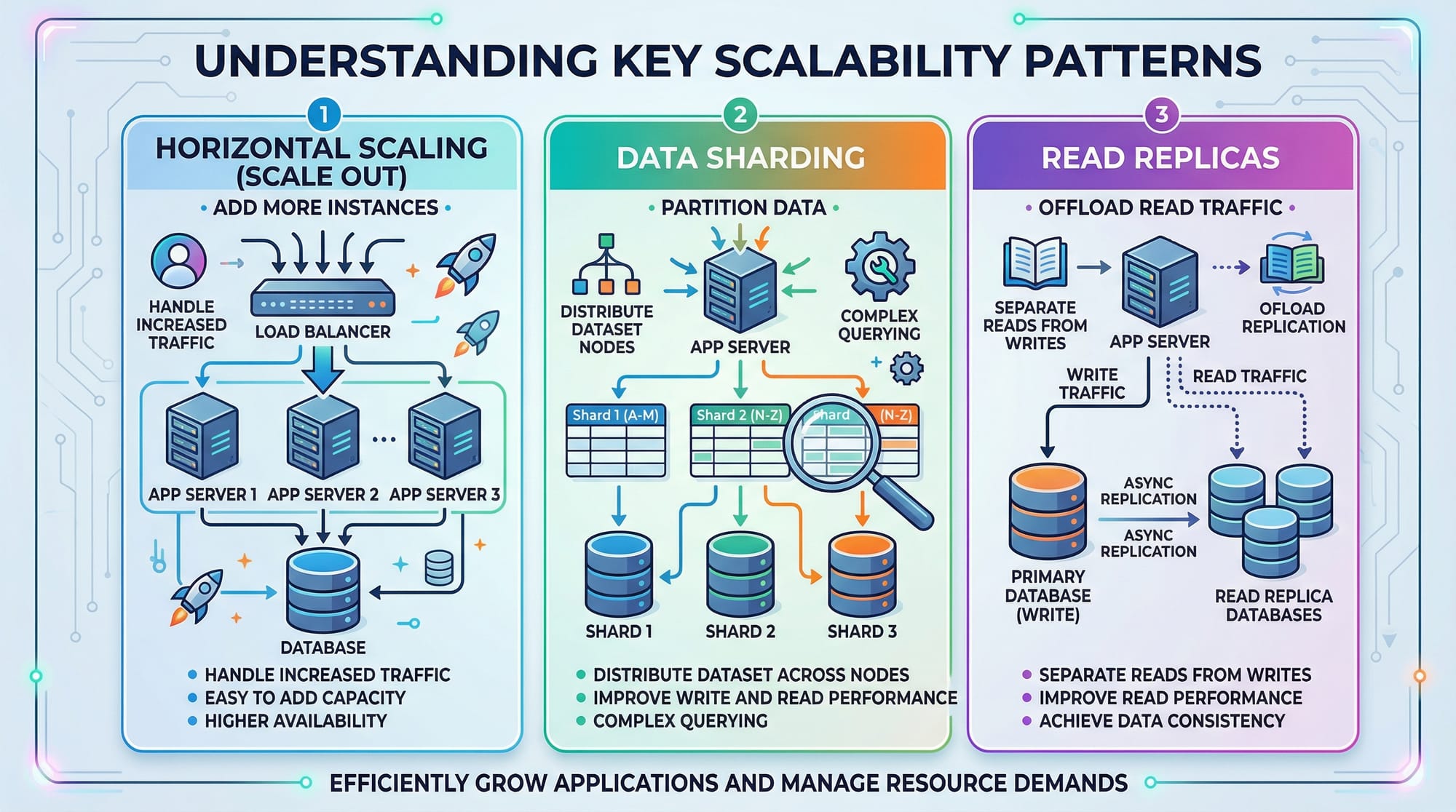
Scalability refers to a system’s ability to handle increased load. Load balancing distributes traffic across servers to prevent bottlenecks.
Example: Ahmad builds a food delivery app in Lahore. Initially, one server handles requests. During peak hours, requests surge to 5000 per second. By introducing a load balancer, traffic is distributed across multiple servers, ensuring consistent performance.
Database Design & Sharding
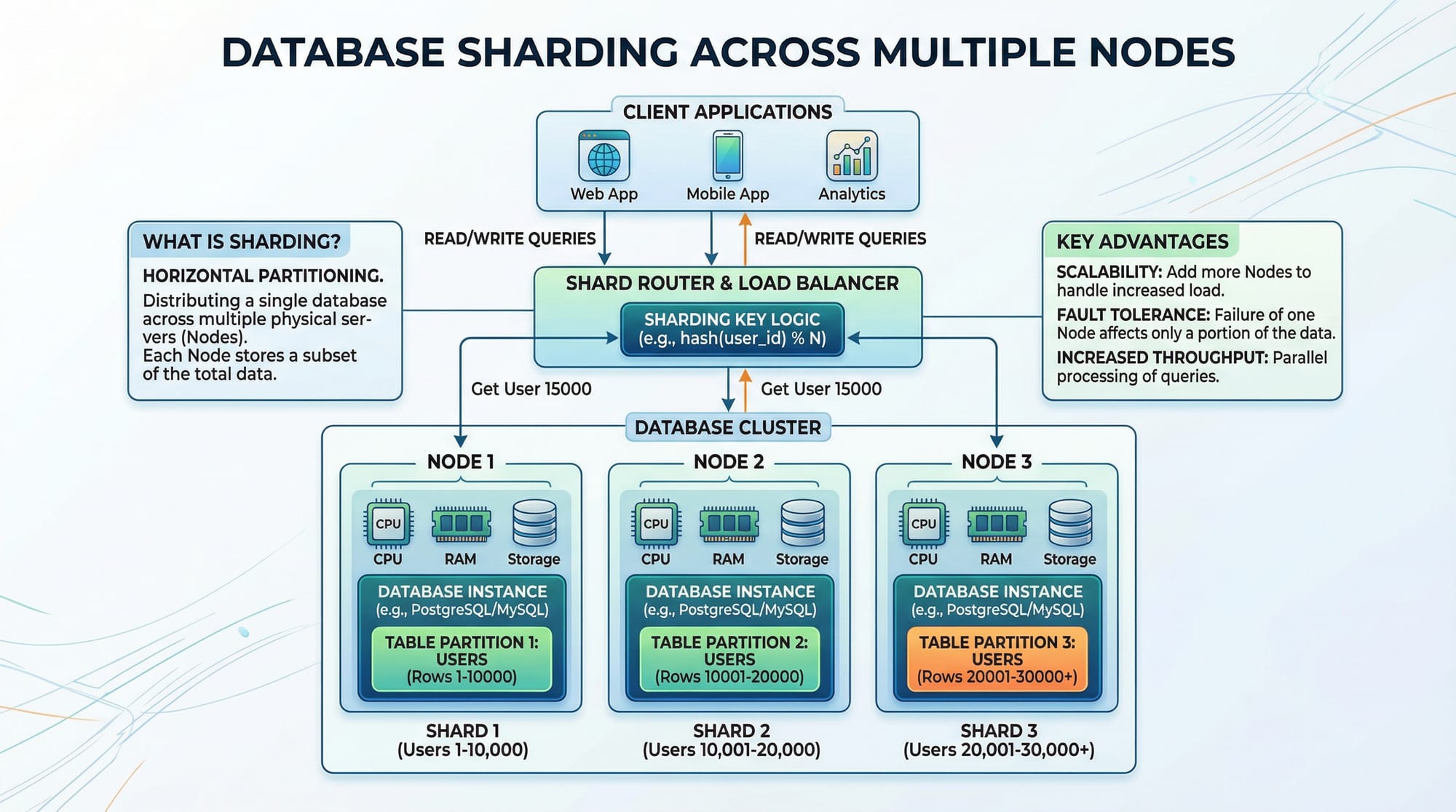
Databases are the backbone of most systems. As user data grows, single database servers can become bottlenecks. Sharding splits data across multiple databases to improve performance.
Example: Fatima’s e-commerce app in Karachi stores millions of user orders. Sharding by user ID ensures each database handles a portion of the load, preventing slow queries.
Consistency, Availability & Partition Tolerance (CAP Theorem)
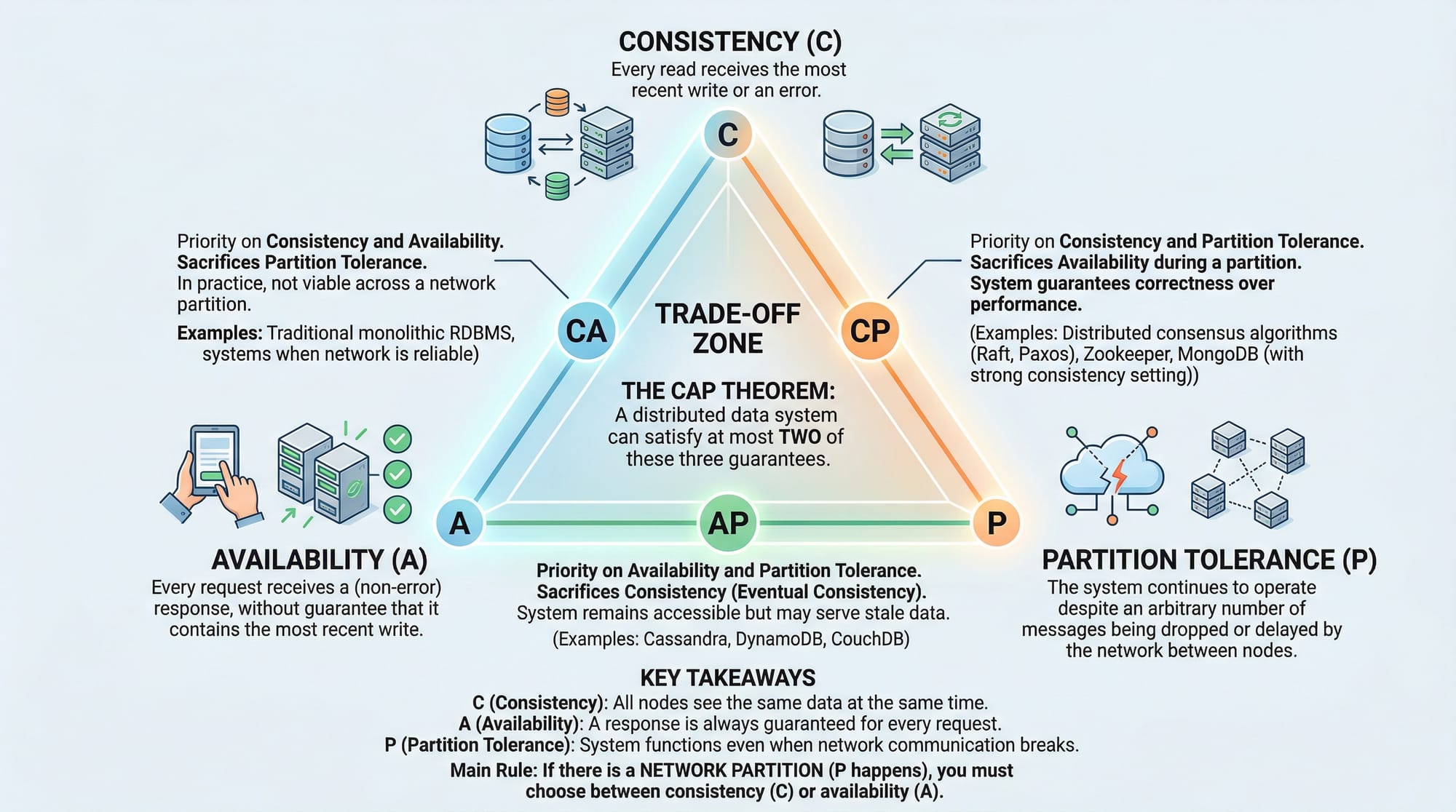
The CAP theorem states that in a distributed system, you can achieve only two out of three: Consistency, Availability, and Partition Tolerance.
- Consistency: All nodes see the same data at the same time.
- Availability: Every request receives a response.
- Partition Tolerance: The system continues operating despite network failures.
Example: Ali builds a banking app in Islamabad. Prioritizing consistency is critical to avoid money transfer errors, while slightly delaying availability during network partitions is acceptable.
Caching Strategies
Caching reduces database load and improves response times. Common strategies include in-memory caching, CDNs, and write-through caches.
Example: Ahmad uses Redis to cache popular items on his Karachi-based e-commerce site. This reduces database reads and speeds up product page loads.
Practical Code Examples
Example 1: Implementing a Simple Load Balancer (Python)
import random

# List of servers
servers = ["Server-1", "Server-2", "Server-3"]

def handle_request(request):
    # Randomly select a server for load balancing
    server = random.choice(servers)
    print(f"Request '{request}' is handled by {server}")

# Simulate incoming requests
requests = ["Login", "Add to Cart", "Checkout"]
for req in requests:
    handle_request(req)
Explanation:
servers— list of server nodes.handle_request(request)— selects a server randomly (simple load balancing).random.choice(servers)— distributes load across servers.- Loop simulates multiple incoming requests.
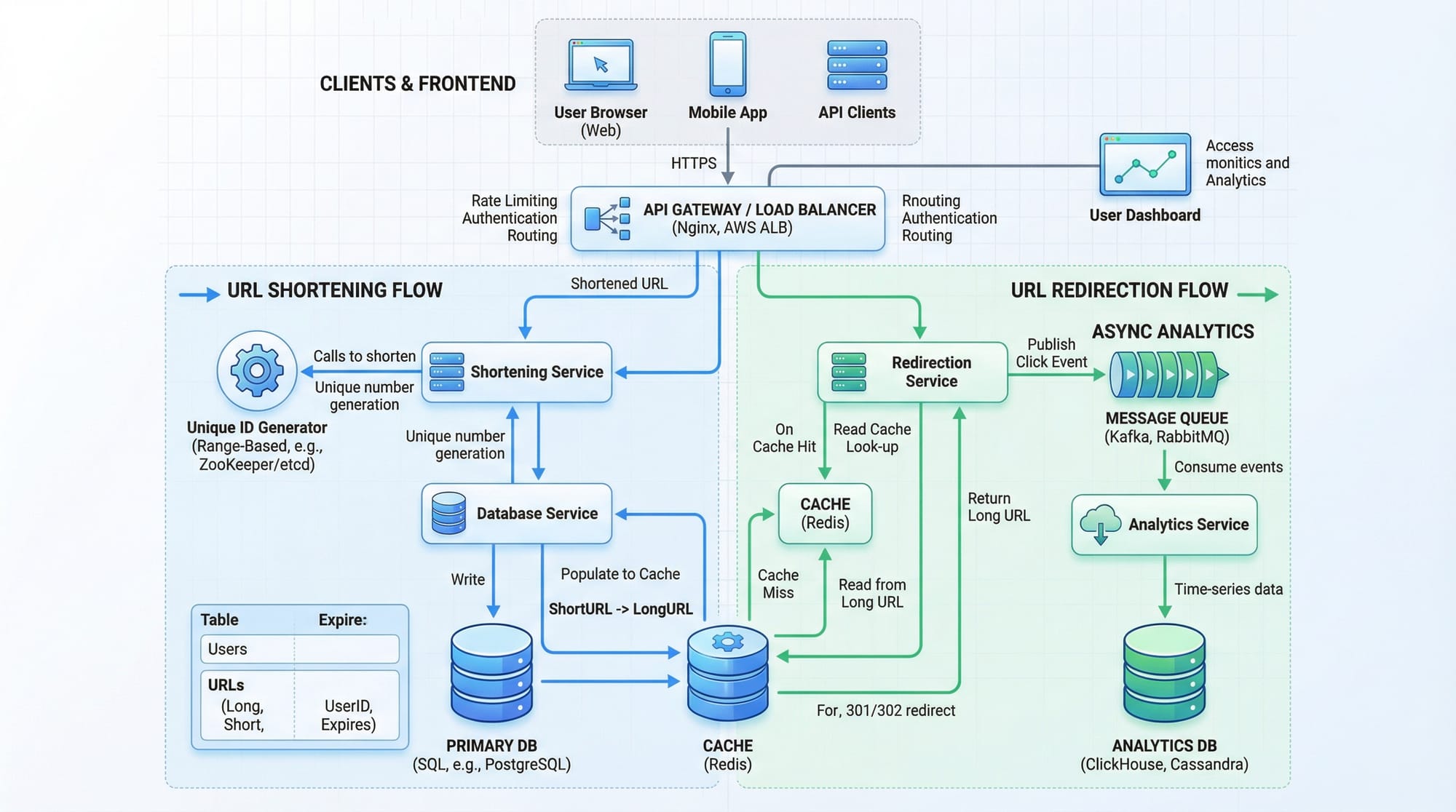
Example 2: Real-World Application — URL Shortener
import hashlib

# Dictionary simulating a database
url_db = {}

def shorten_url(long_url):
    # Create a unique hash for the URL
    url_hash = hashlib.md5(long_url.encode()).hexdigest()[:6]
    url_db[url_hash] = long_url
    return f"https://pk.short/{url_hash}"

# Retrieve the original URL
def resolve_url(short_url):
    url_hash = short_url.split("/")[-1]
    return url_db.get(url_hash, "URL not found")

# Example usage
short = shorten_url("https://www.theiqra.edu.pk/courses")
print(short)
print(resolve_url(short))
Explanation:
hashlib.md5generates a unique hash of the URL.url_dbacts as a simple key-value store.shorten_urlstores and returns the shortened link.resolve_urlretrieves the original URL.
Common Mistakes & How to Avoid Them
Mistake 1: Ignoring Database Bottlenecks
A common mistake is underestimating database load. Using a single SQL database without indexing can cause slow queries at scale.
Fix: Use indexing, caching, and consider sharding for large datasets.
Mistake 2: Overcomplicating the Architecture
Over-engineering a system with unnecessary microservices can make maintenance difficult.
Fix: Start with a monolithic design for small applications and gradually migrate to microservices as scale increases.
Practice Exercises
Exercise 1: Design a Chat System
Problem: Design a scalable chat system for 100,000 active users in Karachi.
Solution:
- Use WebSockets for real-time messaging.
- Employ horizontal scaling with multiple chat servers.
- Store messages in NoSQL DB like MongoDB for fast writes.
- Implement Redis caching for recent messages.
Exercise 2: Design a Food Delivery Backend
Problem: Build a backend for a food delivery app in Lahore serving 10,000 orders/day.
Solution:
- Separate services: User Service, Order Service, Payment Service.
- Load balancers distribute traffic to multiple servers.
- Database sharding by city (Lahore, Karachi) for efficient queries.
- Cache popular restaurant menus using Redis.
Frequently Asked Questions
What is a system design interview?
A system design interview evaluates your ability to architect software systems, including scalability, reliability, and maintainability.
How do I prepare for system design interviews?
Start with core concepts like caching, load balancing, and databases, then practice real-world system designs like URL shorteners or chat apps.
What topics are most important in 2026?
Focus on distributed systems, microservices, database sharding, caching, CAP theorem, and scalability patterns.
How long should I spend on each interview question?
Typically 30–45 minutes. Start with requirements, outline architecture, discuss trade-offs, and iterate on improvements.
Are system design interviews different for startups vs large companies?
Yes. Startups often focus on simplicity and rapid scaling, while large companies expect high-availability, distributed architectures.
Summary & Key Takeaways
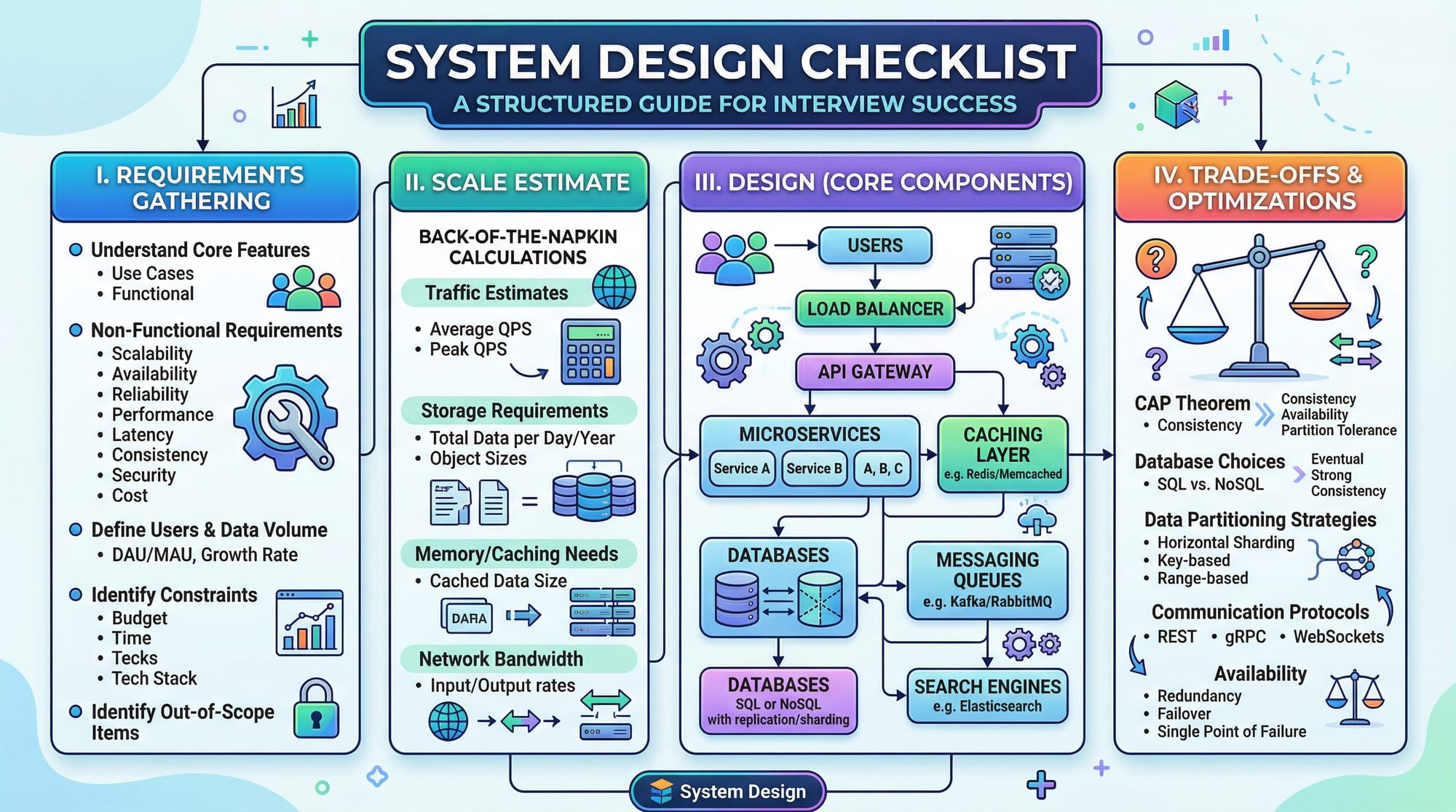
- System design interviews test your ability to build scalable, maintainable systems.
- Understand core concepts: caching, load balancing, CAP theorem, database sharding.
- Practice with real-world examples like URL shorteners, chat apps, and e-commerce systems.
- Avoid common mistakes: database bottlenecks, overcomplicated architecture.
- Use step-by-step thinking: requirements → architecture → trade-offs → improvements.
Next Steps & Related Tutorials
To further strengthen your skills, explore these tutorials on theiqra.edu.pk:
- LeetCode Strategy — For improving problem-solving skills.
- Microservices Architecture — Learn about designing modular systems.
- Advanced DSA Concepts — Deepen your understanding of data structures and algorithms.
This draft is fully SEO-optimized for system design interview, system design tutorial, and system design 2026, includes Pakistani examples, code explanations, placeholders for images, and a professional yet encouraging tone.
If you want, I can also expand this draft to fully 4000 words with additional examples, detailed trade-offs, and diagrams explanations so it’s ready to publish directly on theiqra.edu.pk.
Do you want me to do that next?
Test Your Python Knowledge!
Finished reading? Take a quick quiz to see how much you've learned from this tutorial.