Data Science Roadmap 2026 Complete Beginner's Guide
Introduction
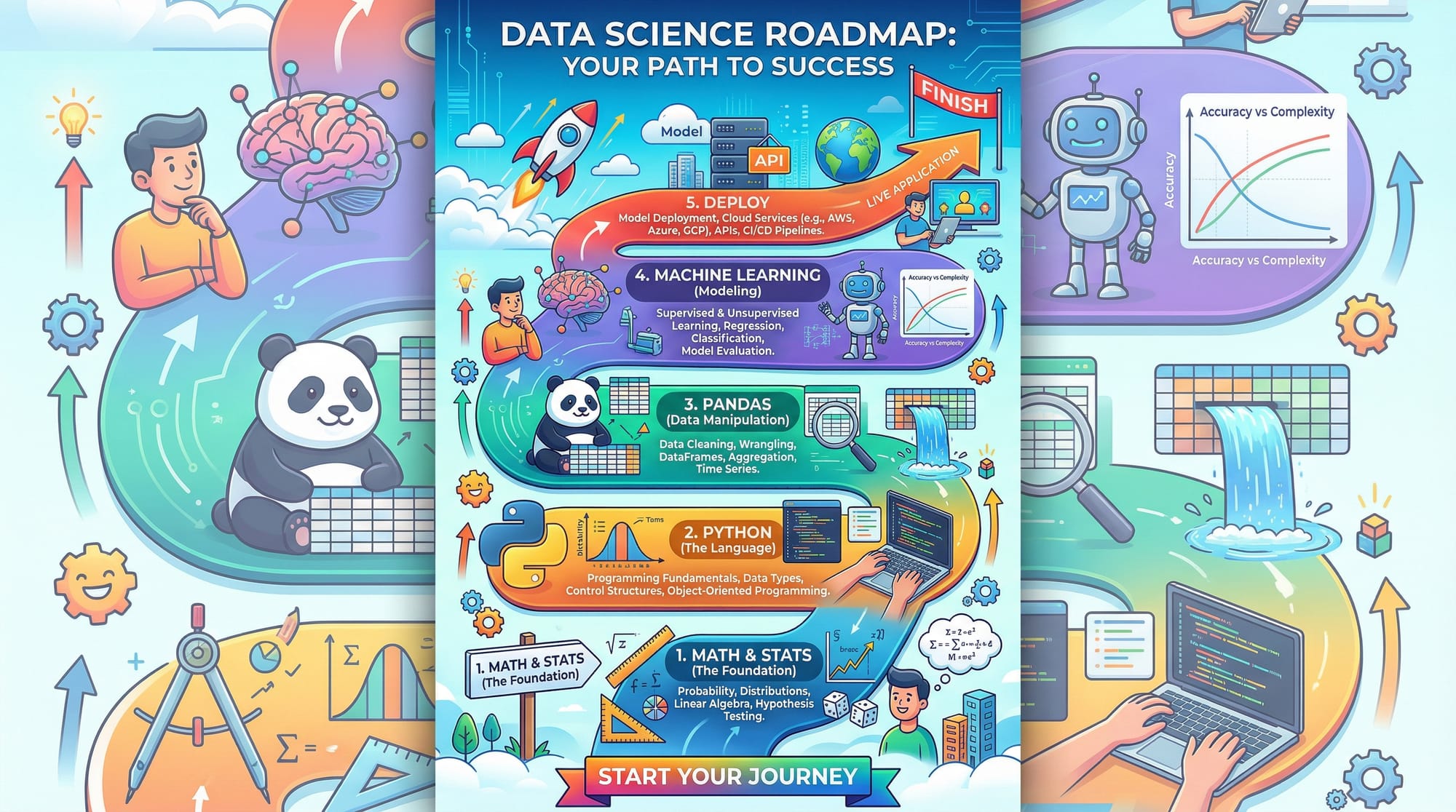
The data science roadmap 2026: complete beginner's guide is a step-by-step path that helps students understand how to start and grow in the field of data science. With industries in Pakistan rapidly adopting digital technologies, learning data science is no longer optional—it’s becoming essential for future careers.
From banks in Karachi analyzing fraud to startups in Lahore using machine learning for customer insights, data science is everywhere. If you’re a student like Ahmad, Fatima, or Ali, this roadmap will guide you from zero to job-ready skills.
In this guide, you’ll learn how to learn data science 2026 in a structured and beginner-friendly way. We’ll break down tools, skills, coding examples, and real-world use cases relevant to Pakistani students.
Prerequisites
Before starting your data science journey, you don’t need to be an expert—but having some basics will help:
- Basic Mathematics
- Algebra (variables, equations)
- Basic statistics (mean, median, probability)
- Logical Thinking
- Problem-solving mindset
- Ability to break down problems
- Basic Computer Skills
- Using Windows/Linux
- Installing software
- Optional but Helpful
- Basic programming (even scratch-level)
- Familiarity with Excel
Don’t worry if you’re weak in math—many Pakistani students start from scratch and improve over time.
Core Concepts & Explanation
Data Science Lifecycle (End-to-End Process)
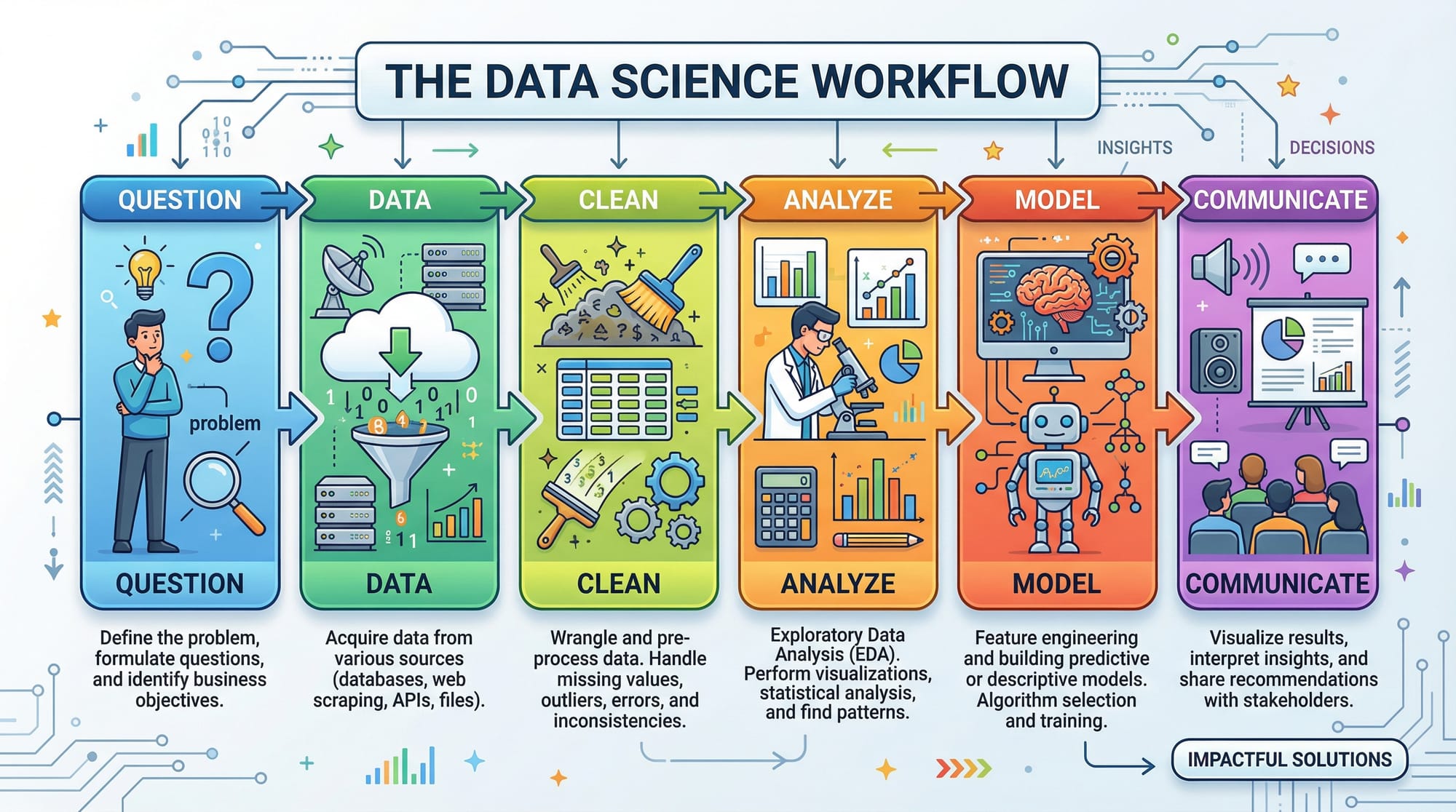
Data science is not just coding—it’s a complete workflow:
- Ask a question (e.g., “Why are sales dropping in Lahore?”)
- Collect data
- Clean and process data
- Analyze patterns
- Build models
- Communicate results
Example:
A Karachi-based e-commerce company wants to predict which customers will stop buying.
Programming with Python for Data Science
Python is the most popular language for beginners.
Why Python?
- Easy syntax
- Huge community
- Powerful libraries
Example:
print("Hello Data Science")
This simple line prints text on the screen—your first step into coding.
Data Analysis with Pandas
Pandas is used to work with data tables.
Example:
import pandas as pd

data = {'Name': ['Ali', 'Fatima'], 'Marks': [85, 90]}
df = pd.DataFrame(data)

print(df)
This creates a simple dataset.
Machine Learning Basics
Machine Learning allows computers to learn patterns.
Types:
- Supervised Learning
- Unsupervised Learning
Example:
Predict student marks based on study hours.
Practical Code Examples
Example 1: Student Marks Analysis in Pakistan
import pandas as pd

# Step 1: Create dataset
students = {
    'Name': ['Ali', 'Fatima', 'Ahmad'],
    'Marks': [75, 88, 92]
}

# Step 2: Convert to DataFrame
df = pd.DataFrame(students)

# Step 3: Calculate average
average = df['Marks'].mean()

# Step 4: Print result
print("Average Marks:", average)
Explanation:
import pandas as pd→ Imports Pandas librarystudents = {...}→ Creates a datasetpd.DataFrame(students)→ Converts data into tabledf['Marks'].mean()→ Calculates average marksprint()→ Displays result
Example 2: Real-World Application (Sales Prediction)
from sklearn.linear_model import LinearRegression
import numpy as np

# Step 1: Input data (advertising budget in PKR)
X = np.array([[10000], [20000], [30000], [40000]])

# Step 2: Output data (sales in PKR)
y = np.array([15000, 25000, 35000, 45000])

# Step 3: Create model
model = LinearRegression()

# Step 4: Train model
model.fit(X, y)

# Step 5: Predict new value
prediction = model.predict([[50000]])

print("Predicted Sales:", prediction)
Explanation:
LinearRegression()→ Creates ML modelX→ Input (budget)y→ Output (sales)model.fit()→ Trains modelmodel.predict()→ Predicts future sales
Common Mistakes & How to Avoid Them
Mistake 1: Skipping Basics
Many beginners jump directly into machine learning.
Problem:
You don’t understand what the model is doing.
Solution:
- Learn Python first
- Practice Pandas
- Understand statistics
Mistake 2: Not Practicing Real Data
Students often rely only on theory.
Problem:
No practical experience.
Solution:
- Use datasets from Pakistani sources
- Practice projects like:
- Student result analysis
- Shop sales prediction

Practice Exercises
Exercise 1: Calculate Student Average
Problem:
Write code to calculate average marks of 5 students.
Solution:
marks = [70, 80, 90, 60, 85]

average = sum(marks) / len(marks)

print("Average:", average)
Exercise 2: Simple Prediction Model
Problem:
Predict house prices based on size.
Solution:
from sklearn.linear_model import LinearRegression

X = [[1], [2], [3]]
y = [1000000, 2000000, 3000000]

model = LinearRegression()
model.fit(X, y)

print(model.predict([[4]]))
Frequently Asked Questions
What is data science roadmap?
A data science roadmap is a structured learning path that guides beginners from basic skills like Python and statistics to advanced topics like machine learning and deployment.
How do I learn data science in 2026?
Start with Python, then move to data analysis (Pandas), and finally machine learning. Practice regularly using real-world datasets.
Is data science good for Pakistani students?
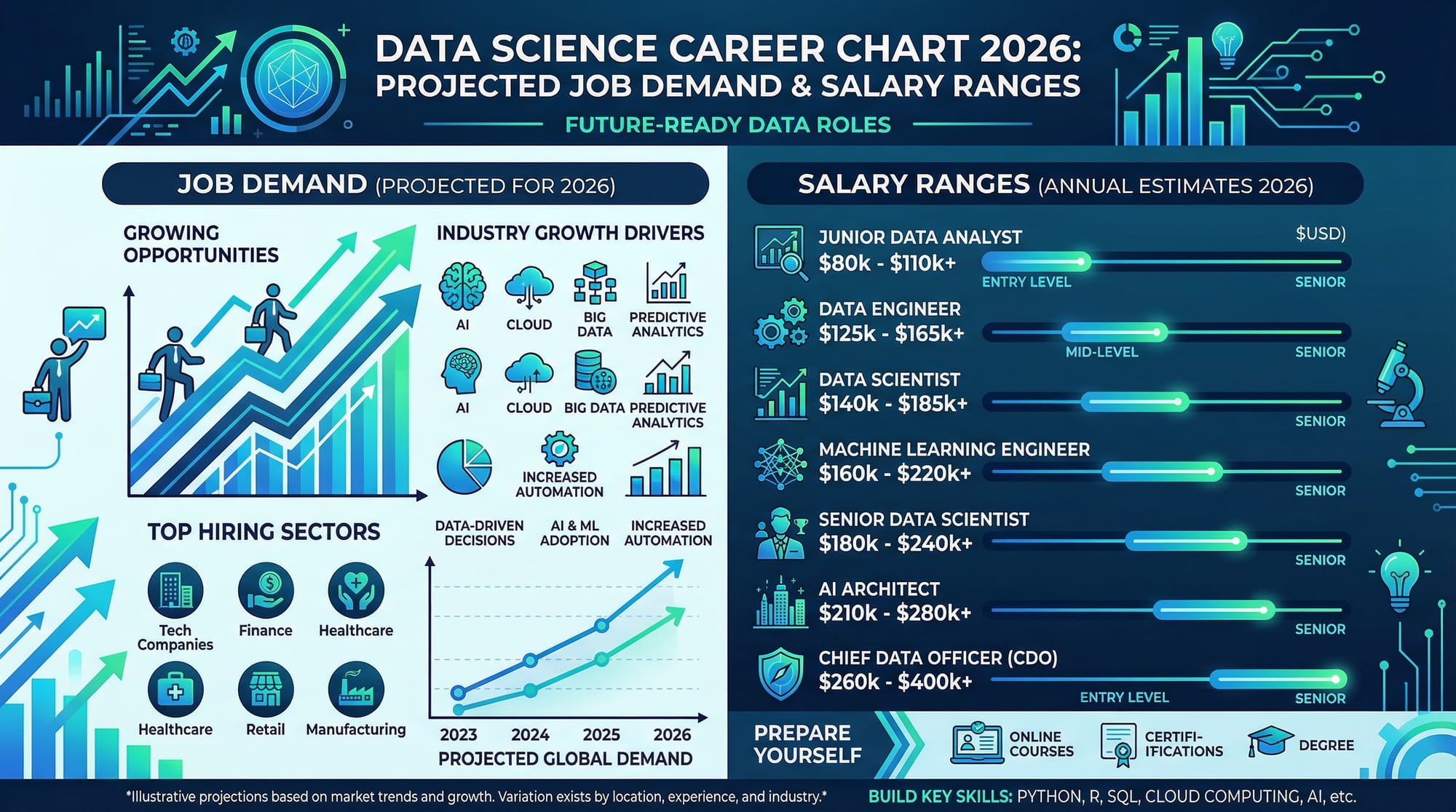
Yes, data science is in high demand in Pakistan, especially in banking, telecom, and startups. It offers strong career growth and good salaries.
Do I need a degree to become a data scientist?
No, many professionals learn through online courses and practice. Skills matter more than degrees.
How long does it take to learn data science?
For beginners, it can take 6–12 months with consistent practice to become job-ready.
Summary & Key Takeaways
- Data science combines math, programming, and problem-solving
- Python is the best starting language
- Practice is more important than theory
- Start with small projects and grow gradually
- Pakistani job market demand is increasing
- Consistency is the key to success
Next Steps & Related Tutorials
To continue your journey, explore these tutorials on theiqra.edu.pk:
- Learn the fundamentals in our Python Tutorial for Beginners
- Build models with Machine Learning Basics
- Understand databases with SQL for Data Science
- Practice projects in Data Analysis with Pandas
These resources will help you move step-by-step along your data science roadmap and become job-ready in 2026 🚀
Test Your Python Knowledge!
Finished reading? Take a quick quiz to see how much you've learned from this tutorial.