MySQL vs PostgreSQL vs MongoDB Which Database in 2026
Introduction
Choosing the right database is one of the most important decisions for any developer in 2026. In this tutorial, we’ll explore MySQL vs PostgreSQL vs MongoDB: Which Database in 2026?—a detailed comparison to help Pakistani students understand which database best fits their needs.
Whether you're building a student portal in Lahore, an e-commerce store in Karachi, or a startup app in Islamabad, selecting the right database affects performance, scalability, and long-term success.
We’ll also explore the broader concept of SQL vs NoSQL, which is central to modern database design. By the end of this guide, you’ll have a clear understanding of:
- When to use MySQL
- When PostgreSQL is the better choice
- Why MongoDB is popular for modern applications
Prerequisites
Before starting this tutorial, you should have:
- Basic understanding of programming (preferably Python, JavaScript, or PHP)
- Familiarity with databases and tables
- Basic knowledge of SQL queries (SELECT, INSERT, UPDATE)
- Understanding of JSON format (helpful for MongoDB)
Core Concepts & Explanation
SQL Databases (MySQL & PostgreSQL)
SQL databases use structured schemas and tables with rows and columns.
- MySQL is widely used, beginner-friendly, and great for web apps.
- PostgreSQL is more advanced, offering powerful features like complex queries, JSON support, and extensions.
Example:
A student table in a university database:
- id
- name
- city
- fee (PKR)
SQL databases enforce strict structure, which ensures data consistency.
NoSQL Database (MongoDB)
MongoDB is a NoSQL database that stores data in JSON-like documents.
Instead of tables, you use collections and documents.
Example:
{
  "name": "Ali",
  "city": "Karachi",
  "courses": ["Web Dev", "AI"]
}
MongoDB is flexible and ideal for applications where data structure changes frequently.
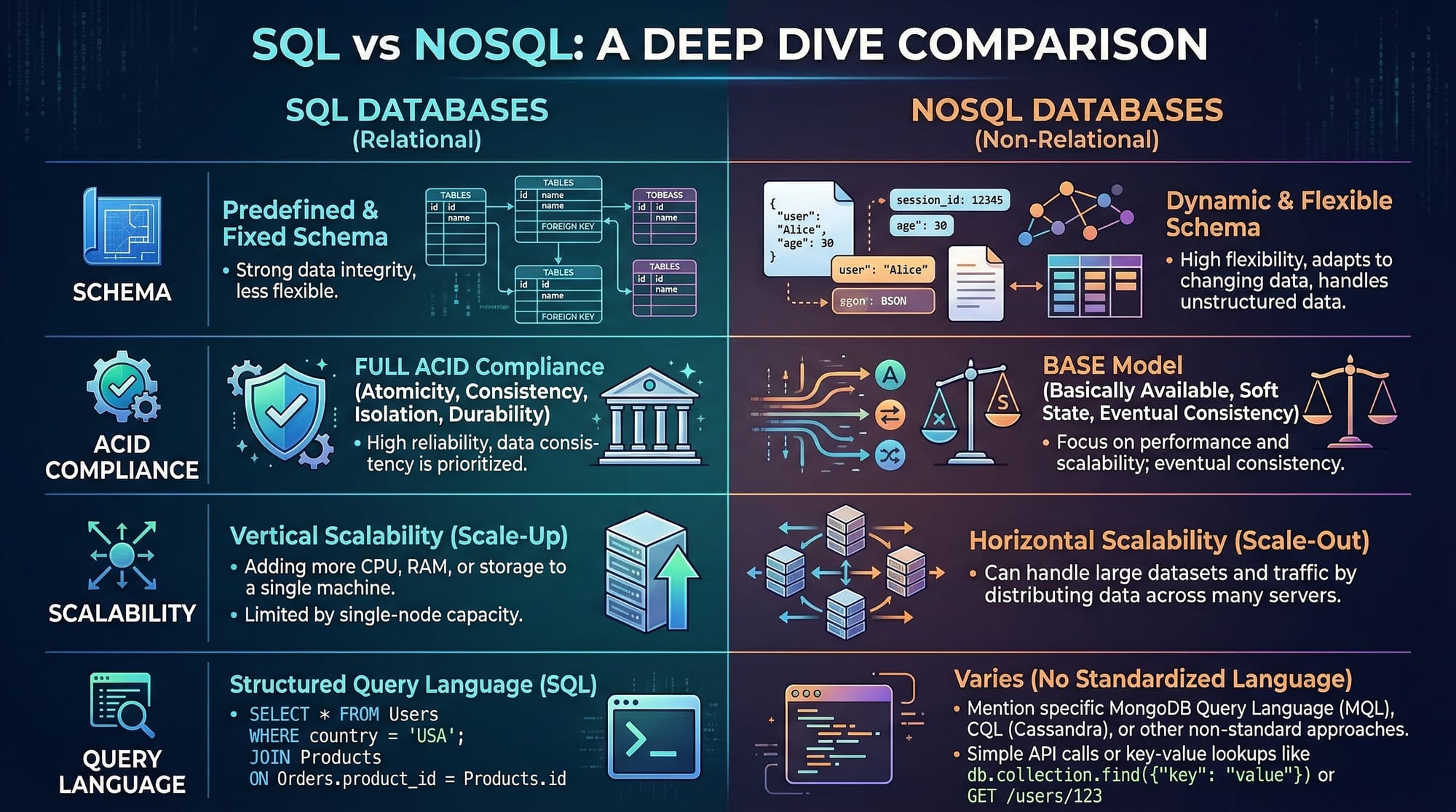
SQL vs NoSQL: Key Differences
Here’s a quick comparison:
| Feature | SQL (MySQL/PostgreSQL) | NoSQL (MongoDB) |
|---|---|---|
| Schema | Fixed | Flexible |
| Structure | Tables | Documents |
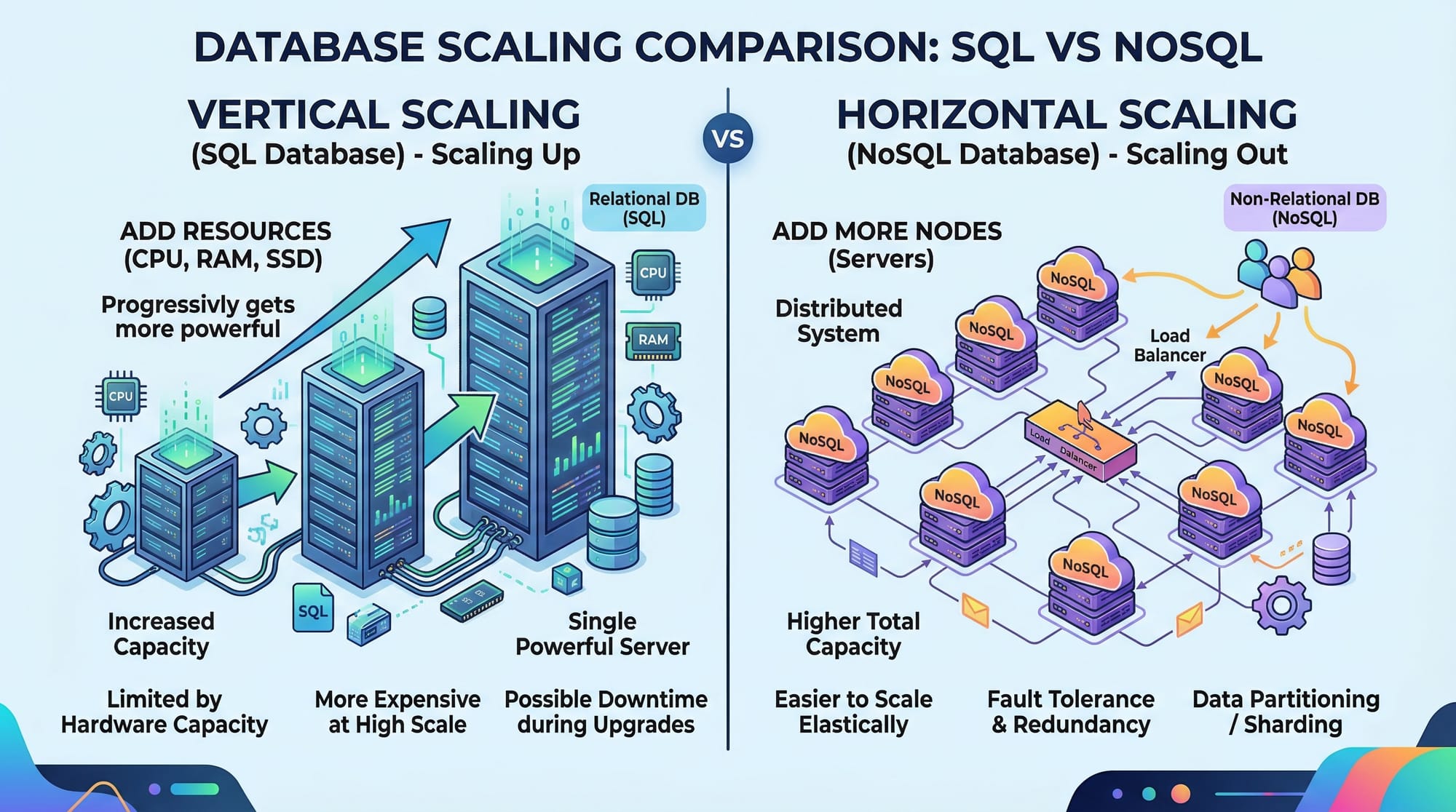
| Scalability | Vertical | Horizontal |
| ACID Compliance | Strong | Varies |
| Query Language | SQL | JSON-like |
MySQL vs PostgreSQL vs MongoDB (2026 Comparison)
| Feature | MySQL | PostgreSQL | MongoDB |
|---|---|---|---|
| Type | SQL | SQL | NoSQL |
| Ease of Use | Easy | Moderate | Easy |
| Performance | Fast for reads | Strong for complex queries | High scalability |
| Flexibility | Low | Medium | High |
| Best Use Case | Web apps | Data-heavy systems | Real-time apps |
Practical Code Examples
Example 1: Creating a Student Database (MySQL)
CREATE TABLE students (
    id INT AUTO_INCREMENT PRIMARY KEY,
    name VARCHAR(100),
    city VARCHAR(50),
    fee INT
);
Line-by-line explanation:
CREATE TABLE students→ Creates a new table named studentsid INT AUTO_INCREMENT PRIMARY KEY→ Unique ID that increases automaticallyname VARCHAR(100)→ Stores student name (max 100 characters)city VARCHAR(50)→ Stores city name (e.g., Lahore)fee INT→ Stores fee in PKR
Example 2: MongoDB Real-World Application (E-commerce)
db.orders.insertOne({
  customer: "Fatima",
  city: "Islamabad",
  items: [
    { product: "Laptop", price: 120000 },
    { product: "Mouse", price: 2000 }
  ],
  total: 122000
});
Line-by-line explanation:
db.orders.insertOne()→ Inserts a new document into orders collectioncustomer: "Fatima"→ Customer namecity: "Islamabad"→ Locationitems: [...]→ List of purchased productstotal: 122000→ Total amount in PKR
This structure is flexible—new fields can be added anytime without altering schema.
Common Mistakes & How to Avoid Them
Mistake 1: Choosing MongoDB for Structured Data
Many beginners use MongoDB even when data is highly structured (like banking systems).
Problem:
- Data inconsistency
- Hard to enforce rules
Fix:
Use PostgreSQL or MySQL for structured systems.
Mistake 2: Ignoring Scalability Needs
Students often choose MySQL without thinking about future growth.
Problem:
- System slows down with more users
Fix:
- Use MongoDB for scalable apps
- Or PostgreSQL with optimization
Practice Exercises
Exercise 1: Create a Student Table
Problem:
Create a table for students with name, age, and city.
Solution:
CREATE TABLE students (
    id INT AUTO_INCREMENT PRIMARY KEY,
    name VARCHAR(100),
    age INT,
    city VARCHAR(50)
);
Explanation:
- Defines structure for storing student records
- Ensures each student has a unique ID
Exercise 2: Insert Data in MongoDB
Problem:
Insert a product into a MongoDB collection.
Solution:
db.products.insertOne({
  name: "Mobile",
  price: 50000,
  brand: "Samsung"
});
Explanation:
- Creates a new document
- Stores product info without schema restrictions
Frequently Asked Questions
What is the difference between MySQL and PostgreSQL?
MySQL is simpler and faster for basic applications, while PostgreSQL offers advanced features like complex queries, JSON support, and better data integrity. PostgreSQL is often preferred for enterprise-level applications.
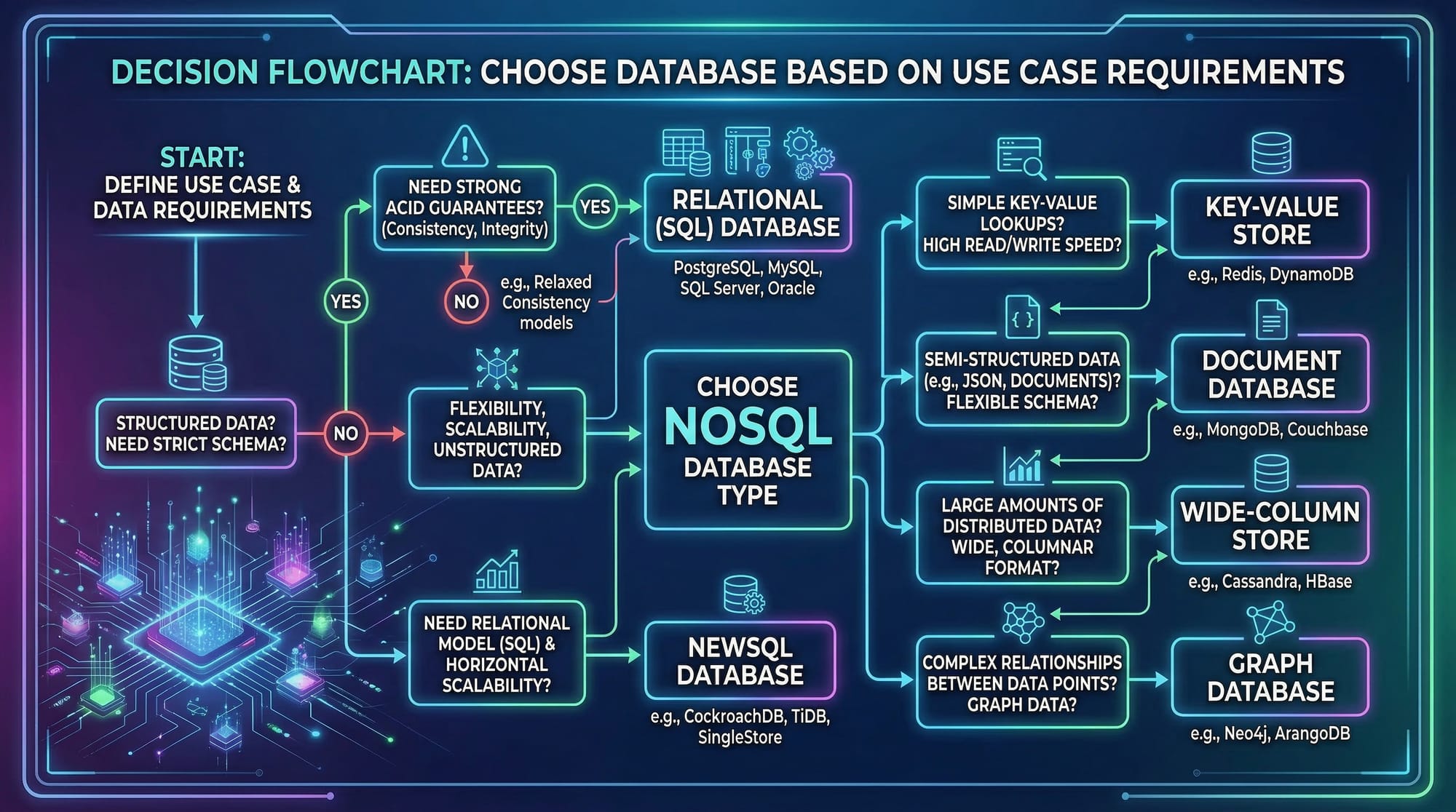
How do I choose between SQL vs NoSQL?
Choose SQL if your data is structured and requires consistency. Choose NoSQL like MongoDB if your data is flexible and needs to scale horizontally.
Is MongoDB better than MySQL in 2026?
MongoDB is better for scalable, real-time applications, while MySQL is still excellent for traditional web apps. The choice depends on your project requirements.
Which database is best for beginners in Pakistan?
MySQL is usually the best starting point because it is easy to learn and widely used in Pakistani universities and industry.
Can I use both SQL and NoSQL together?
Yes, many modern applications use both. For example, SQL for transactions and MongoDB for analytics or caching.
Summary & Key Takeaways
- MySQL is beginner-friendly and great for web applications
- PostgreSQL is powerful and ideal for complex systems
- MongoDB offers flexibility and scalability for modern apps
- SQL databases use structured schemas; NoSQL uses flexible documents
- Choosing the right database depends on your project needs
- Understanding database comparison 2026 trends is essential for future developers
Next Steps & Related Tutorials
To deepen your understanding, explore these tutorials on theiqra.edu.pk:
- Learn SQL basics with our MySQL Tutorial for Beginners
- Master advanced queries in the PostgreSQL Tutorial
- Build scalable apps with the MongoDB Tutorial
- Understand backend development with our Full-Stack Development Guide
Start small, practice consistently, and build real-world projects—whether it's a student system for a college in Lahore or an online store in Karachi.
Test Your Python Knowledge!
Finished reading? Take a quick quiz to see how much you've learned from this tutorial.